Posted by: Alex MacGregor | May 18, 2013

Soggy Seattle

For Caroline’s Spring Break, we headed to the Pacific Northwest–one of my personal favorite parts of the world.

First, I handled some work in Portland (no blog post on that…Portland will have to wait until a future trip), then met up with Caroline and spent a couple days with my sister in Seattle.

Caroandcar

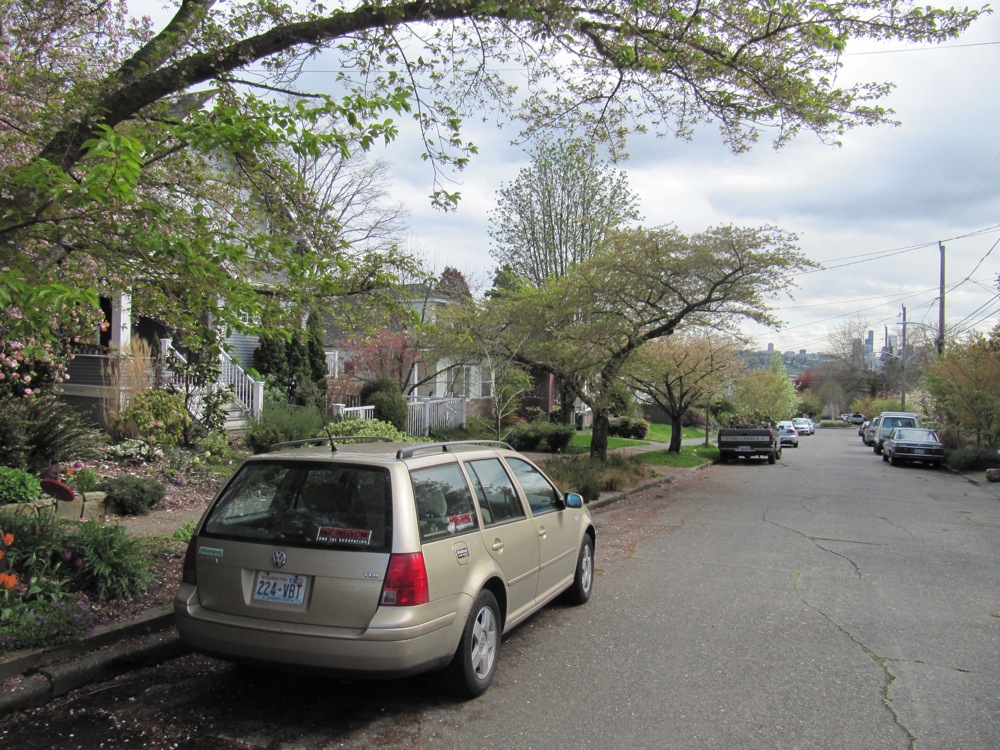
Caroline, pictured in front of my sister’s house in South Seattle, with our trusty rental car in the background.

As you might guess, the trip up and down the PNW entailed a lot of driving–definitely bucking our normal travel style. Alas, even in the PNW,  intercity public transit is far less user-friendly than it is in most of the world.

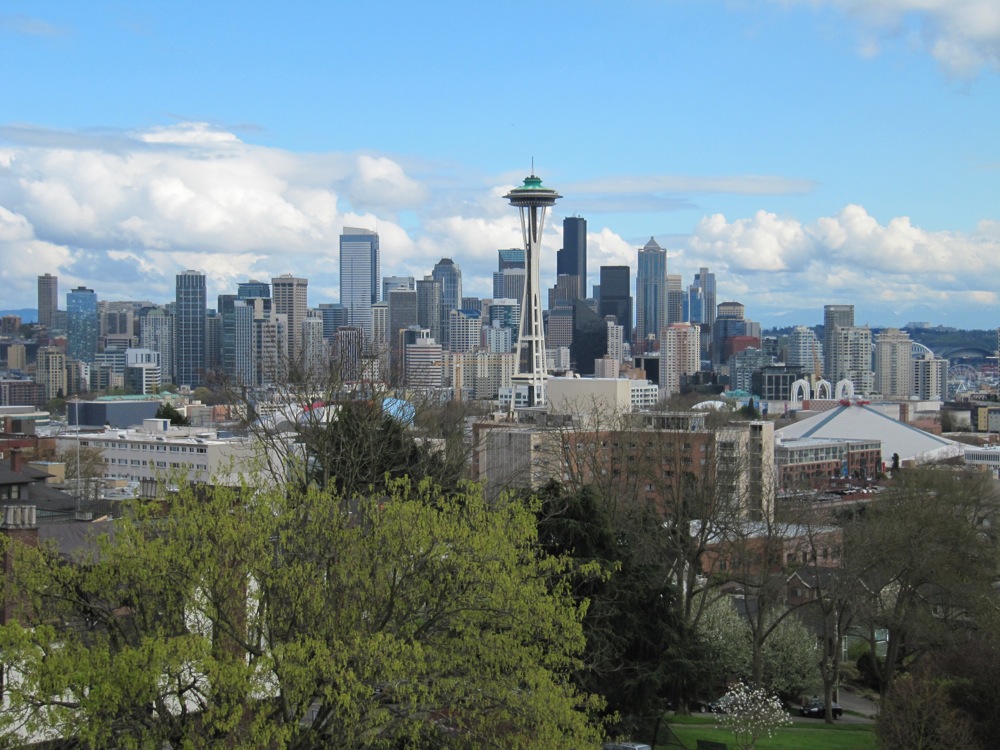
queen anne skyline

If something were to cause me to have to leave Atlanta, Seattle would be near the top of my list.

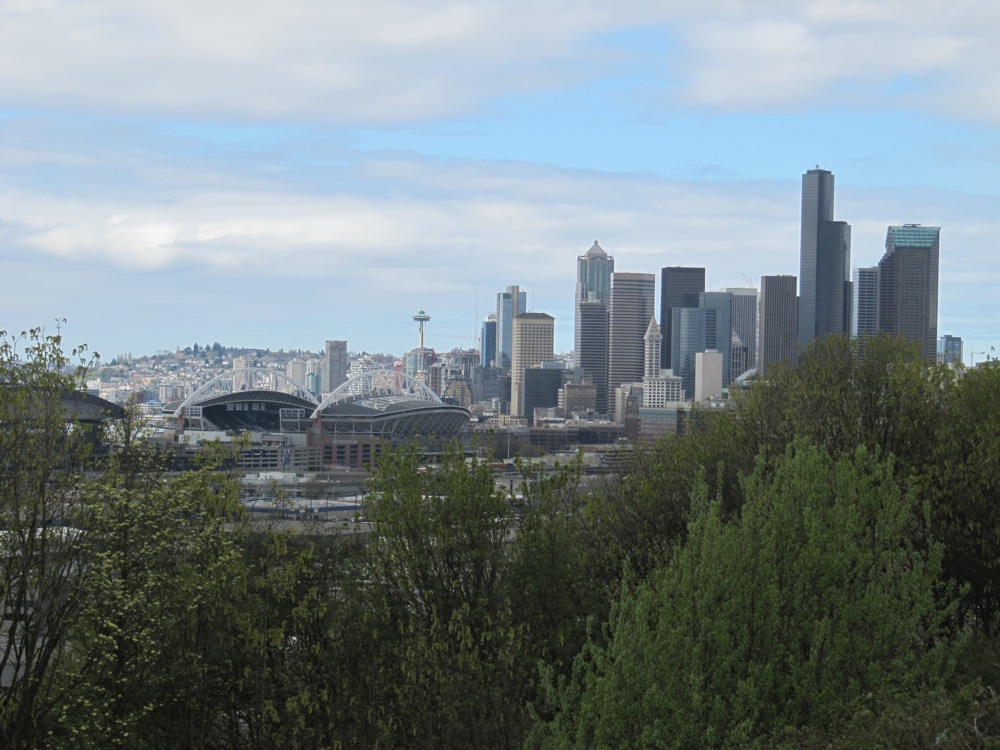
skyline1

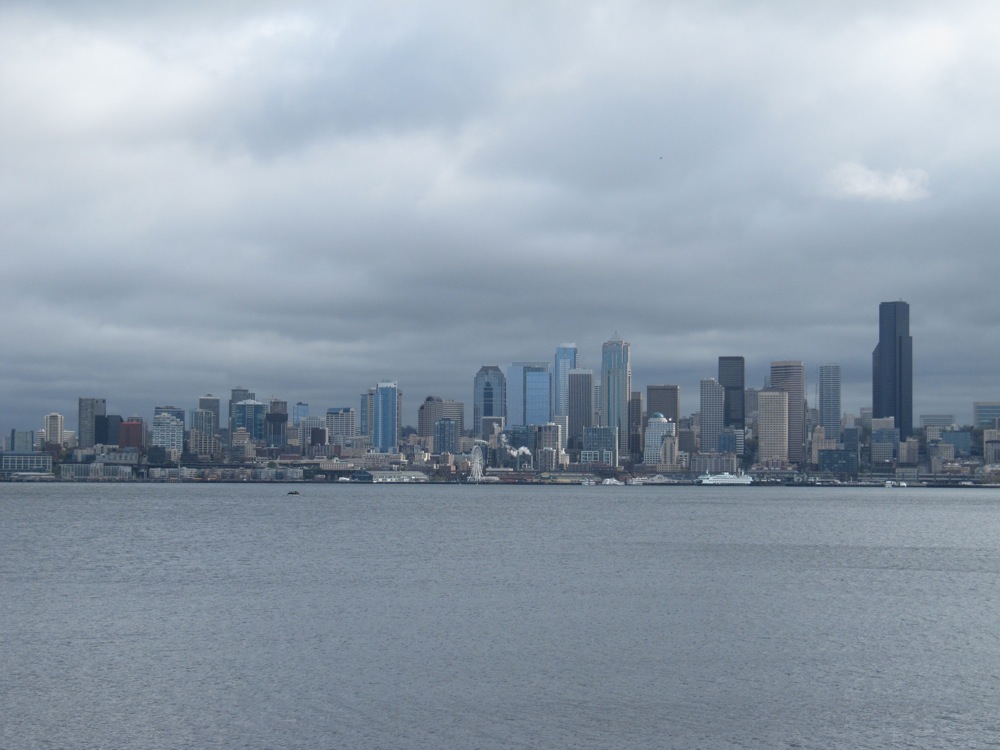
west seattle skyline

west seattle beach

The city is filled with gorgeous views over downtown, the lakes, Puget Sound, and the surrounding mountains…

queen anne

…and with equally gorgeous neighborhoods.

neighborhoods1

At times, Seattle reminds me a lot of Atlanta. This street could easily be Inman Park or Virginia Highland. The biggest differences are that the political bumper stickers are several notches to the left, and the houses are twice as expensive!

ballard1

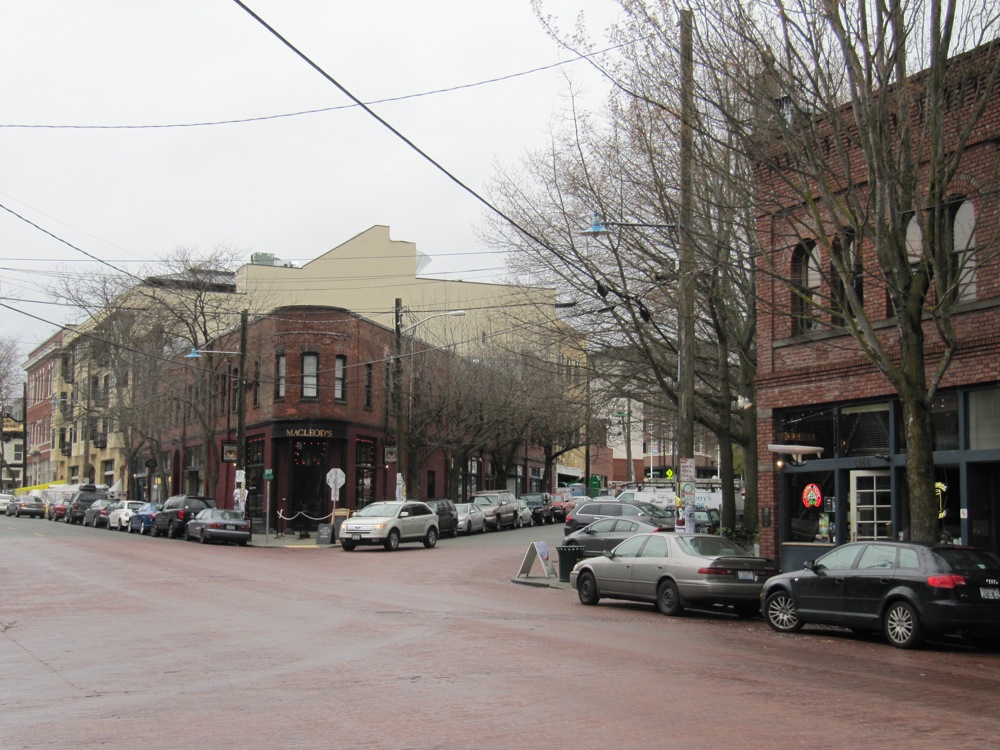
Having my sister as a guide meant we checked out lots of areas that are off the radar for most tourists. This area, Ballard, is an old maritime district.

ballard2

Caroline and my sister, exploring the nooks and crannies of Ballard.

ballard bikeandwine

Ballard has turned relentlessly trendy in recent years. Case in point: this shop specialized in vintage bikes and wine. Or take the adjacent oyster bar, where we had dinner: we arrived at the restaurant at 5:15, and were told by the hostess the wait was already over two hours!

georgetown

Another area I would have never found on my own is Georgetown–historically home to the old Rainier brewery…

georgetown vintage trailer park

…and, more recently, a vintage trailer park market.

space needle

When my sister was busy, Caroline and I saw some of the more mainstream sights downtown. We didn’t go up the Space Needle–didn’t seem worth it in the frigid, drizzly weather.

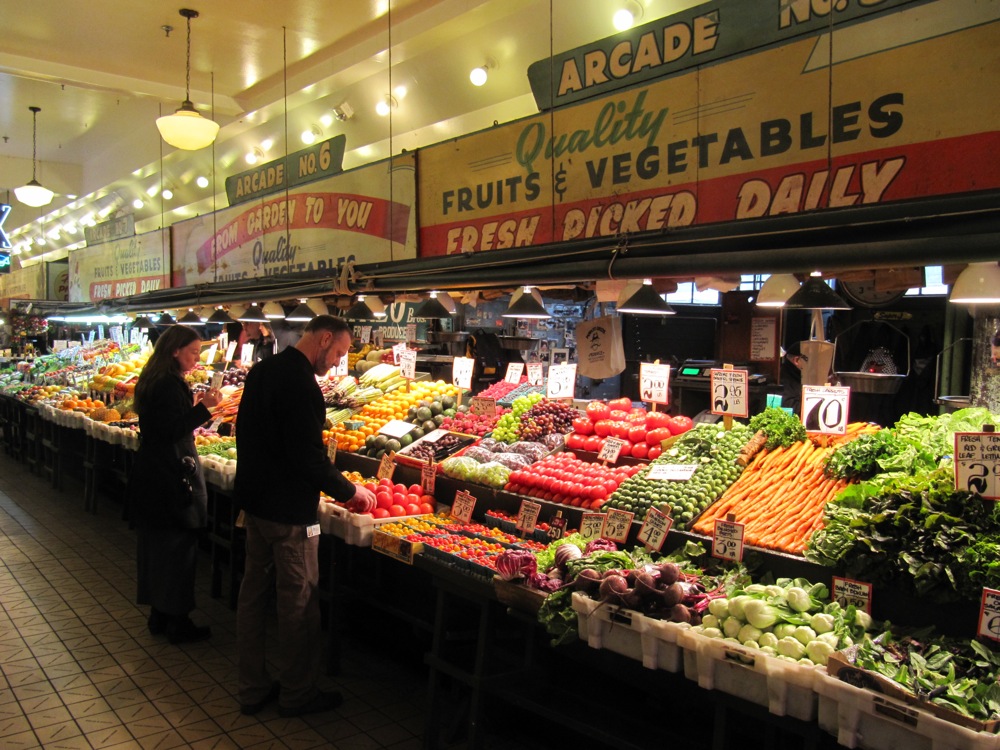
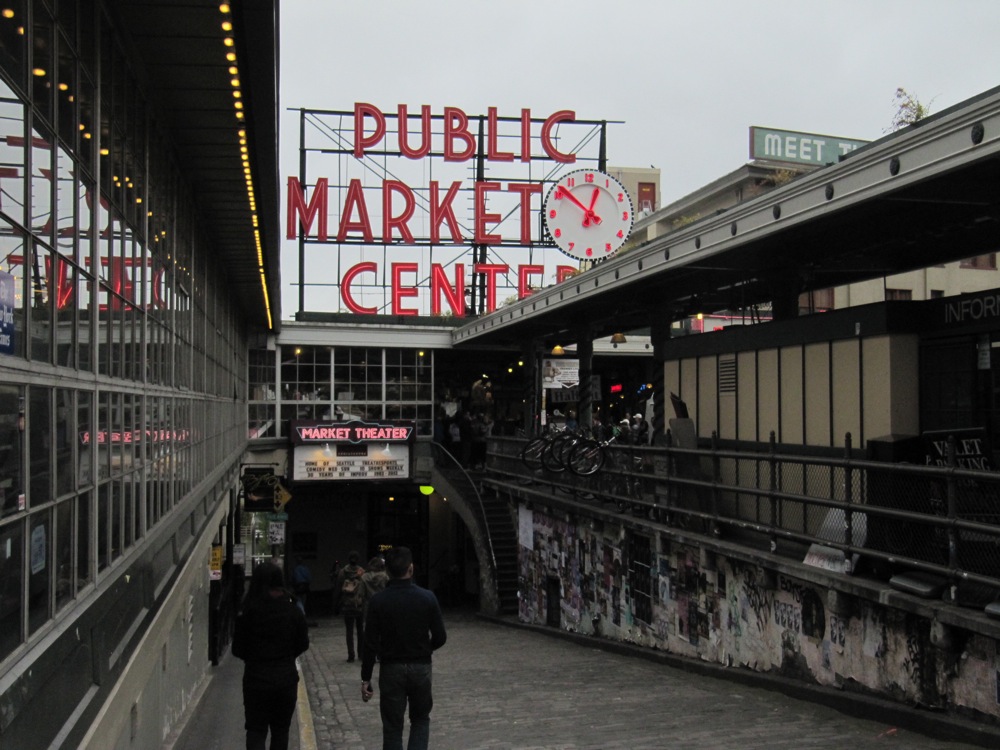
pikeplace1

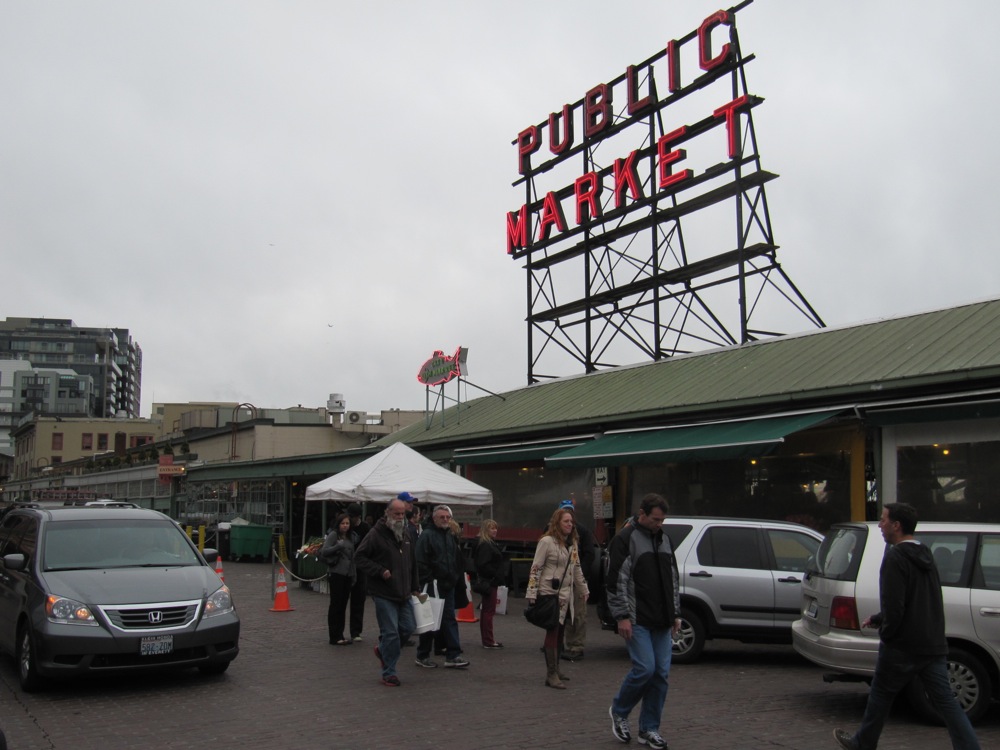
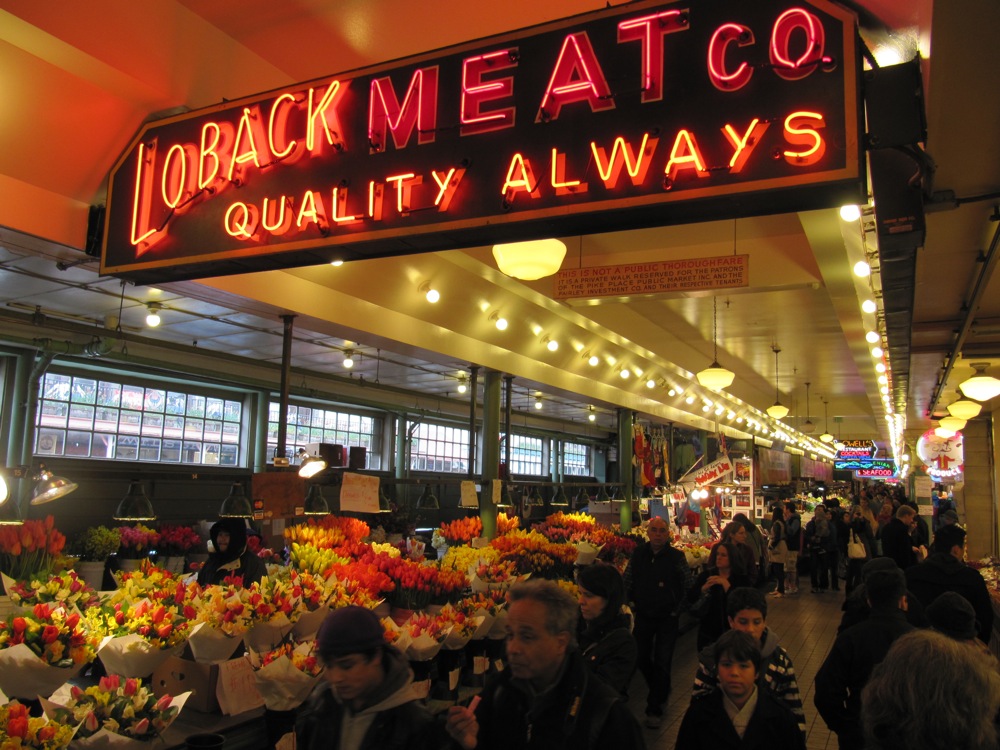
Pike Place Market–another classic Seattle landmark.

pikeplace2

pikeplace3

Mmmm…veggies!

pikesplace4

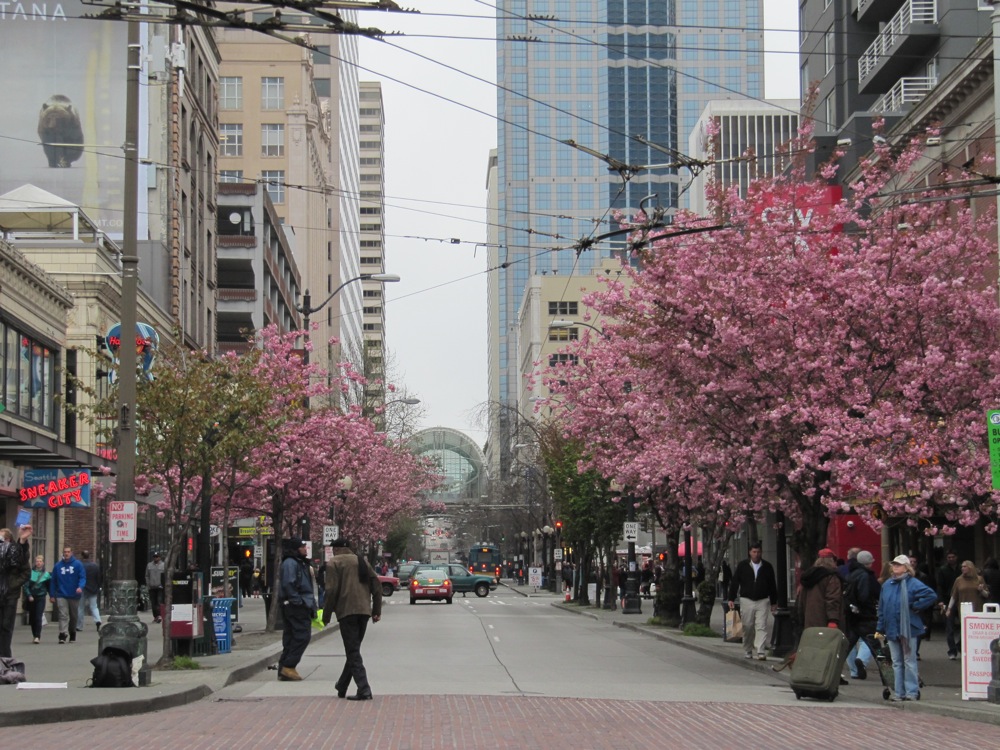
downtown

Downtown Seattle. A far more attractive place than downtown Atlanta, I’m afraid.

downtowncold

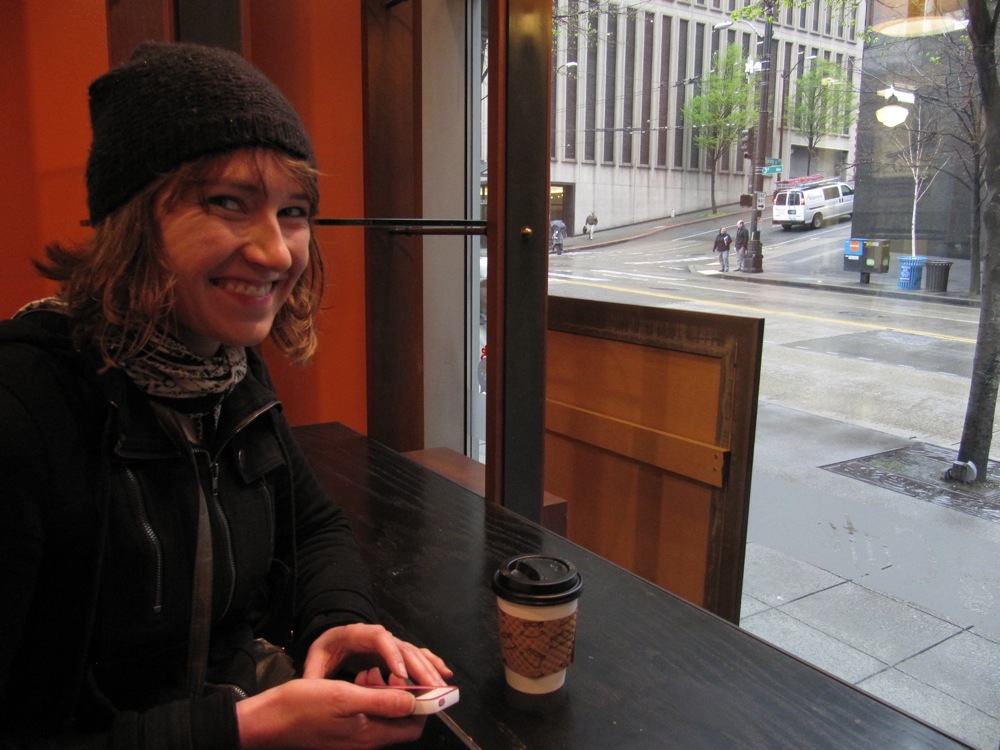
We quickly developed a theory for why Seattle pioneered the coffee shop: so that people had a dry place to warm their hands! We must have stopped for coffee once an hour. Walking around in 40-degree rain for a few hours definitely takes a toll.

downtown lib

In terms of modern libraries, I’m afraid Seattle has got Phoenix beat.

downtown lib1

downtown lib2

downtown lib3

Caroline in a sea of red.

sculpture park2

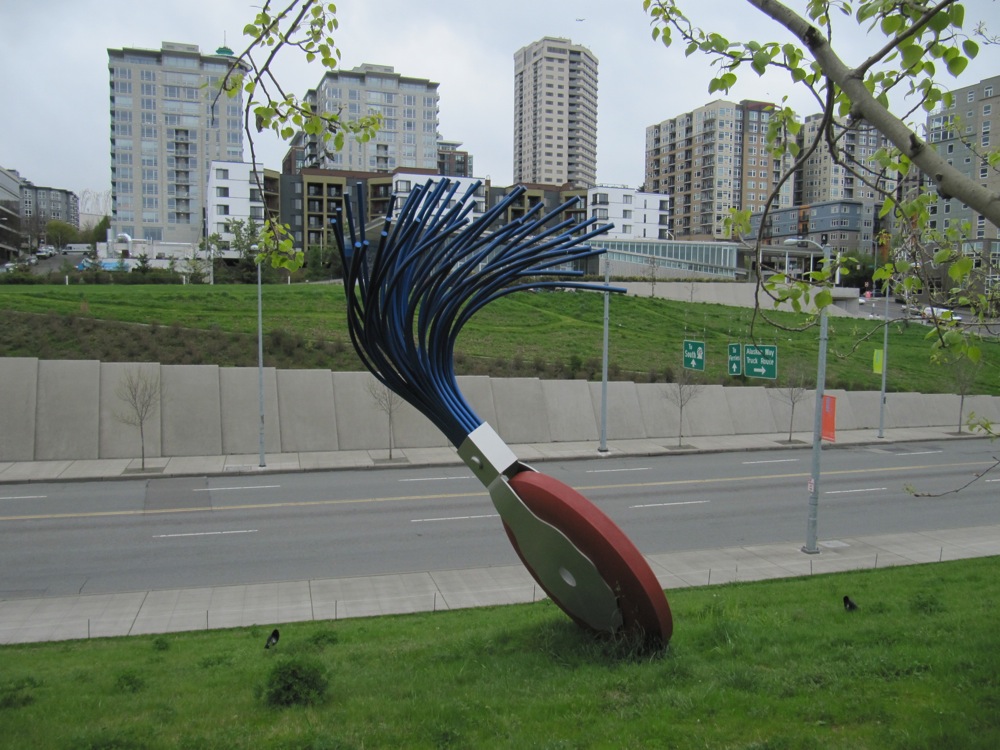
We took a quick wander around Seattle’s sculpture park–another neat attraction, although much less cold-weather-friendly than the market or library!

sculpture park5

sculpture park4

And, last but not least…

south lake union flywheel

…we indulged our addiction to Flywheel’s spin classes at the Seattle branch! We go to this gym often enough in Atlanta, we figured we might as well try it out in another city.

Posted by: Alex MacGregor | April 27, 2013

A Walk Through Worcester

Work recently took me to Central Massachusetts (not quite as exotic is China or Brazil, but there are worse places to end up), and, given my recent post about Boston, I decided to extend the series to Massachusetts’ second largest city: Worcester.

hillside

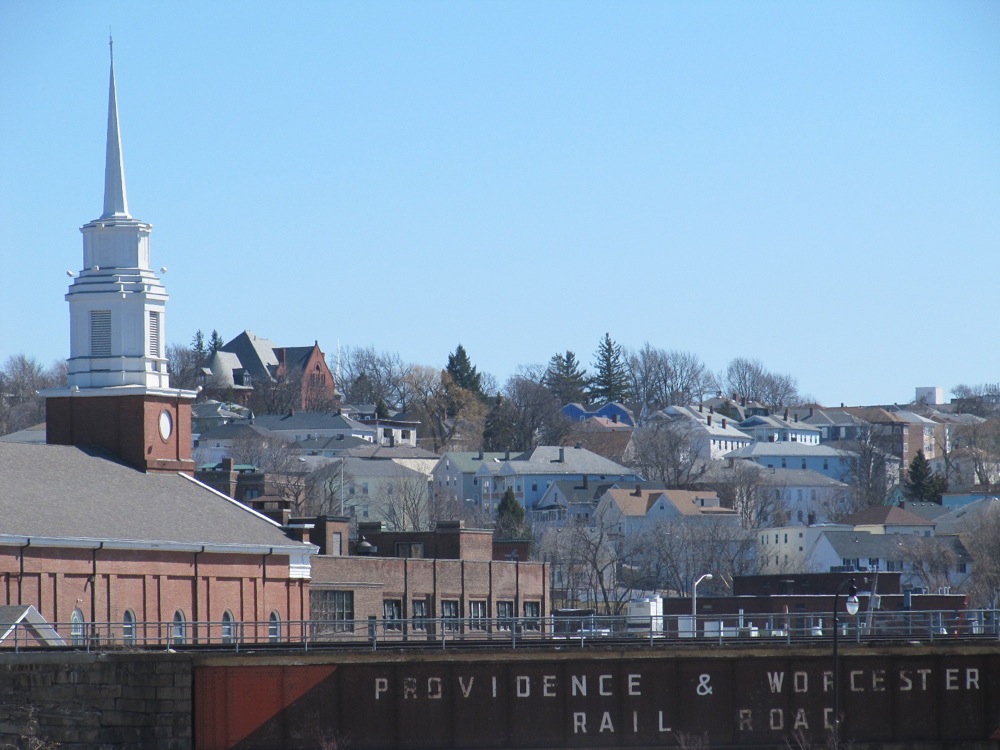
Worcester is a pleasant little place, and I lucked out with a perfectly sunny March day (the wind was brisk and chilled right down to the bone, but at least wind doesn’t ruin pictures!).

worcester common

Like Boston, Worcester is laid out around a central Common that feels distinctly New England. Worcester is kind of like a kid brother to Boston in a lot of ways, and, just an hour away by car or train, is home to a lot of commuters into Boston.

turtle boy

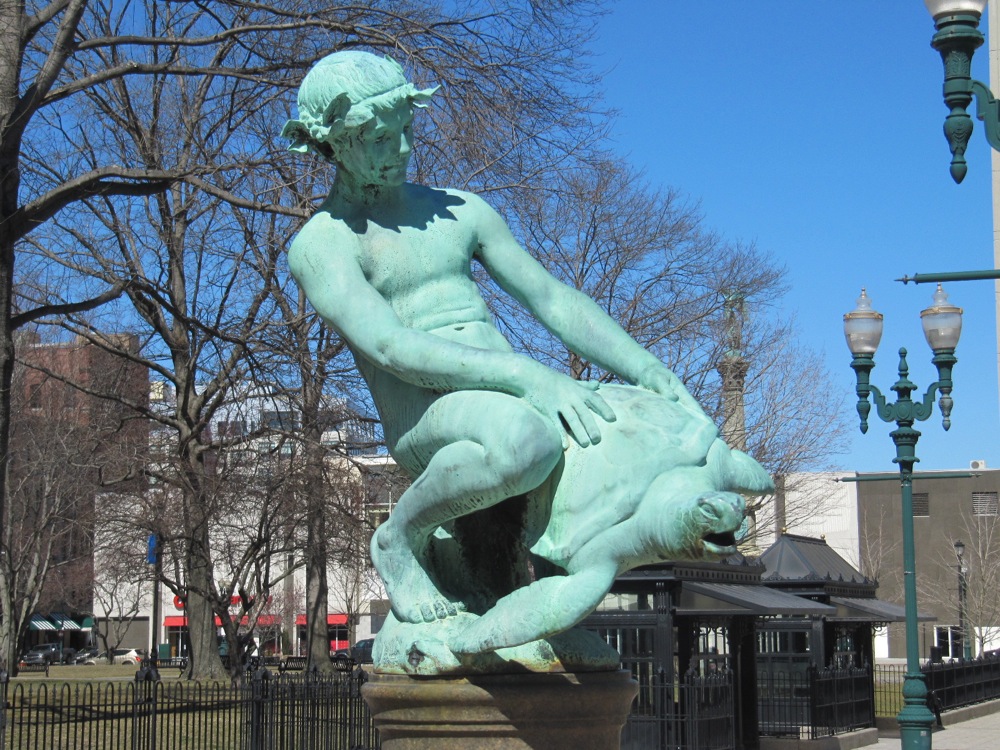
But Worcester does beat Boston–handily–in one category: the most unintentionally inappropriate statue. You can peruse the Wikipedia article on this 100-year old statue for the complete details, but the “Turtle Boy” has earned its share of local celebrity.

Worcester has among the most unintuitive pronunciations of any place I have heard of. To the best of my knowledge, it’s pronounced “wuss-ter”–feel free to chime in if I’m off base here.

central1

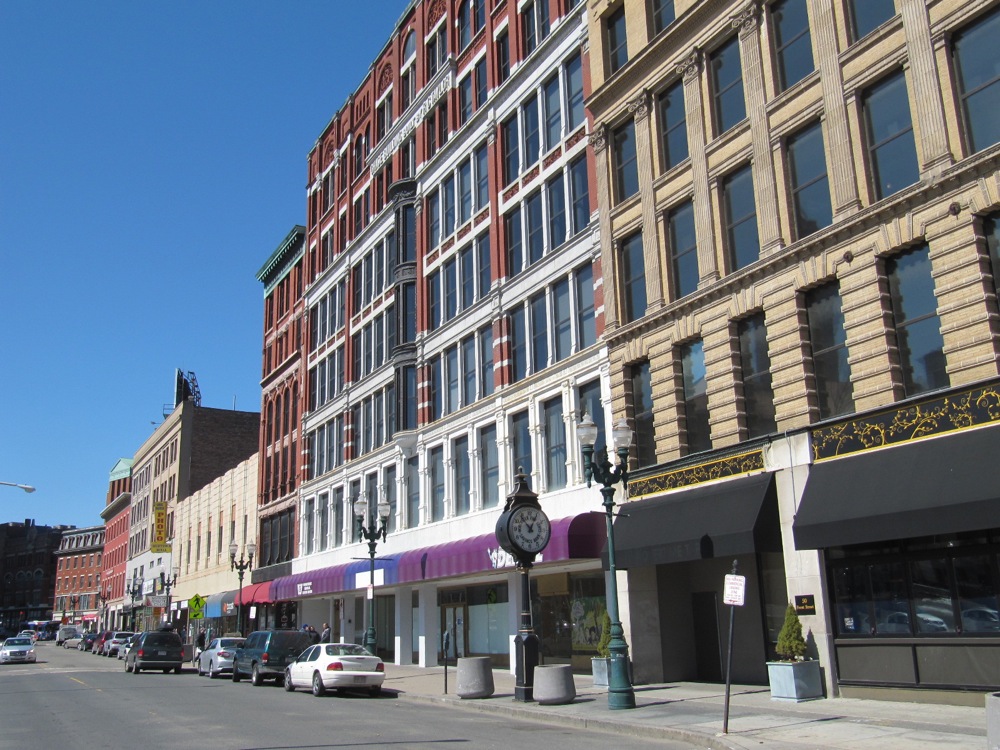
A main shopping street in central Worcester. The city’s growth mainly occurred prior to the automobile, so there is a lot more density downtown than you’d expect in a city of 200,000.

Most of the scene downtown these days is decidedly working class, in stark contrast to Boston.

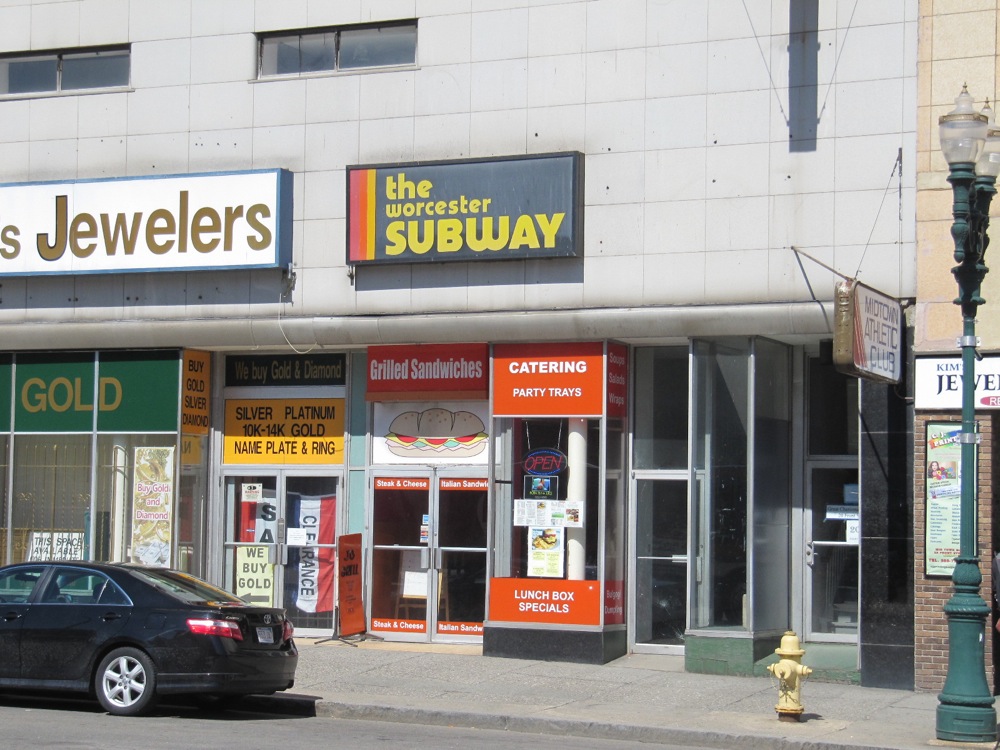
central subway

For instance, any time you’ve got a fake Subway in your neighborhood, you’re definitely not looking at prime commercial real estate. There’s actually something very similar in downtown Atlanta at the corner of Forsyth and MLK–that one even took promotional signs from a real Subway and hangs them on the windows!

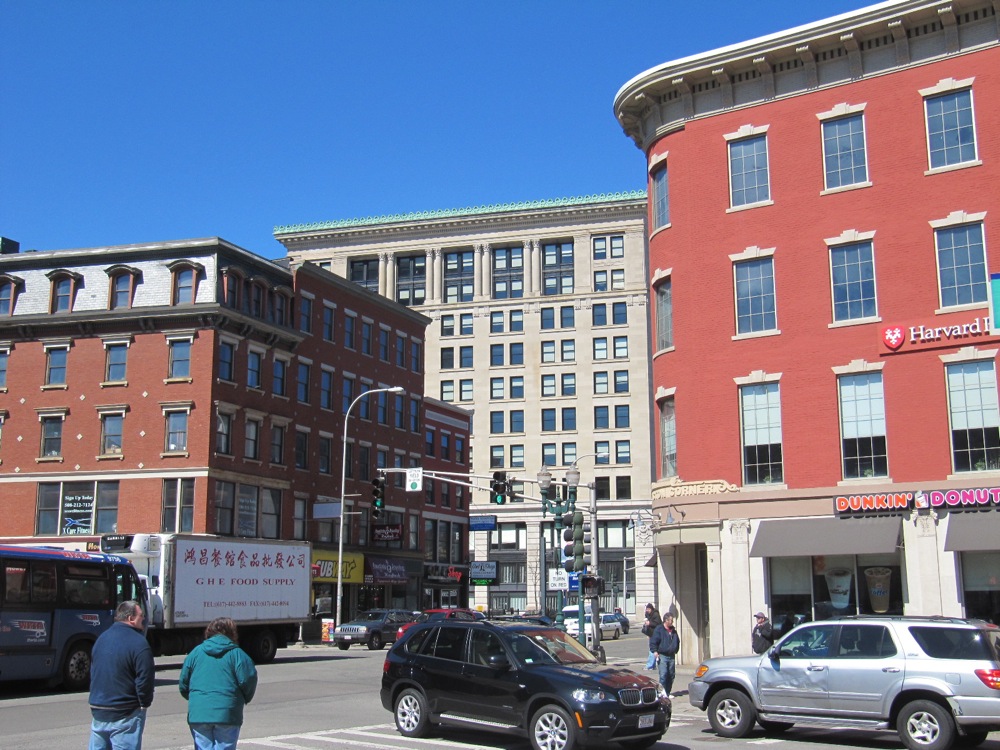
central2

Given the surging cost of living in Boston, Worcester has also become a significant hub for immigrants. According to DHS data, Worcester attracted almost as many immigrants in 2012 as Jacksonville, Florida! Notice the Chinese characters on the side of the truck.

Locals often blame the perceived demise of downtown Worcester (although it still feels pretty bustling and vibrant to me) on the development of a big shopping mall on the east edge of downtown in the 1970s, which allegedly sucked the life out of the main shopping streets, never to return.

old mall

Nowadays, the mall is closed and mostly demolished.

old warehouses

Renovated warehouses a bit further to the east–towards Boston and firmly outside of downtown–appear to house much of the city’s upscale dining and retail now.

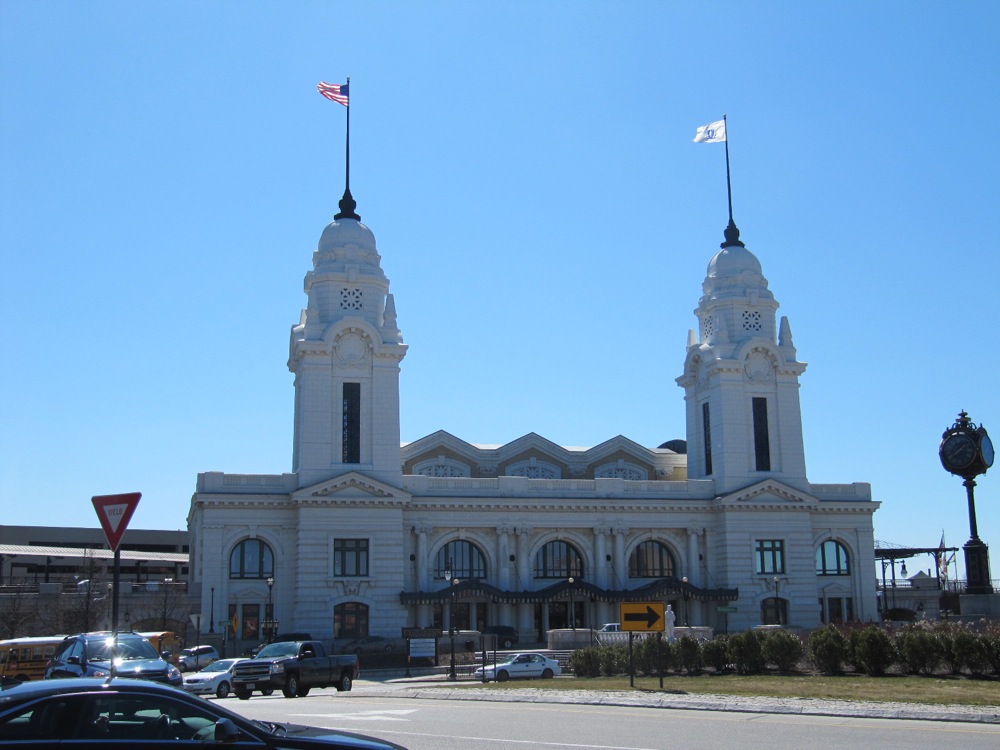
train sta1

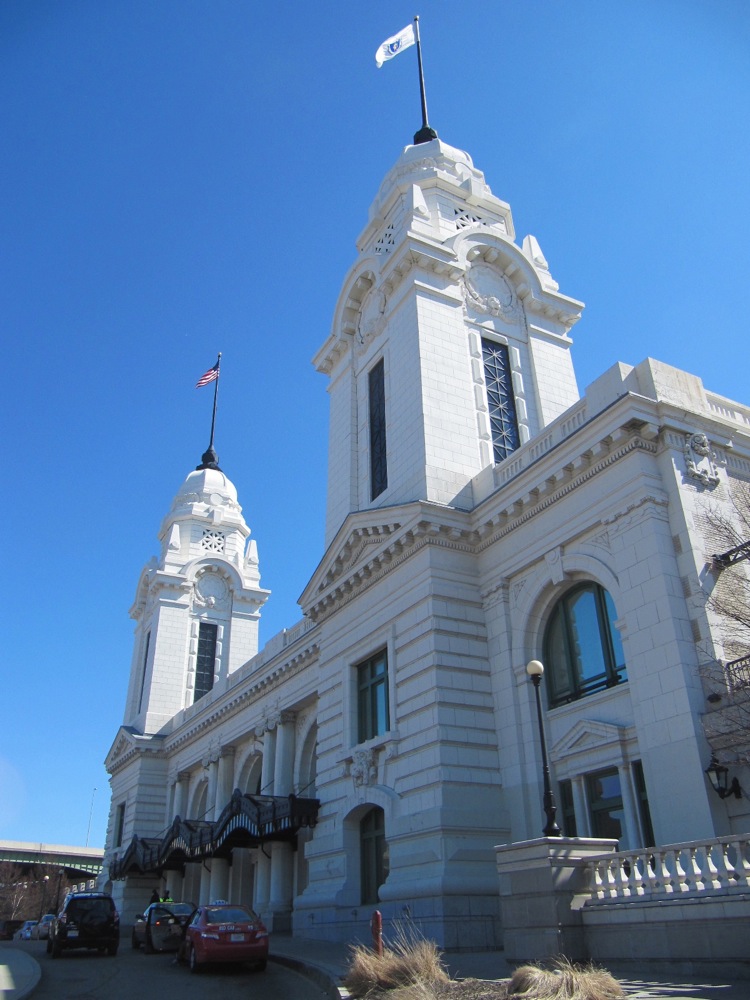
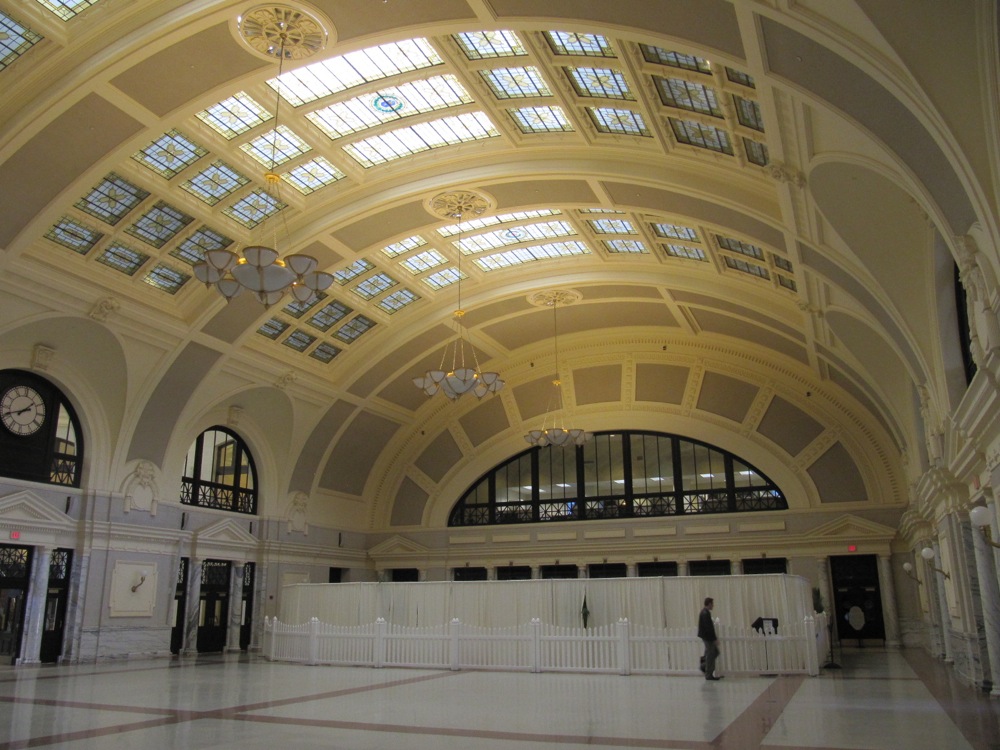
Worcester is definitely a worthy addition to my ever-growing train-station photo collection. Easily among the cities I have seen whose train station is most out of proportion with the current importance of the place.

train sta2

train sta3

Posted by: Alex MacGregor | April 1, 2013

Hazy Hangzhou

Making my towards the place where I was working, I decided to stop off for a night in Hangzhou.

Hangzhou (pronounced “Hong-Joe”) is a great example of a huge city that, in almost any other country, would be pretty well-known globally. But in a huge county like China, Hangzhou doesn’t really stand out.
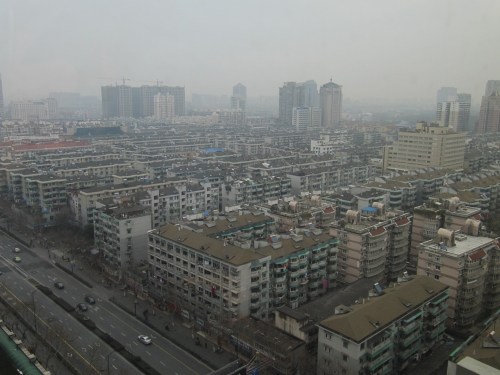
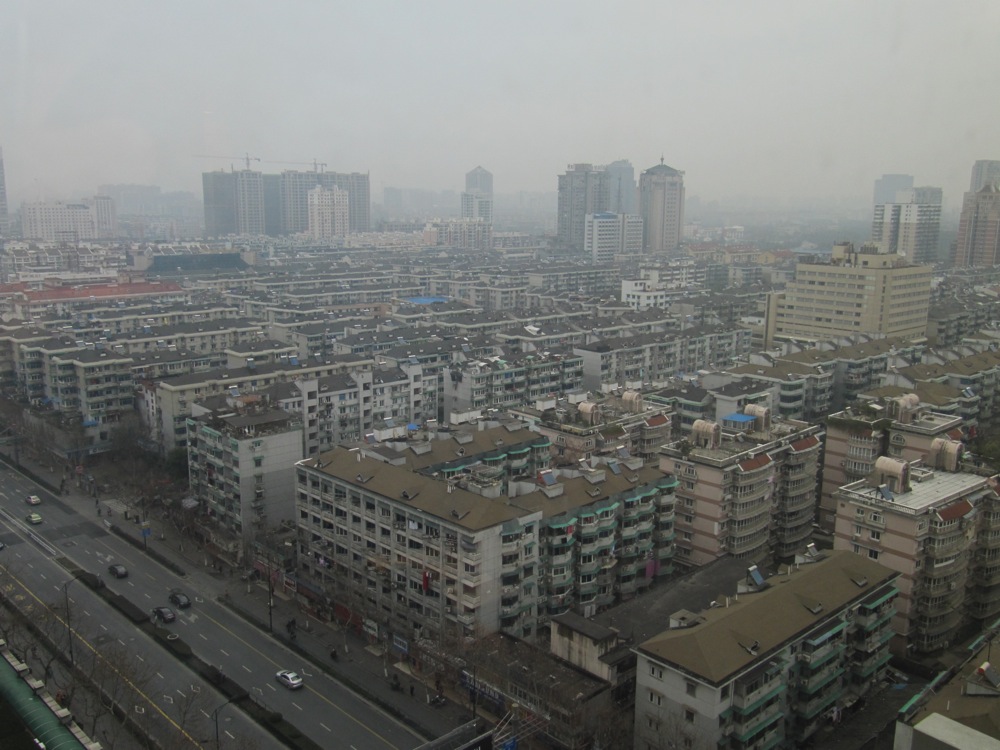
hz view

With about 7 million people, Hangzhou is often the destination for jobs and industries that have been priced out of booming Shanghai. It’s far more working class and less international (read: basically nobody speaks any English).

hz center3

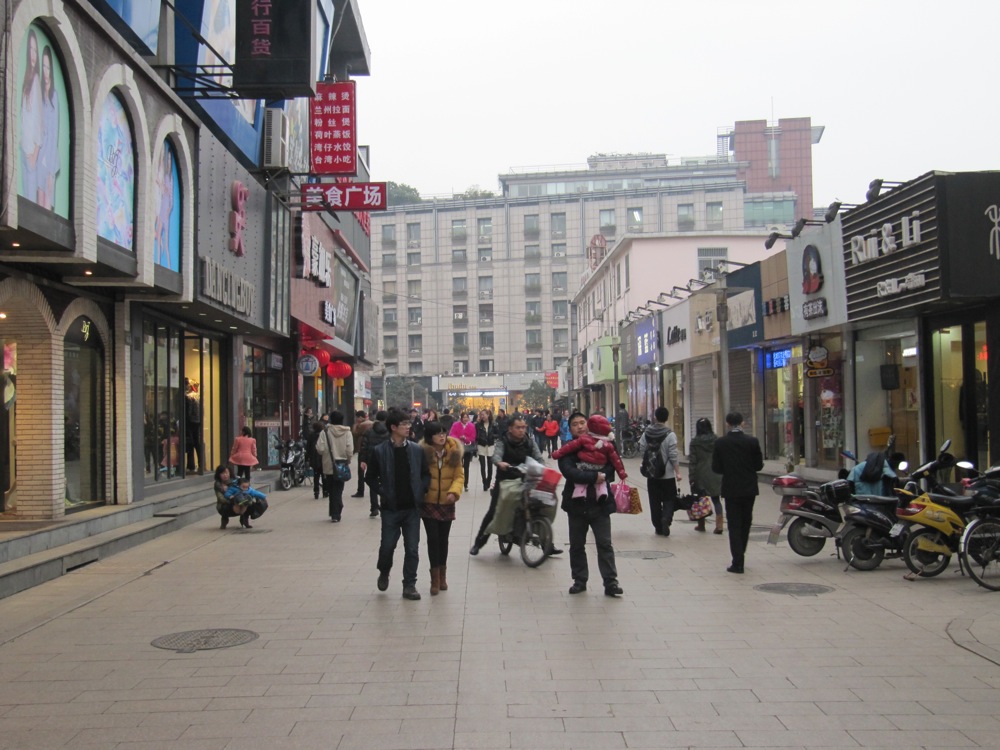
Hangzhou’s city center is clean and pleasant, if lacking in character.
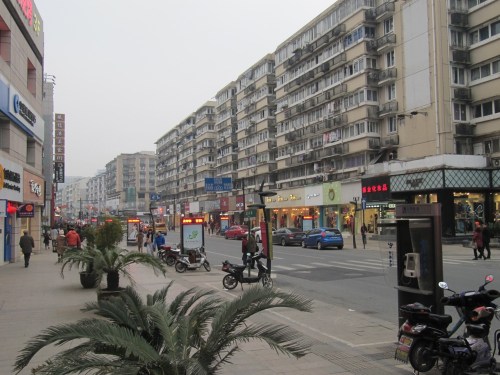
hz center2

hz center

Shops in the center of town.

hz center stores

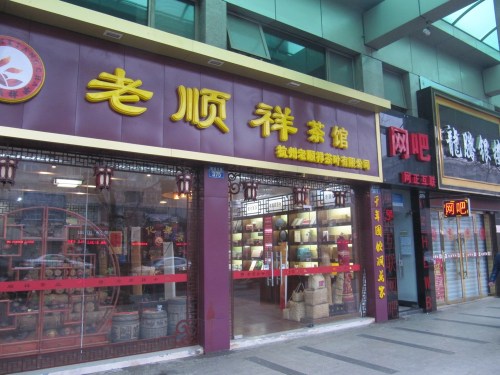
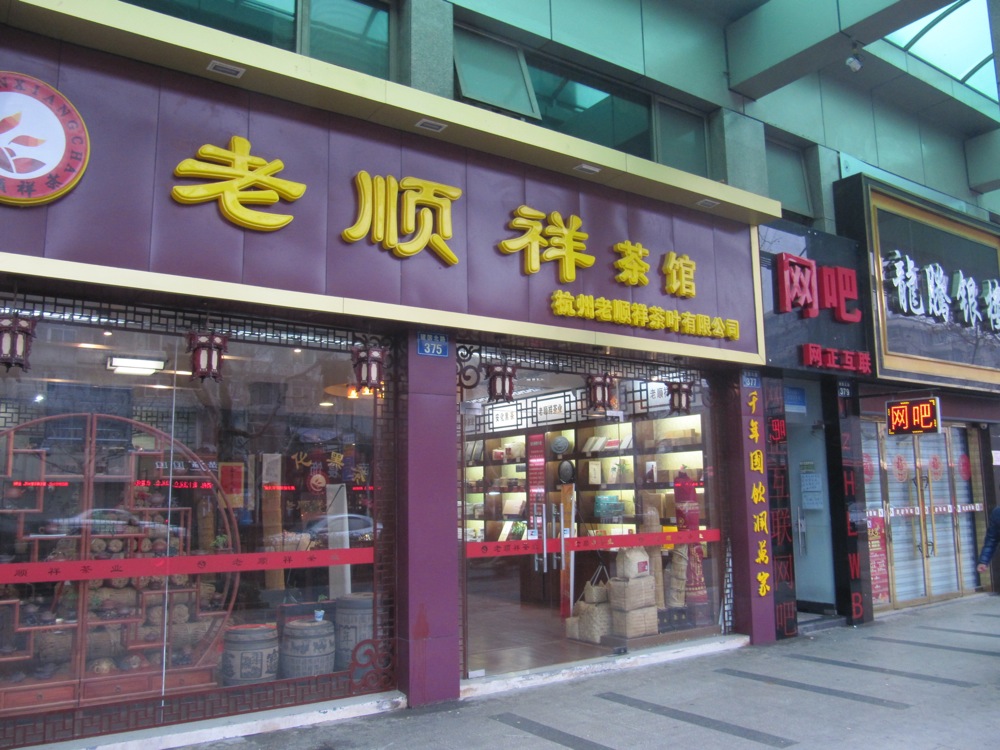
Hangzhou felt a bit isolating to this foreigner. I’ve been to plenty of places where I don’t speak the language, but normally I have some clue as to what a particular business sells at a glance. No so in China. The success rate for a business actually selling something you want is vanishingly small.
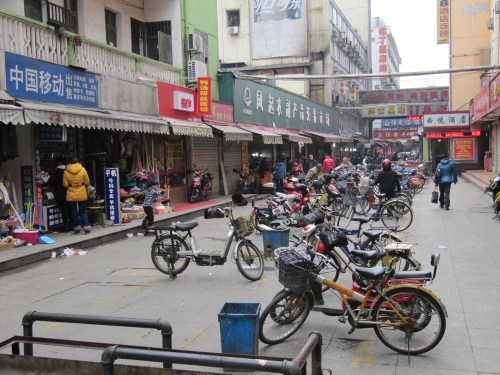
hz market1

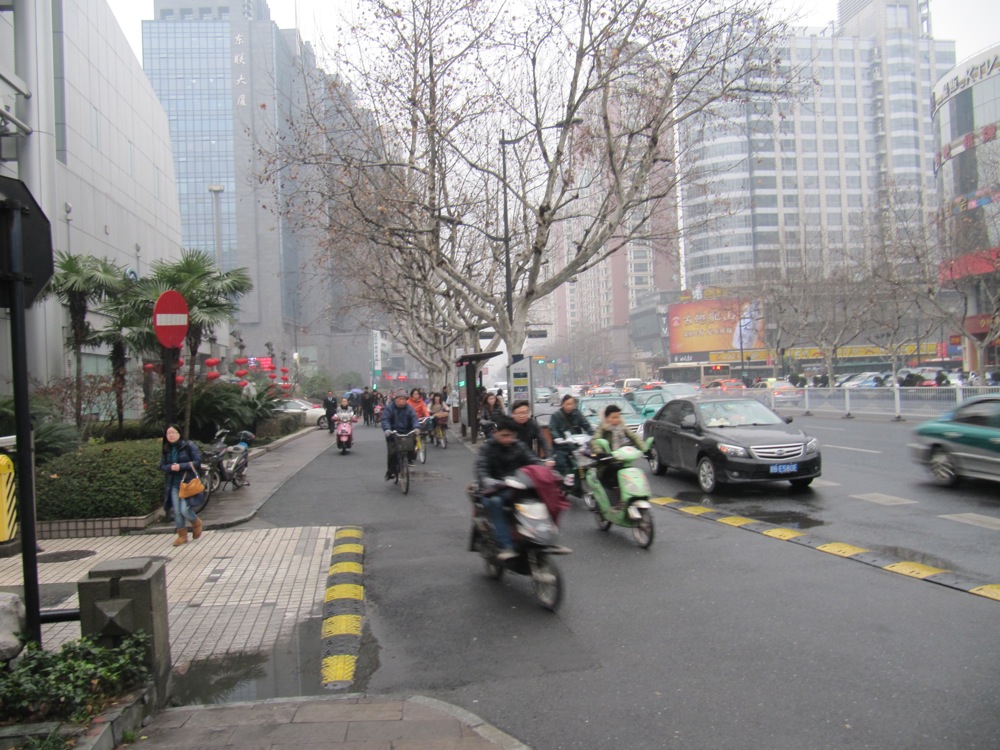
One neat thing about Hangzhou is the prevalence of biking.
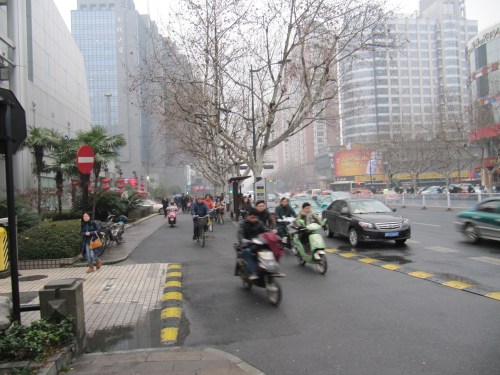
hz center bikes

Bikers and mopeds have their own little road network, which is actually a bit scary to deal with as a pedestrian!
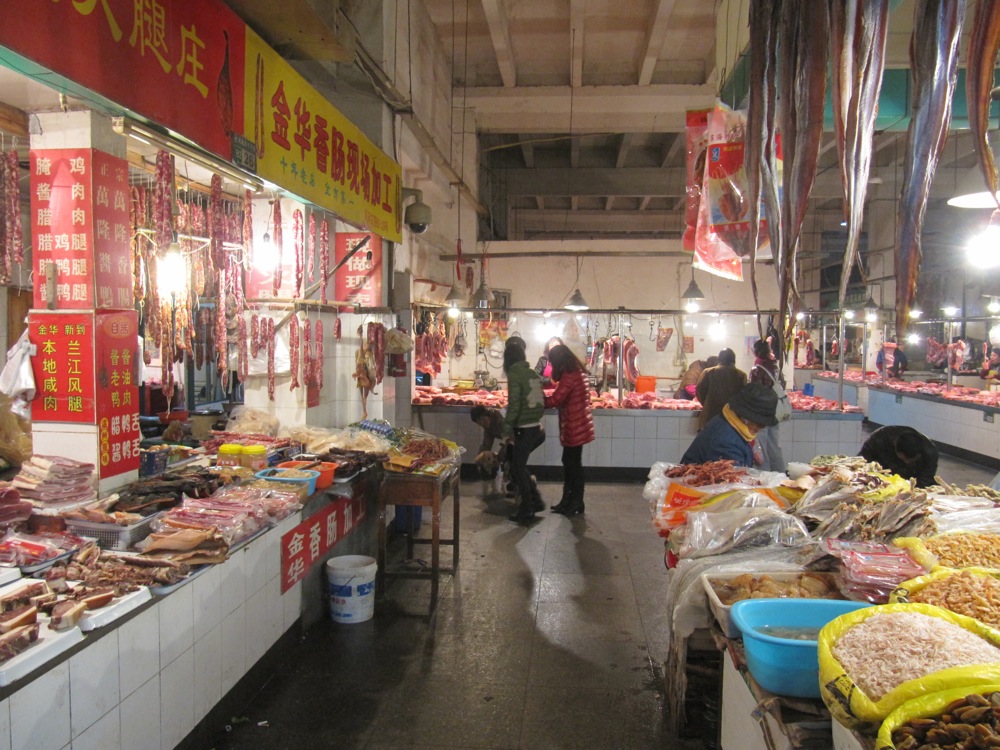
hz market2

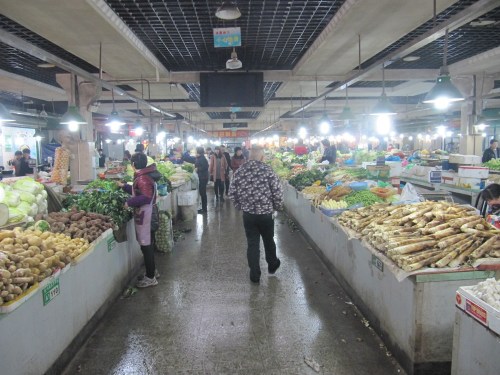
A market across the street from my hotel.

hz market 3

The meat section was a bit much, I must say.

After wandering around and grabbing some lunch, I hopped on a bus to Hangzhou’s premier tourist attraction: West Lake.
hz climb4

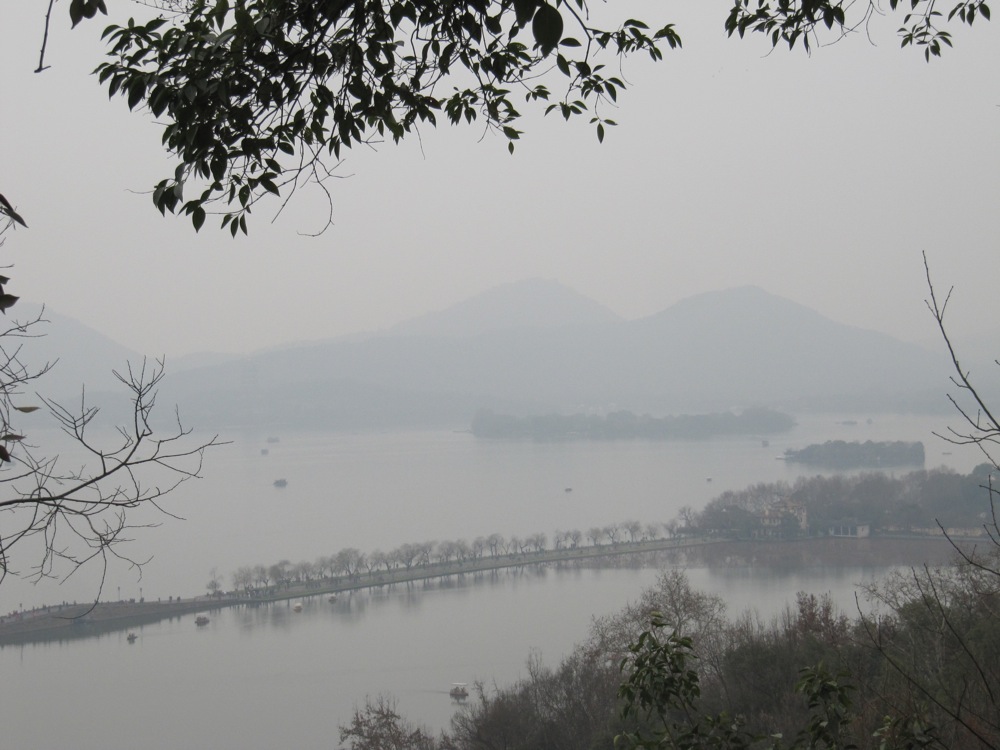
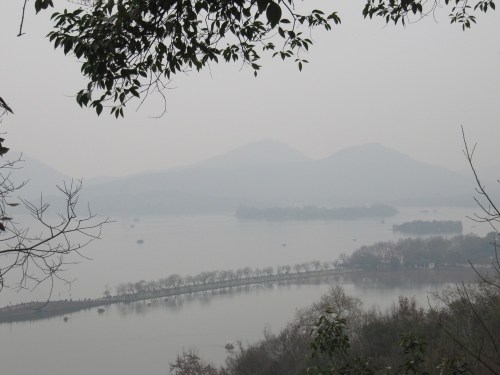
The lake abuts the city’s downtown and is ringed on three sides with pagoda-topped hills. It’s a UNESCO World Heritage Site–in other words, a pretty big deal.
hz wl1

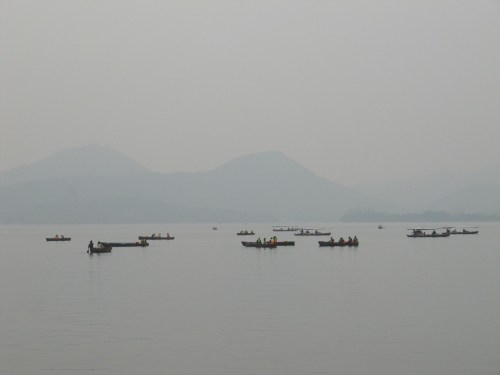
I’m sure it would have been lovely if I could actually have seen it. Instead, a haze reminiscent of Lake Tana in Ethiopia shrouded everything.

hz wl4

Given the lack of sweeping vistas the lake is known for, I had to mainly just enjoy the ambiance.

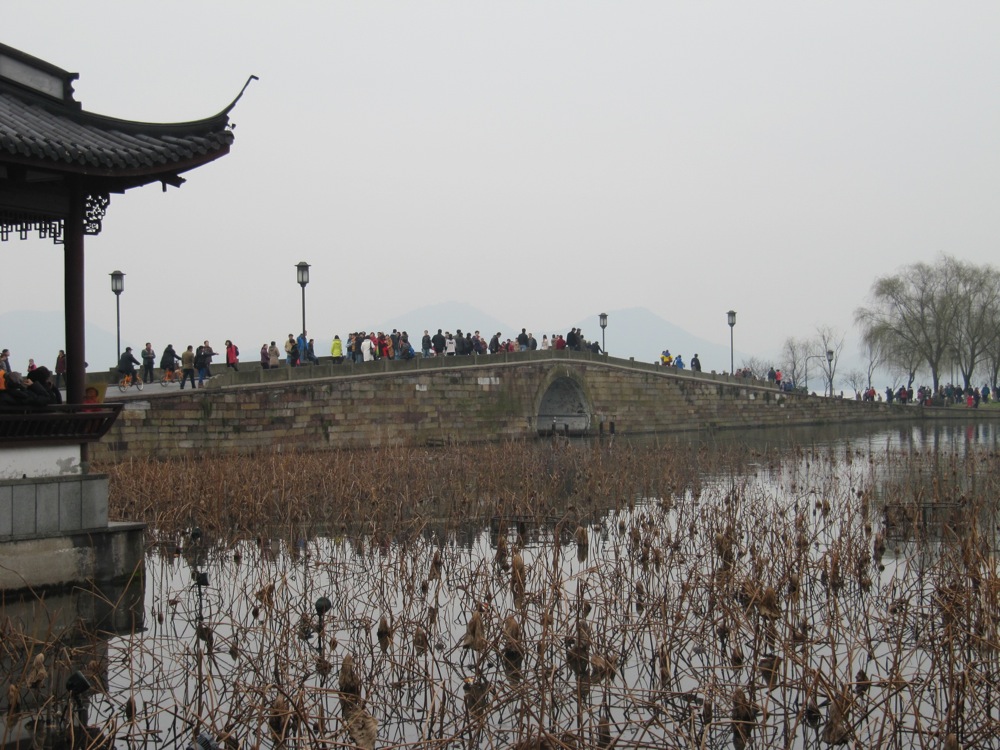
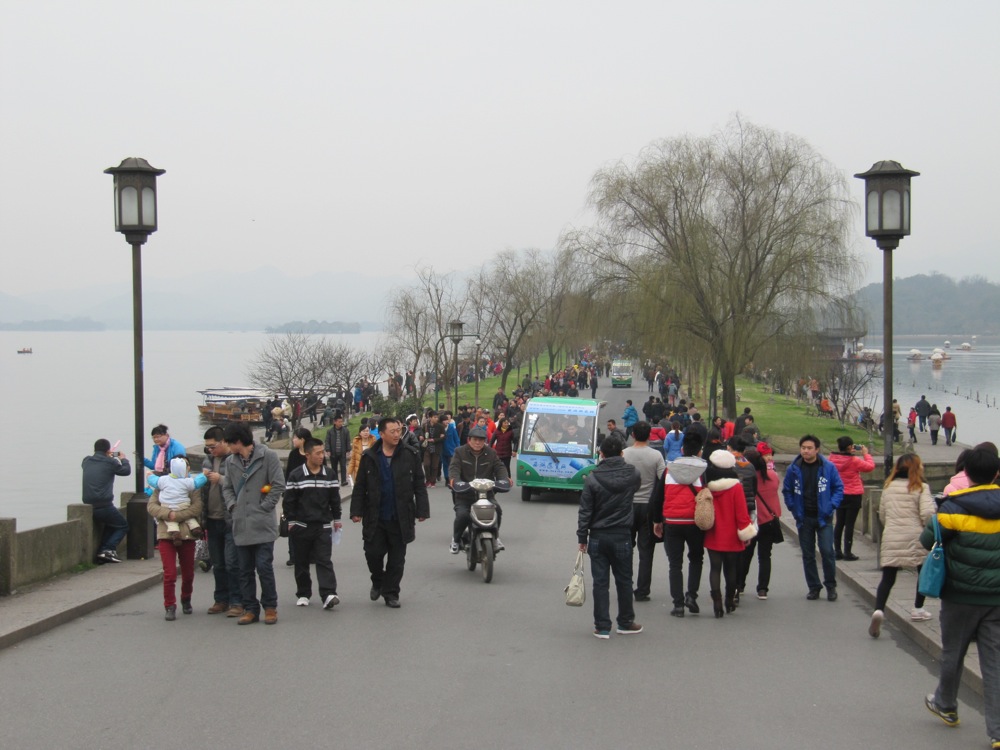
hz wl3

hz wl2

I was still on the tail end of the Chinese New Year holiday and thus the place was mobbed by Chinese tourists. A nice enough place to walk around, but given the fog and crowds I decided it might be more pleasant to head up the nearest hill and try to stumble upon some temples and pagodas.
hz climb5

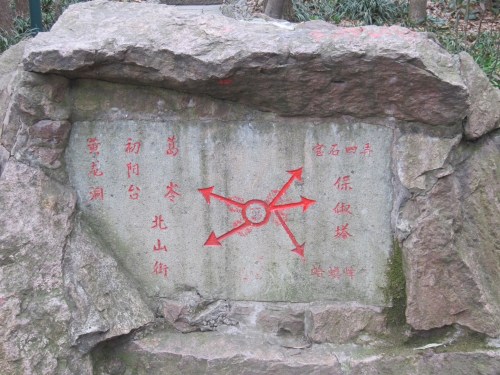
Stumbling upon stuff is more of a necessity than a choice. These signposts don’t really throw foreigners a bone (although occasionally a fork in the road would have an English sign, too).

hz climb1

The lower part of the trail had a bunch of stalls selling basic stuff. No hassle whatsoever, in stark contrast to so many places we have visited before. There was an exotic quality to the place that made these among the better knick-knack and  snack stalls I’ve seen.
hz climb2

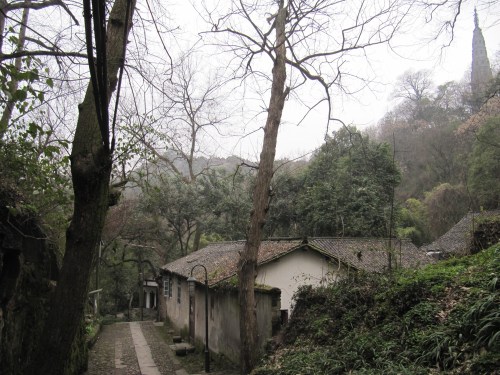
The first pagoda comes into view, in the upper right.

hz climb3

The pagoda was fenced-off and thus not quite so stimulating. Sort of a “Well, I guess this is it!” kind of place.

hz climb6

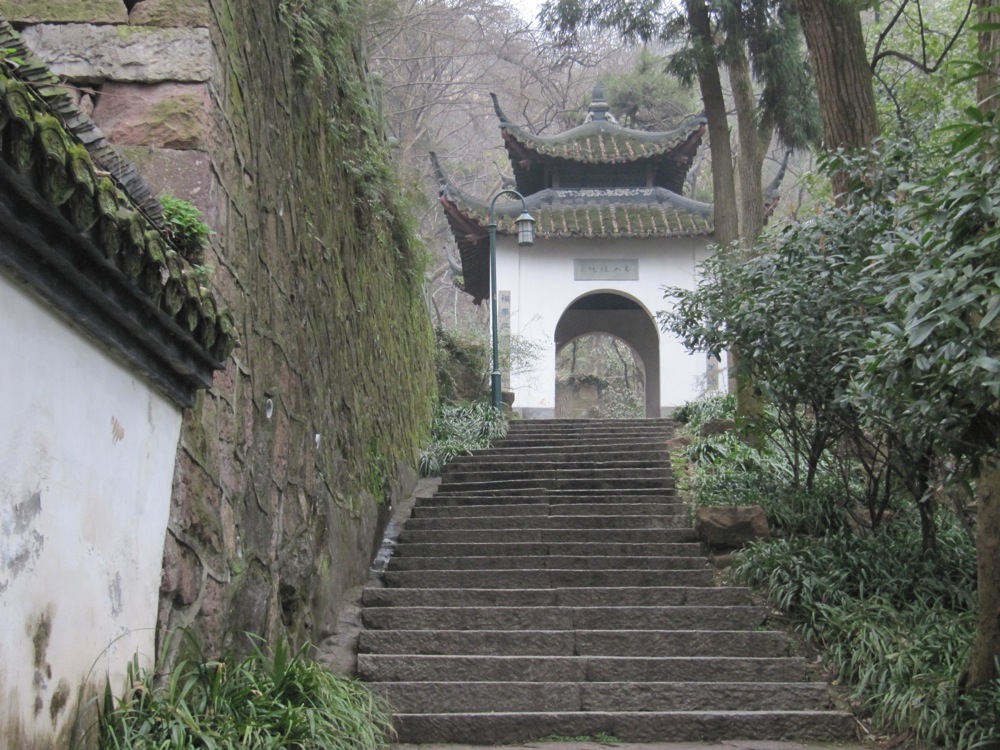
Most of the interest to me was just wandering around in the picturesque hill, which definitely has an enchanting feel in the haze.

I noticed, eventually, that lots of signposts were pointing towards the Baopu Taoist Temple, so I decided it must be worth seeing. After another period of wandering around on the mountain, I finally found it:

hz temple

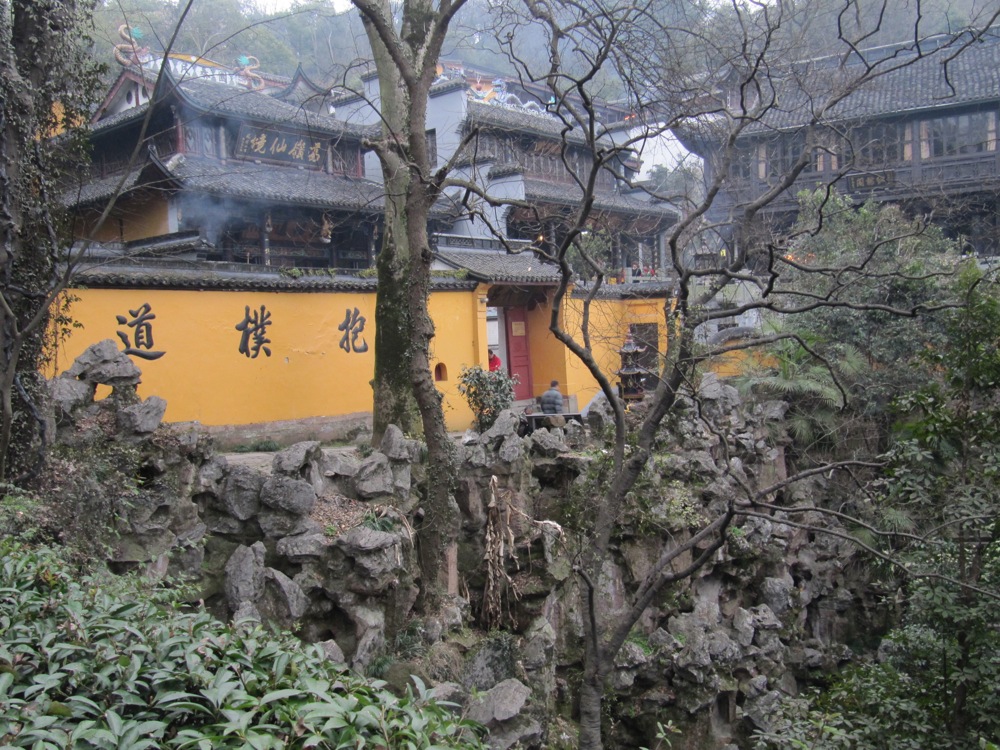
Built into a limestone hillside and only reachable by foot, this was much more worth the hike than the pagoda (although less-visited).

hz temple3

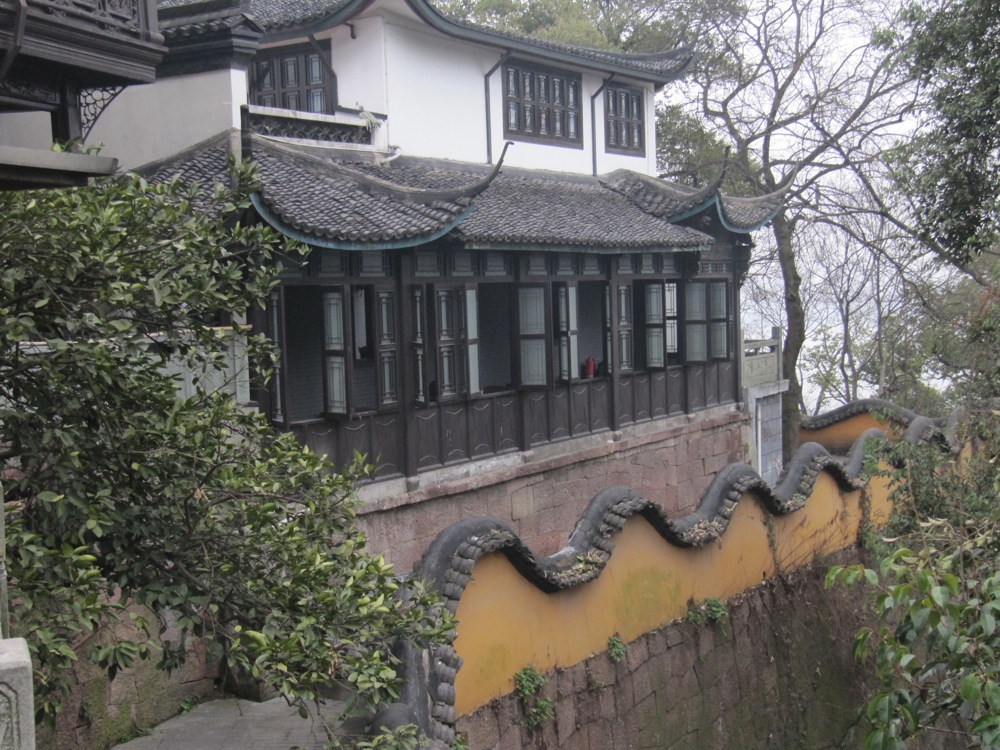
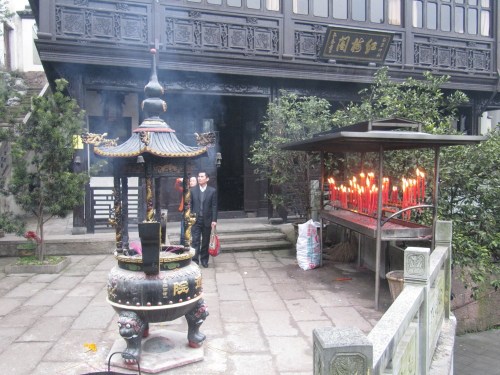
I took a few minutes to wander around and enjoy the distinctive Chinese architecture.

The place is very old, like lots of stuff in China. But despite being very old, nothing in China seems to be tied to an exact date: this was originally built about 1,000-1,500 years ago and rebuilt roughly 400-600 years ago. So, yeah, we’ll just say the temple is old and leave it at that.
hz temple2

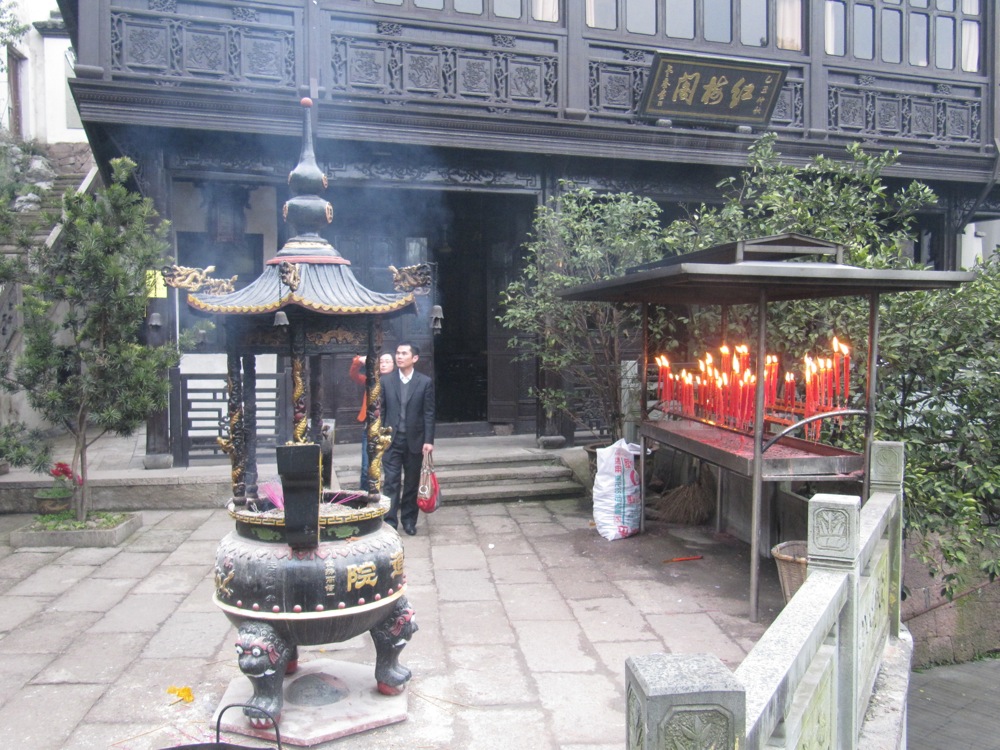
No photography was allowed inside the temple, and I decided to respect the rule (I find the more unfamiliar I am with the culture, the more likely I am to obey “no photography” signs). But the outside was very pleasant.

Unfortunately, as I was wandering around it started to rain. Being a 20 minute walk from the road with just a mediocre rain jacket, I found the rain worrying enough that I didn’t linger long at the temple. The rain was pretty light, although it has the tendency to get bad and stay that way for hours; I didn’t want to risk it.
hz wl5

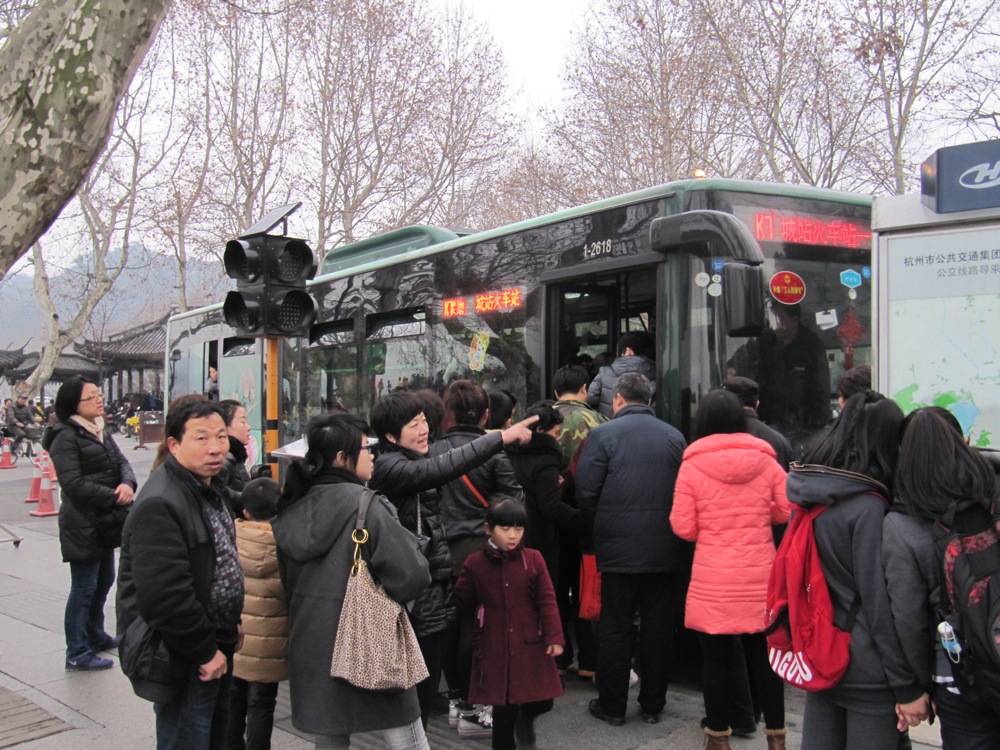
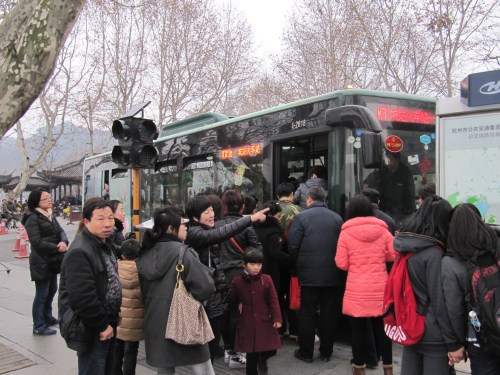
Once at the road, I realized I was in a predicament. The throngs of tourists were also worrying about the rain, and scrambling to get any sort of transport they could. Buses, taxis–everything was completely jam-packed going in the direction of downtown, and that was before they arrived at the hordes of which I was a part.

I just decided to walk back to the city center in the rain and grab a bus to my hotel from there.

One thing that started to settle in during my time in Hangzhou was the reality of Chinese food. Shanghai was pretty westernized and thus not so bad; Hangzhou was much more difficult to navigate as a foreigner.
hz food1

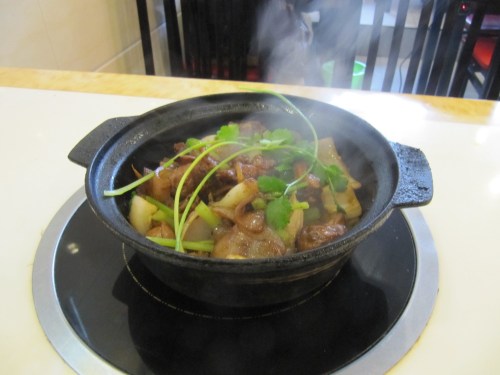
My first meal in Hangzhou was this beef (I think) in a zesty sauce. I could do without the bones, but it was actually pretty good. I just went into a restaurant and pointed at something someone else was having; this “hot pot” was given to me.

The second place I went was another matter entirely. I walked for at least half an hour, going in all different directions from the hotel until I would lose hope and chose another direction (I was quite tired of walking by this point), and finally stumbled upon a quasi-modern looking place with a chicken in its logo, a sign in English that said “Over 100 Locations in China”, and mainly a younger clientele inside. I figured this must be something passable.

hz food2

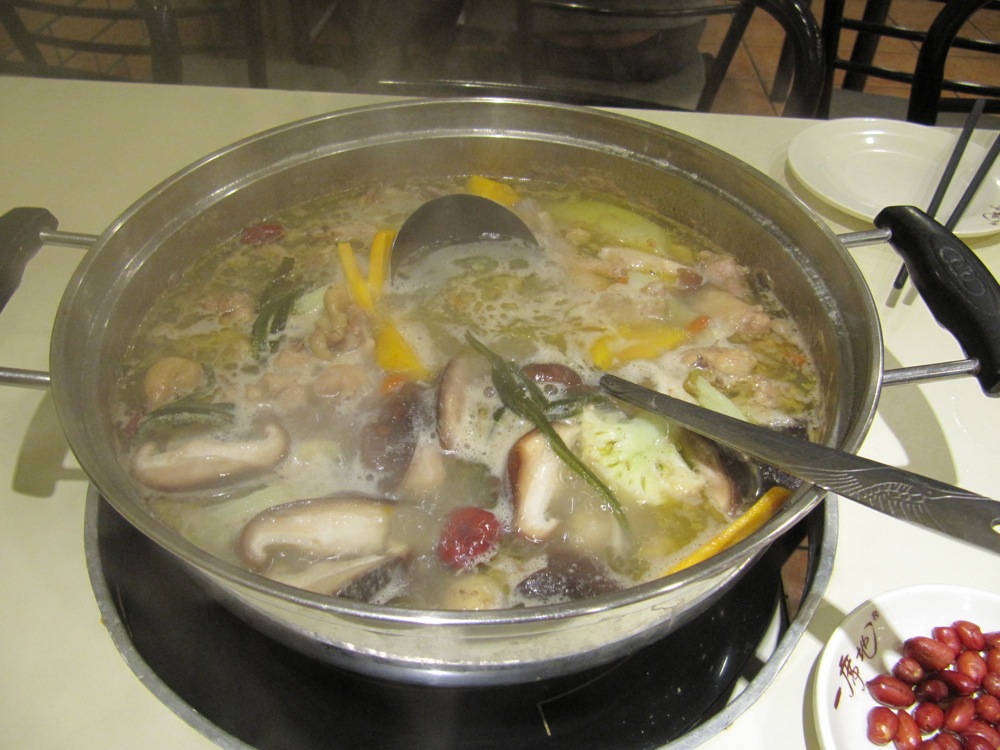
Not so. Basically you are given a bowl of semi-murky water that is brought to a boil, then they bring a raw whole chicken that has been (rather crudely) chopped into bits and dump it in the water. Then you order vegetables and they bring them to you and you cook them yourself in the boiling chicken-mixture.

The vegetables were the only part I really found edible. The chicken was extremely difficult to eat (I’m not talking about drumsticks and breasts, folks), and completely without flavor. And seeing the chicken feet float around in the soup wasn’t very appealing. Some people I asked later about it told me they should have brought seasoning for me to add to the chicken-mixture; but alas, they did not.

I left wishing I had just stopped at one of the many KFCs around town.

Posted by: Alex MacGregor | March 25, 2013

Shanghai’s Less Glittery Side

My last post probably gave the impression that Shanghai is a glitzy, modern place. But, on the whole, that’s just not true. These pictures are more typical of Shanghai:

o typical2

o typical4

The fruit vendors contend even with the Albanians in terms of fruit selection.

o historic1

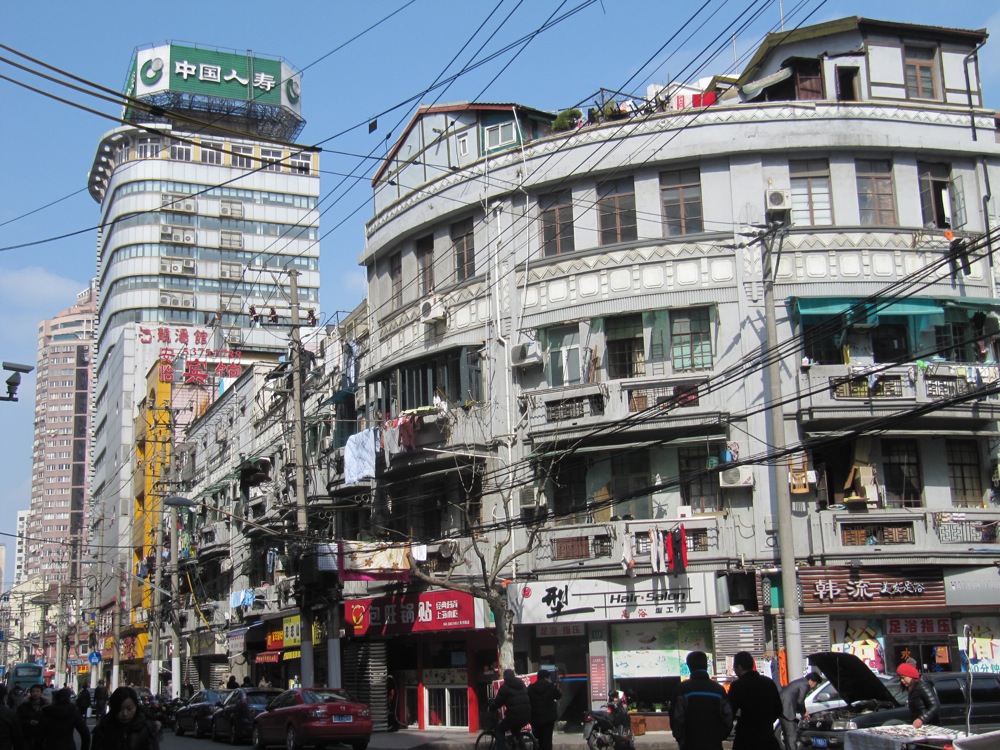
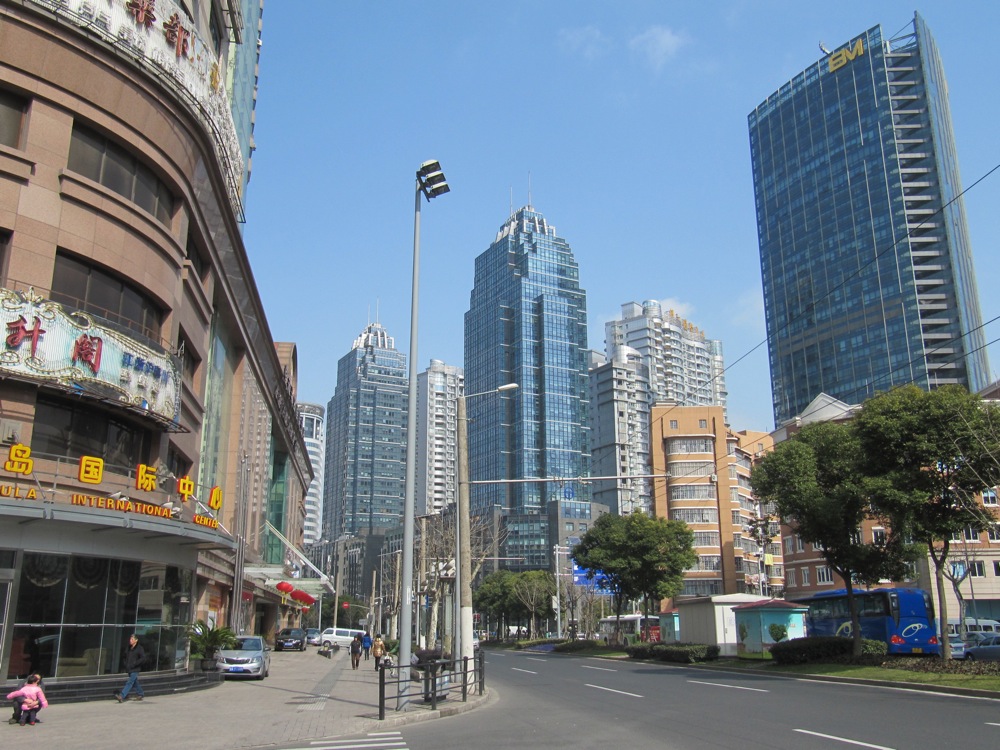
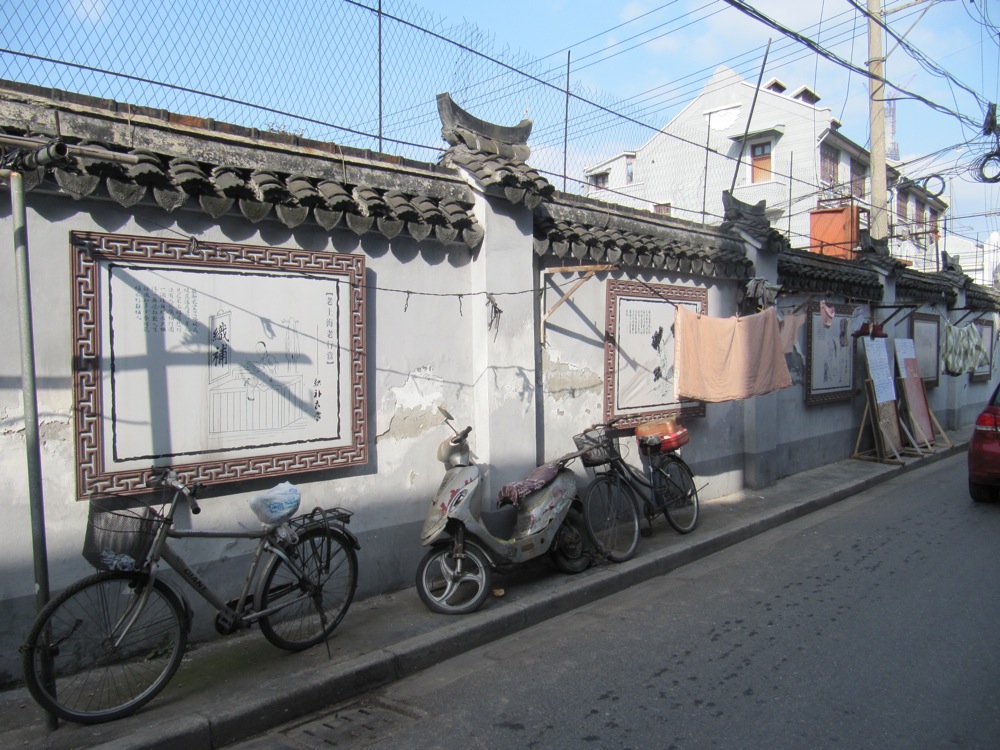
Just a couple blocks away from the relentless modernity of Nanjing Road, historic buildings function as basic housing.

o typical1

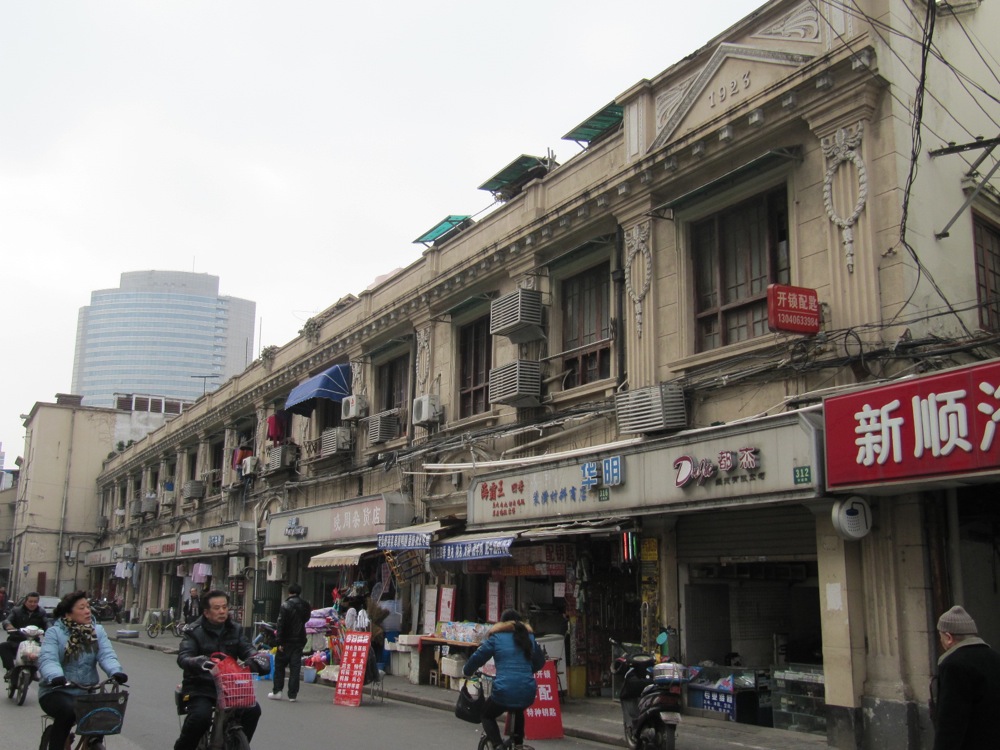
A typical street in Shanghai.

Even where the city isn’t attractive, it’s never dirty. Streets are kept meticulously clean of trash. At one point, I was walking along the street and the shell of a nut caught my attention for some reason. As I looked at it, a trash picker came into view and snatched the shell before my eyes. Can you spot even one piece of trash on the ground in any of these pictures?

o typical alley2

o typical alley

Shanghai’s millions of migrant workers live in tenements like these, which can be accessed only by networks of alleyways.

o typical alley near

These gleaming skyscrapers are just blocks from such tenements. It’s easy to get the feeling that the days are numbered for many of these tenement districts.

o typical alley4

o typical alley3

To me, these areas were the most interesting and unique places to wander around in the city. China isn’t like Latin America, where each house is a mini-fortress, protecting against the brutal culture of violent crime that has developed there. Houses are less closed off here, and interesting scenes seem to be around every corner.

o mus1

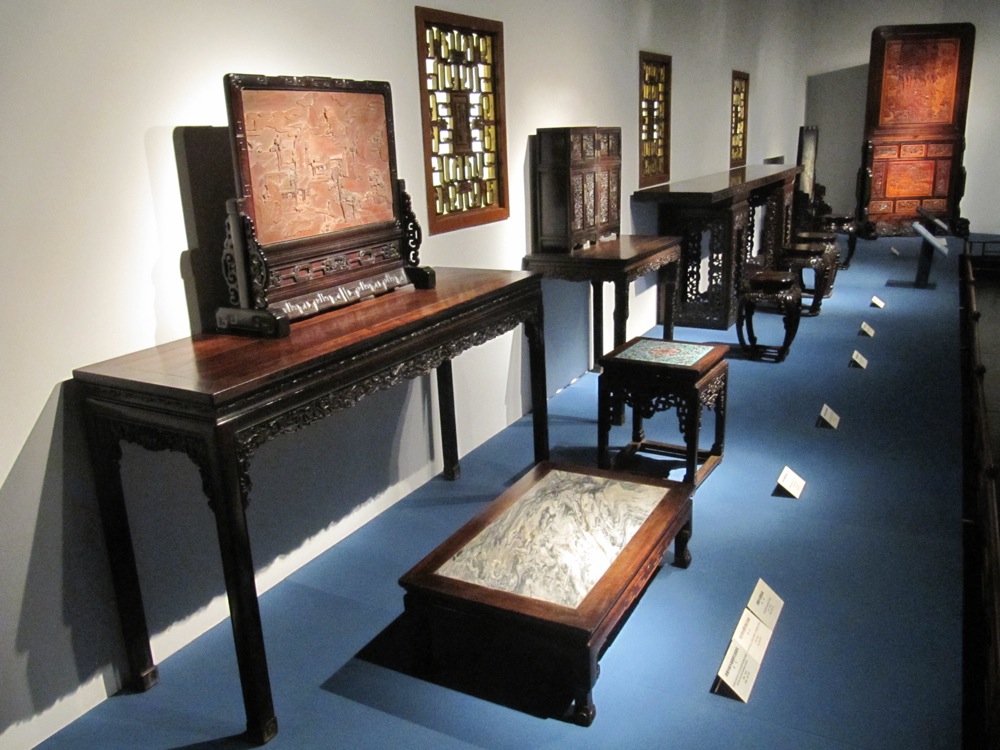
I spent a couple hours wandering around Shanghai’s (free) history museum. The collection of artifacts from Chinese history is simply incredible.

o mus furn

o mus carvings2

o mus coins

o mus carvings

o mus pottery

o mus statues

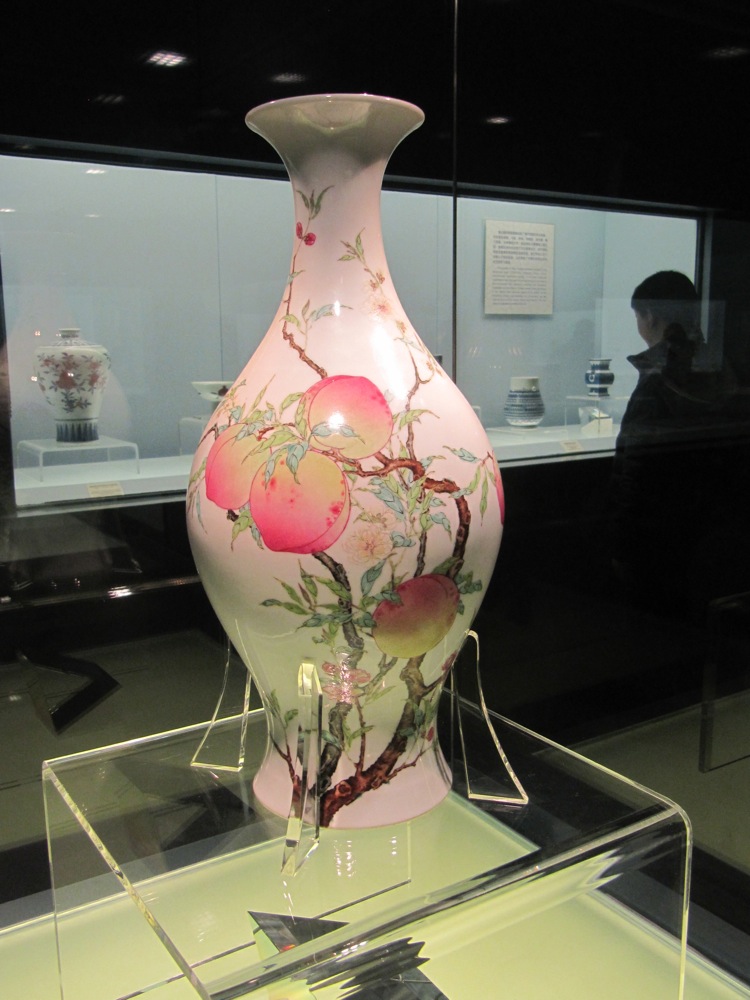
What impressed me the most about the museum was the age of everything.

o mus old

For instance, this carving is 2,000 years old! Everything–whether pottery, currency, furniture, you name it–was far older than I would have expected. That speaks to China’s extremely rich and long history, I suppose.

China may be a culture with a long and storied history, but you wouldn’t guess it from the architecture throughout Shanghai. There isn’t much in the way of traditional Chinese buildings. And, as I said in the last post, most of the old architecture in the central parts of town is European-built and -styled: not the sort of thing that speaks highly of Chinese history.

Much of the historic architecture in Shanghai has gone the way of the wrecking ball over the generations.

o wall temple 1

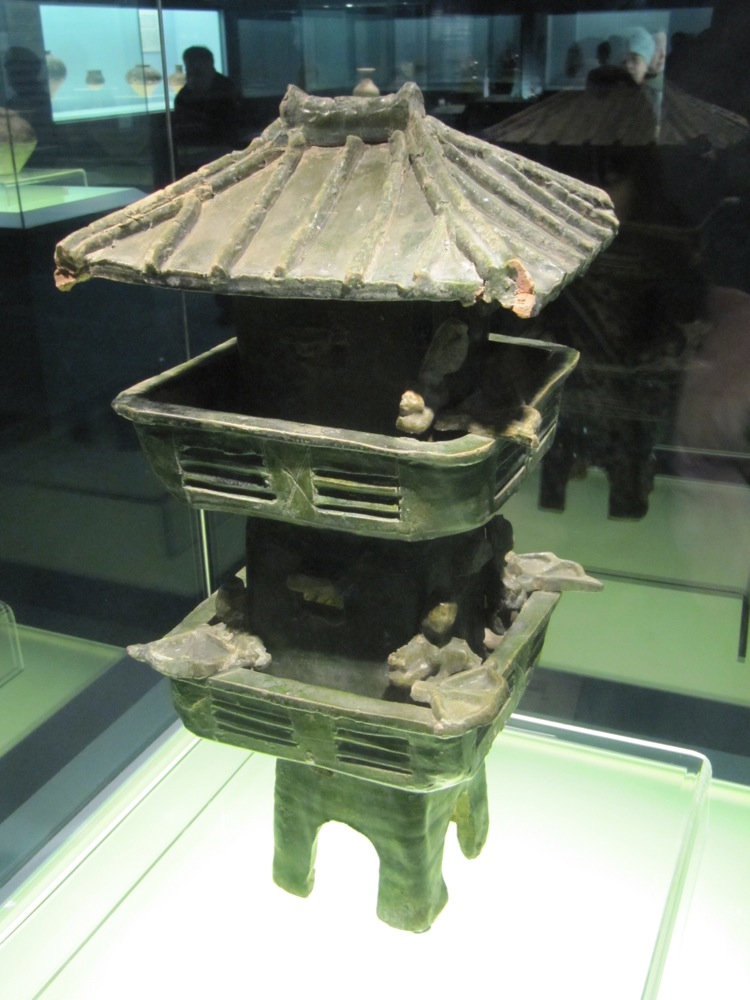
There are some notable exceptions, however. This was a lookout post on part of the old city’s network of fortifications. Now, it’s the only part of the walls that remains.

o wall temple 2

The traditional architecture contrasts with the glass skyscrapers all around (and with ever more under construction). I was firmly off the gringo trail at this point (read: no information whatsoever was in English), so I can’t offer too much in the way of detail.

o wall temple 3

o wall temple 4

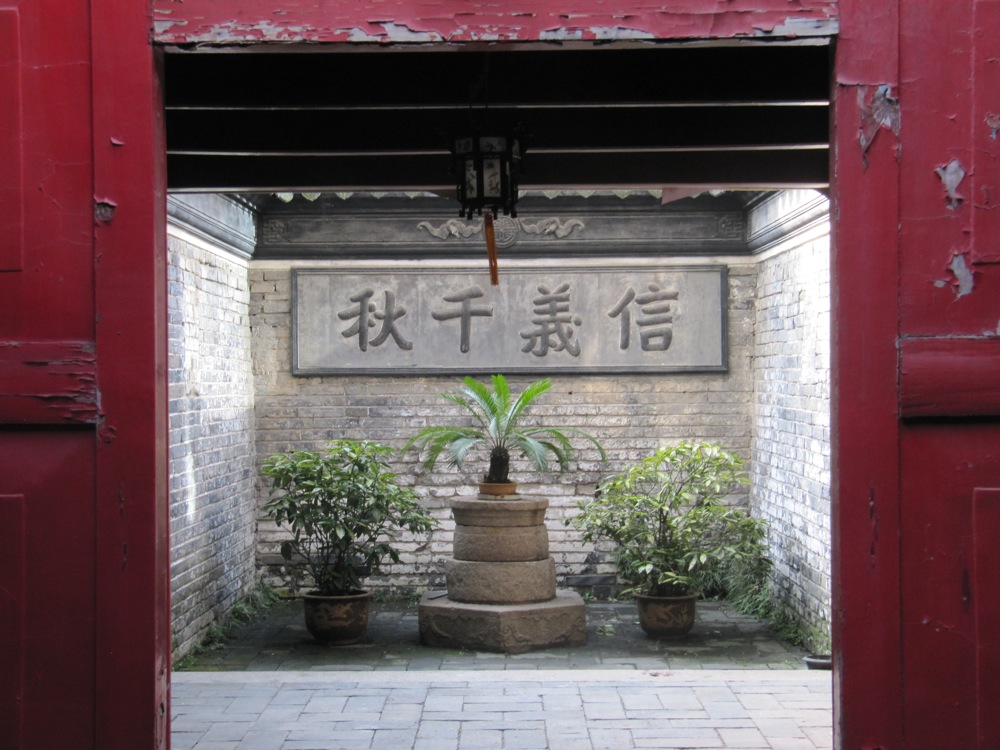
Inside the building it feels like a different world from the hustle and bustle outside. Especially since the 5 yuan entry fee holds the flow of visitors to a bare minimum.

o hunan2

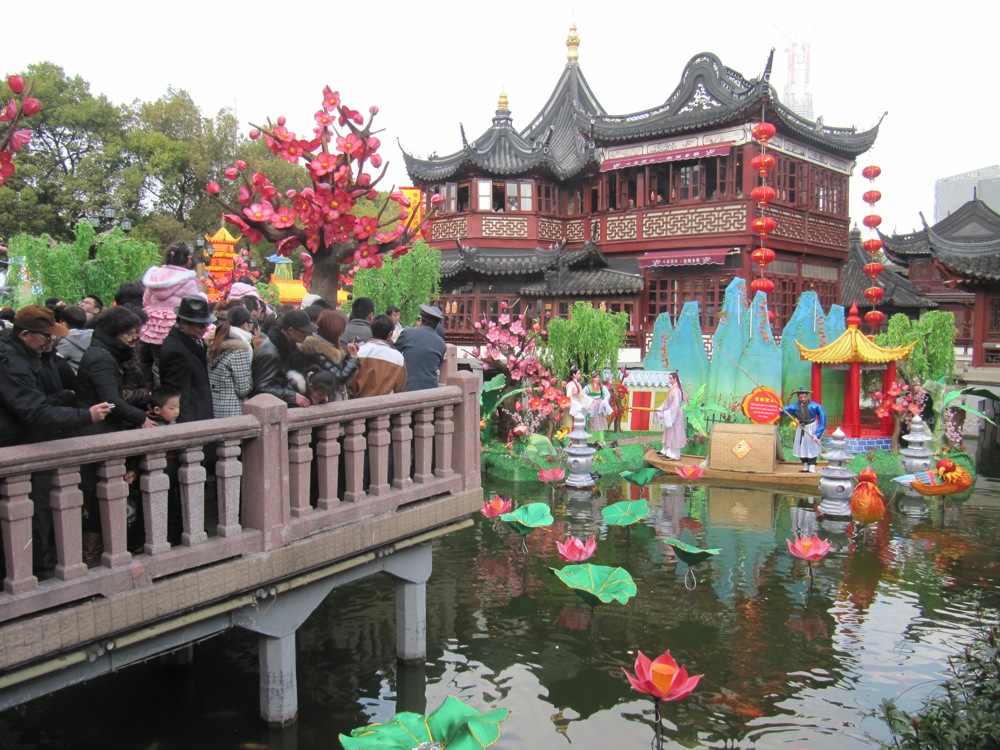
The most impressive collection of historic architecture in Sanghai, by far, is Yuyuan Garden, which has buildings dating back hundreds of years.

o hunan3

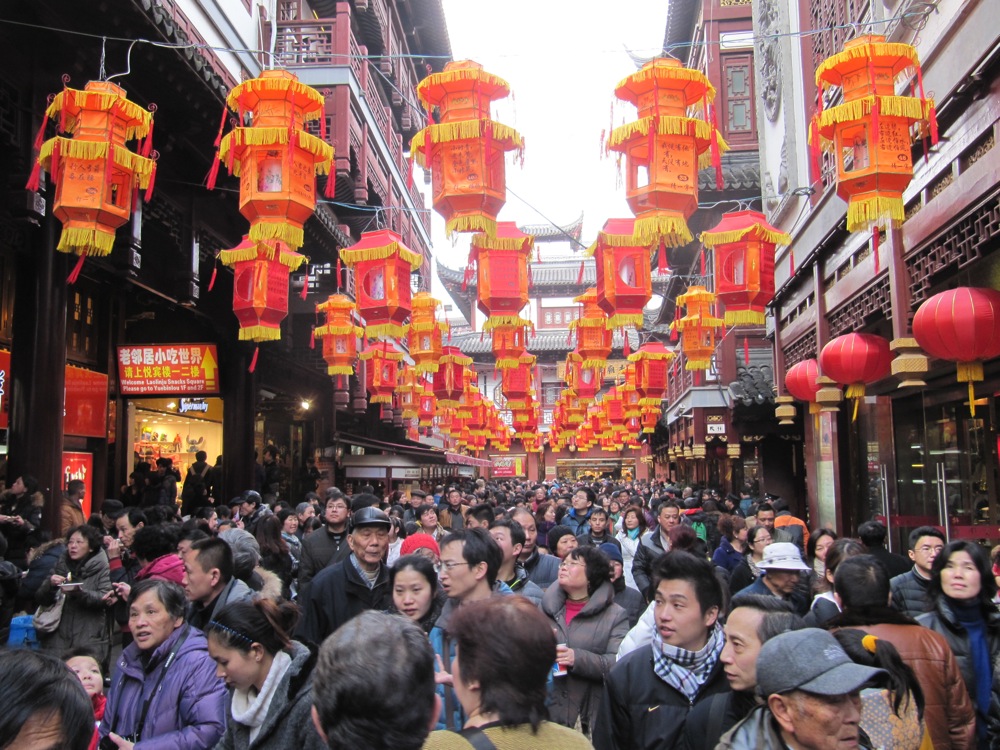
I didn’t see the gardens themselves, which are accessed via this horrendously crowded footbridge. I went during the end of the Chinese New Year holiday, and Chinese tourists mobbed everything.

o hunan4

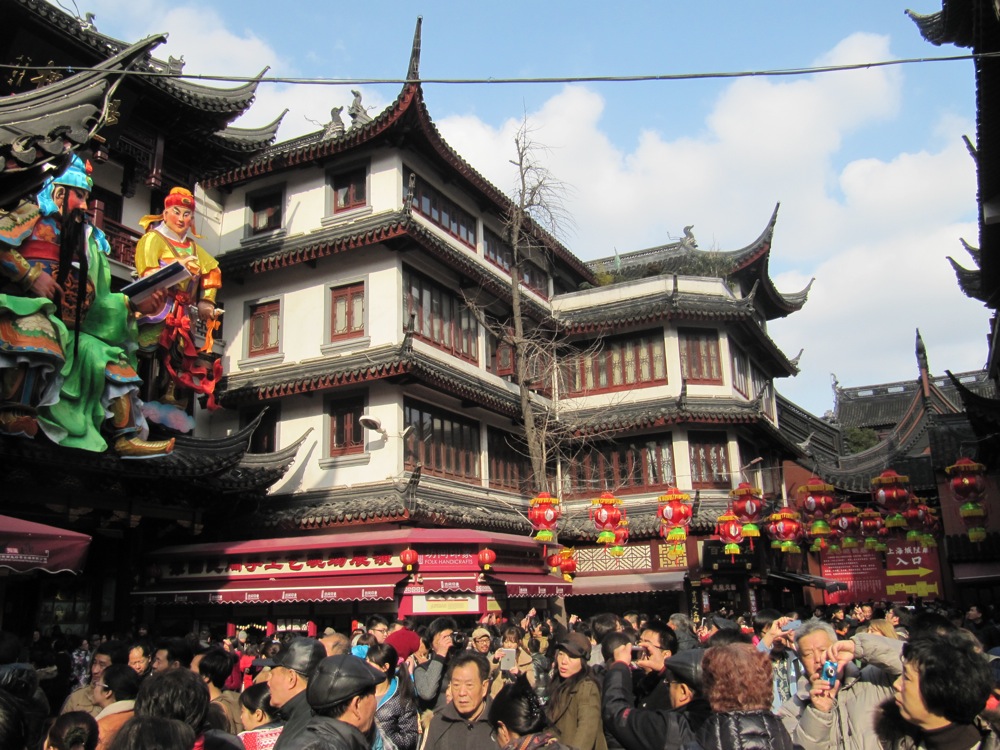
The historic city adjoining the gardens has been converted into a massive shopping center. Walking around was immensely difficult.

o hunan1

I’m sure my head was poking up awkwardly in the background of at least a thousand pictures.

o hunan5

The area lit up at night.

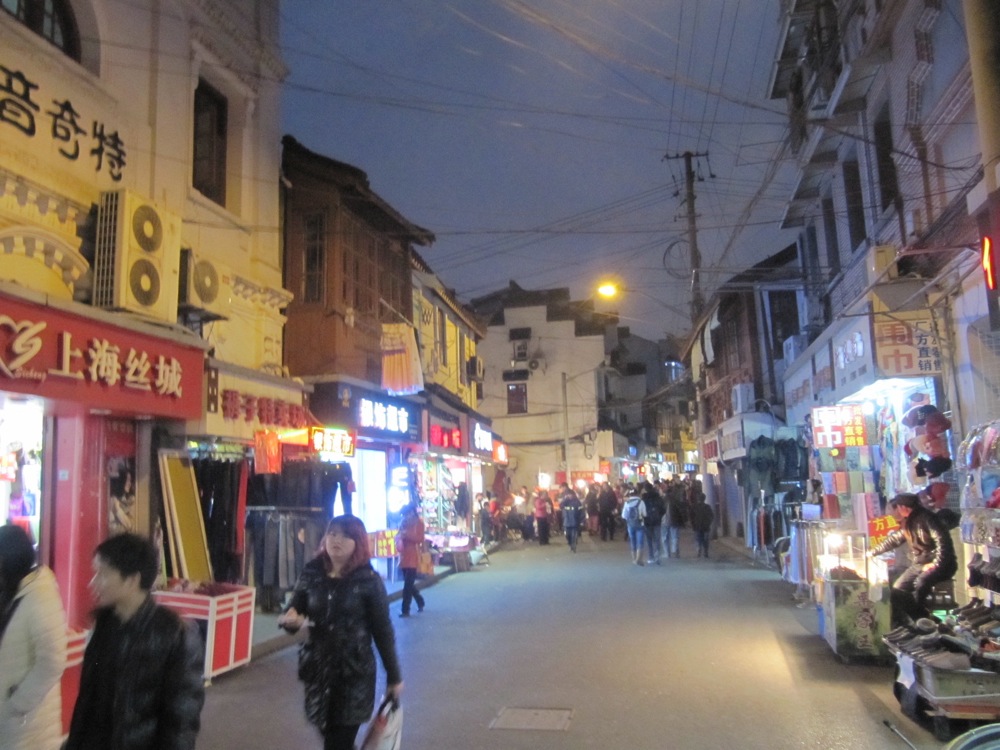
o market st

A market street near Yuyuan, which bustles into the night.

o market food

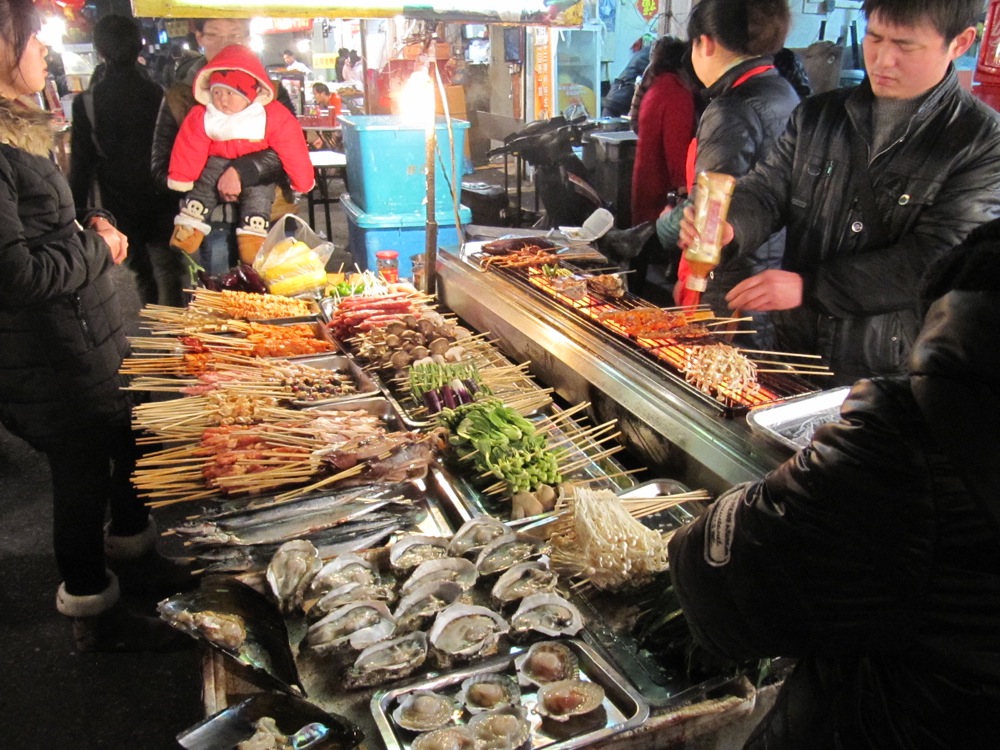
The area also has a thriving street food scene–among the best I’ve ever seen. Comparable to Leon, except in China a lot more stuff falls into the “extremely weird” category. (For the record, the squids-on-a-stick silhouetted in this picture definitely DON’T fall into that category, and were absolutely delicious.)

o market food2

I was breaking every rule in the book for preventing sickness in China when I ate here. Although I did pass on the oysters–I’d prefer for my souvenirs be tangible objects, rather than stomach bugs.

Posted by: Alex MacGregor | March 22, 2013

Shiny New Shanghai

My first stop in China was the country’s largest and most resilient city: Shanghai.

n pudong2

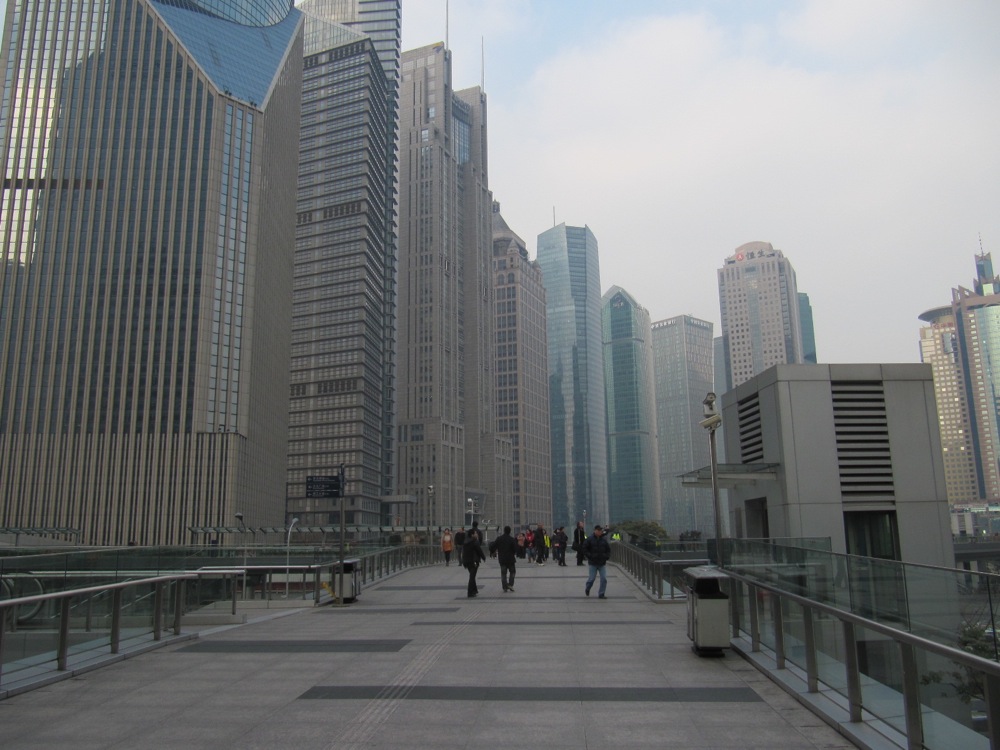
Shanghai is characterized mainly by the dramatic rate of change the city has undergone in the past couple decades.

n bund2

Nowhere is Shanghai’s unreal rate of change more evident than in Pudong, the new part of the city. The eastern bank of the Huangpu River was, until the early 1990s, connected to Shanghai only by ferry, and thus sparsely populated and agricultural. Since its development was allowed, it has grown into one of the world’s most magnificent and modern skylines.

n pudong wfc2

Pudong lacks anything of much historical or cultural interest, but that’s no bother. You can wander around for hours marveling at all the unbelievable stuff they’ve built. Like this: the Shanghai World Financial Center is the fourth-tallest building in the world at the time of writing, and the tallest in mainland China.

n pudong wfc

The hazy view from the top of the WFC.

n pudong4

Next door, Shanghai Tower, on the right, likely be the second-tallest building on the planet when it’s completed.

n pudong1

n pudong mall

Down at street level, the IFC Shopping Mall is, without a doubt, the richest I have seen in my life. Every solitary storefront was a high-end designer.

Pudong is only one manifestation of Shanghai’s emergence as a world city. Shanghai is climbing the charts in every conceivable way. Shanghai is the world’s busiest container port, and nearby Ningbo is the sixth busiest. As I said earlier, Shanghai’s twenty-year-old metro system is the fifth busiest in the world. It’s airport system is ninth busiest. All are growing dramatically.

n bund1

The breakneck growth in Pudong’s skyline has made The Bund–the main riverfront drag on the old side of the river–into a world-famous tourist attraction.

n bund night1

The Pudong skyline at night, viewed from the Bund.

sn bund1

The Bund is probably the most photographed place I’ve ever seen. It’s almost obnoxious: everywhere you step you’re crossing into someone’s picture. Simply walking up to the railing can be a chore.

sn bund2

The Bund is lined with historic buildings, which mainly served as international banks during Shanghai’s heyday prior to China’s communist revolution. The architecture actually reminded me a lot of commercial buildings you see in old parts of American cities: very grey and substantial-looking. Except here, Chinese flags fly atop every spire.

n bund night2

The historic buildings of the Bund light up nightly.

n bund old

In front of this building stands a particularly photogenic bull, modeled after the bull on Wall Street. You can read all about the wacky symbolism and background of this particular statue here.

n nanjin2

Nanjing Road used to be the city’s premier shopping street. Pudong clearly carries the torch now with regard to high-end shopping, but Nanjing Road retains a Times Square-like feel.

n nanjin1

The scammers lurk on Nanjing Road in greater numbers than I have seen anywhere. The typical scam involves an invitation to a tea house or coffee shop by a friendly youth who wants to practice English. The bill will end up higher than expected by an order of magnitude. As a lone guy, I guy plenty of attention from these types. Their robotic knowledge of American sports was particularly amusing–“Atlanta? You must like the…Hawks!”. Me: “Umm…”

Also, there was no shortage of people asking if I want a “massage”.

n nanjin night

Nanjing Road’s impressive neon lights.

c knock offs

China’s notorious counterfeiting culture rears its head on Nanjing Road.

n peoples park3

As you go further away from the Bund on Nanjing Road, you reach People’s Park–a wonderful oasis in the middle of the urban grind.

n peoples park

People’s Park, brought to you by Samsung.

n peoples park2

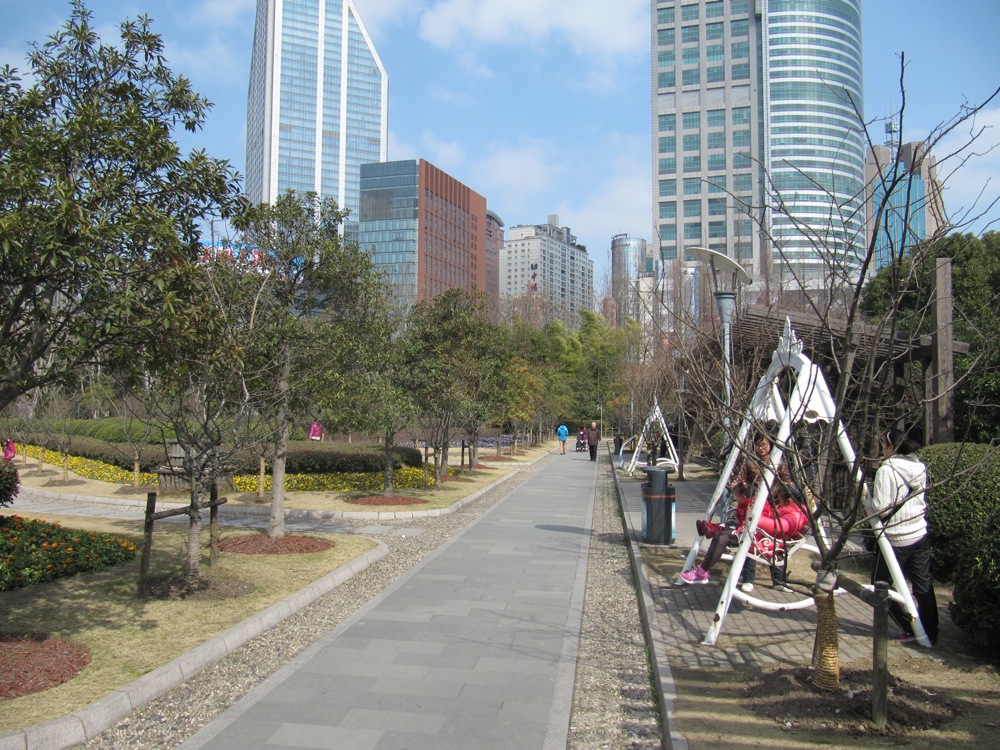
Whatever your opinion on China’s recent fling with state capitalism, you’ve gotta admit: the Chinese children have more sophisticated park diversions than the Cuban children do.

Posted by: Alex MacGregor | March 17, 2013

Culture Shock, China Style

Maybe there is something to this whole BRICs hullabaloo. About six months ago, work took me to Brazil. Just recently, it took me to my second BRIC country: China.

o typical3

Although most of my time was spent working, I had a few days left over to enjoy myself. Given that I was there for work, my enjoyment was unfortunately tempered by Caroline’s absence.

In a place like Boston or even Brazil, traveling alone isn’t so bad. Even if you can’t communicate with people, at least you feel some sense of cultural familiarity and belonging.

c language

Not so in China. I’d put China on the level of Ethiopia or Egypt in terms of feeling exotic and removed from Western culture–especially once you’re outside of Shanghai. Definitely a place where traveling alone is a lot less fun.

c signs5

For starters, a trip to China would definitely be enhanced by having someone to laugh with about the plethora of bizarre things you see.

c signs3

Such as this interesting relationship advice on a restaurant menu.

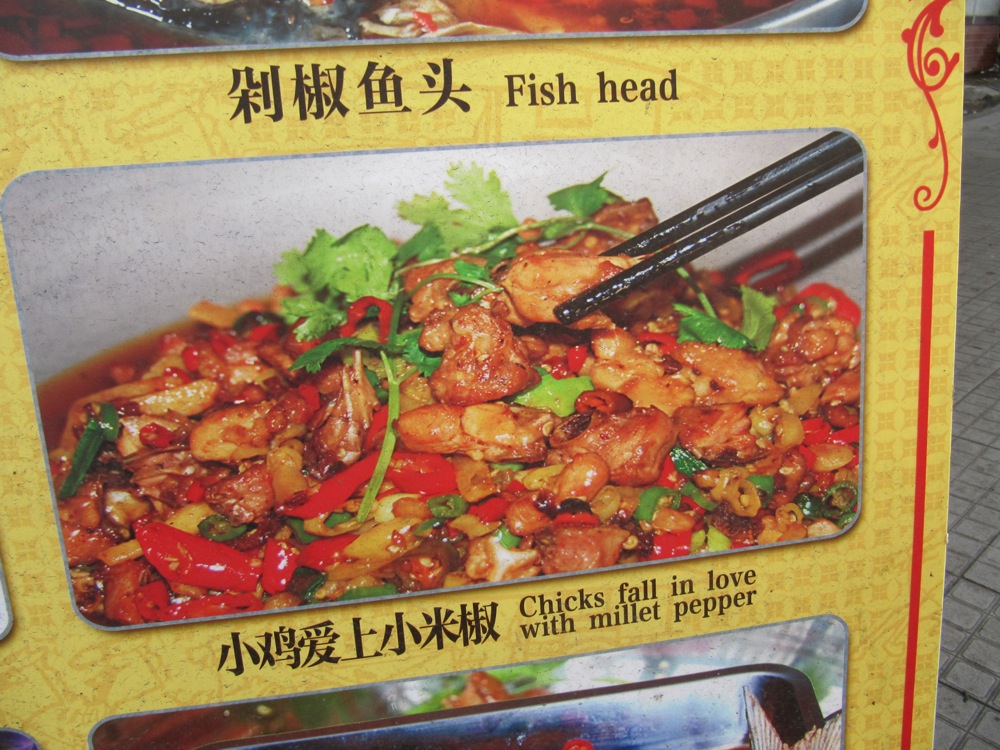
c sign1

Or these bewildering menu translations.

c food2

The dining situation in China as a whole isn’t particularly good for foreigners. This stand with mounds of fried food in the Hangzhou train station looked like a legitimate option from afar. Up close, not so much.

c food1

Or these attractive-looking meatball dishes advertised outside of the food court of a bus station. Nothing this Western-friendly was in evidence once you get inside (instead, “smelly tofu” abounds).

These are the sorts of situations that are much easier when you have someone to laugh with.

n pudong3

Despite the difficulty and loneliness of travel in China, it’s definitely a fascinating place. The things you see one a day-to-day basis are incredible.

c housing

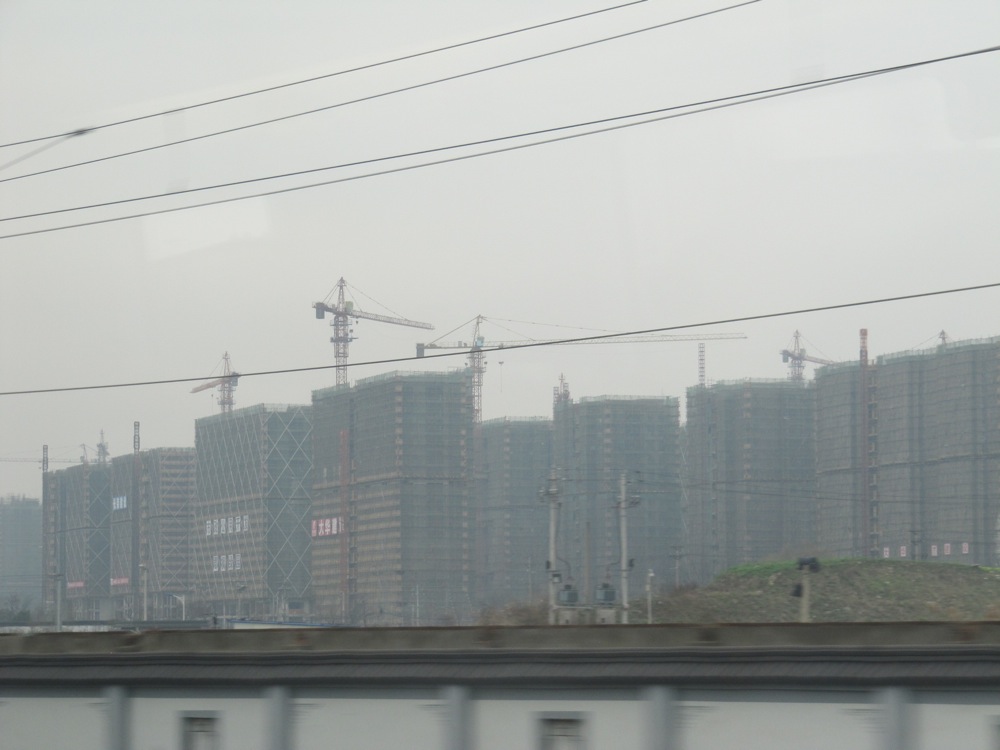
Take, for instance, China’s recently well-publicized construction boom. It is indeed jaw-dropping. I saw this random housing development while riding the high speed train from Shanghai to Hangzhou. The location didn’t seem particularly desirable–roughly 50 miles away from any major city. But for some reason a housing development on an unthinkable scale is under construction here.

c housing2

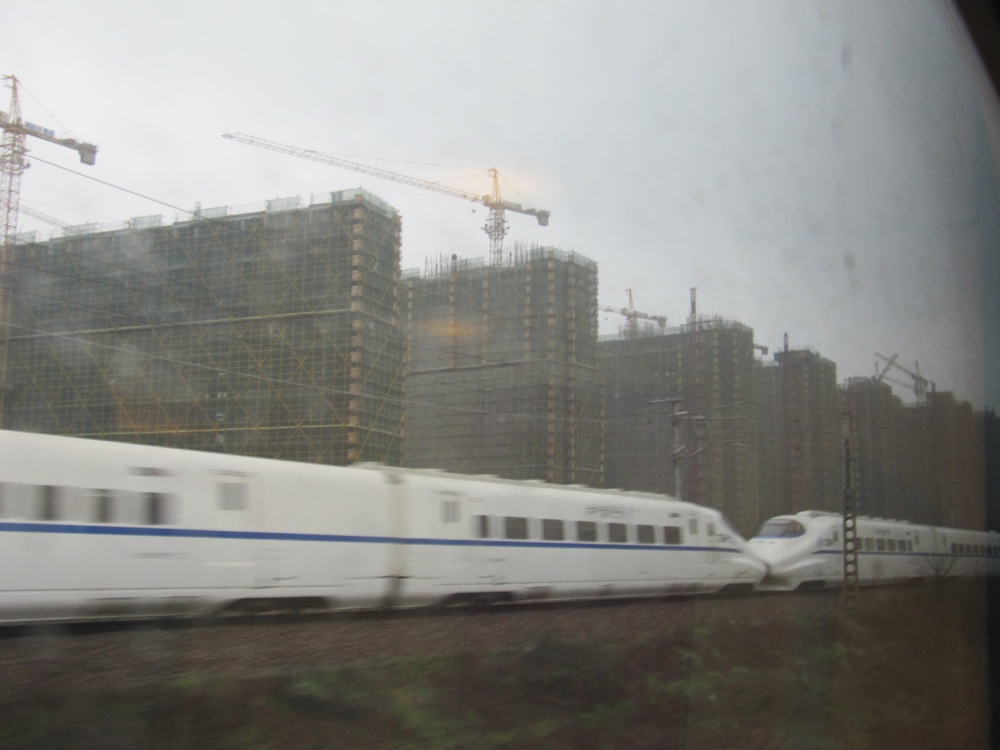
And it appears to be no aberration. This similar construction project is between Hangzhou and Ningbo, again miles away from any major city.

These are just the two projects that I was able to take a reasonably good picture of. Construction on a scale similar to this is everywhere. Cranes hover above every skyline.

c inf maglev

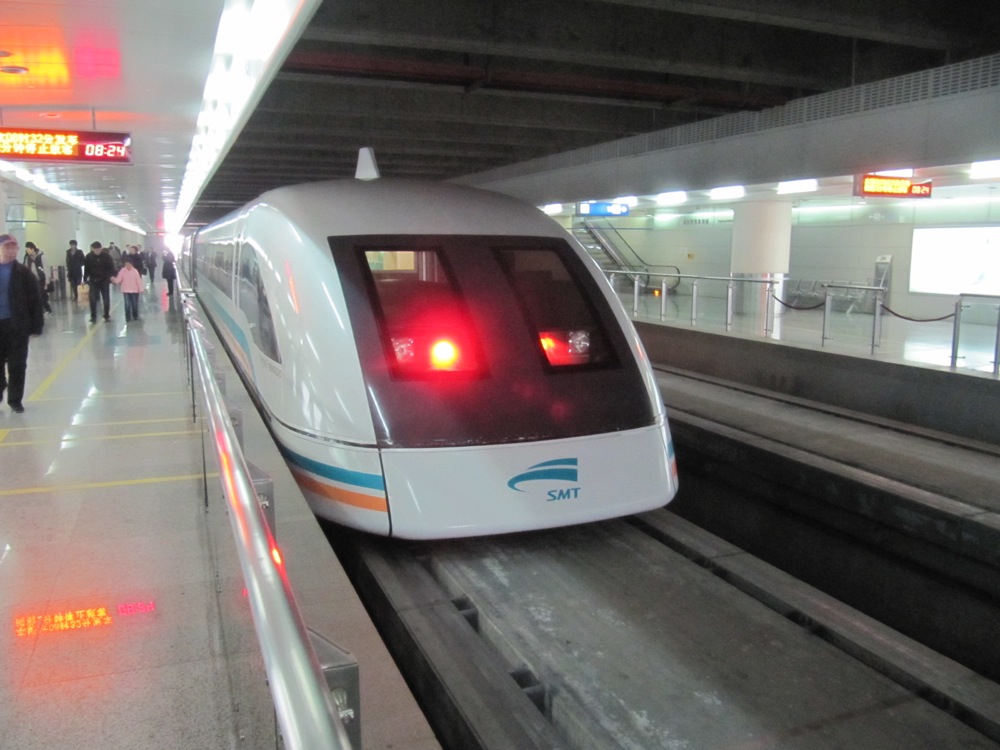
The thing that impressed me most about China was the investment in infrastructure. Simply put, China’s infrastructure, at least in the large coastal cities, rivals anything we have here in the States. This maglev train, for instance, whisks passengers back and forth between the airport and the city at up to 430 km/hr.

c infrastructure

China’s urban roadways are up to first world standards. Heck, maybe even better.

c hongqiao

We’ve shown plenty of train station pictures on this blog. But none anywhere near as impressive as Shanghai’s brand-new Hongqiao Railway Station. It is truly a marvel: a four-level layout that has departures on top, the train tracks below them, the arrivals hall and ticketing below that, and the metro tracks on the bottom floor. The whole complex is attached to Shanghai’s secondary airport. The US has nothing remotely like it.

c metro

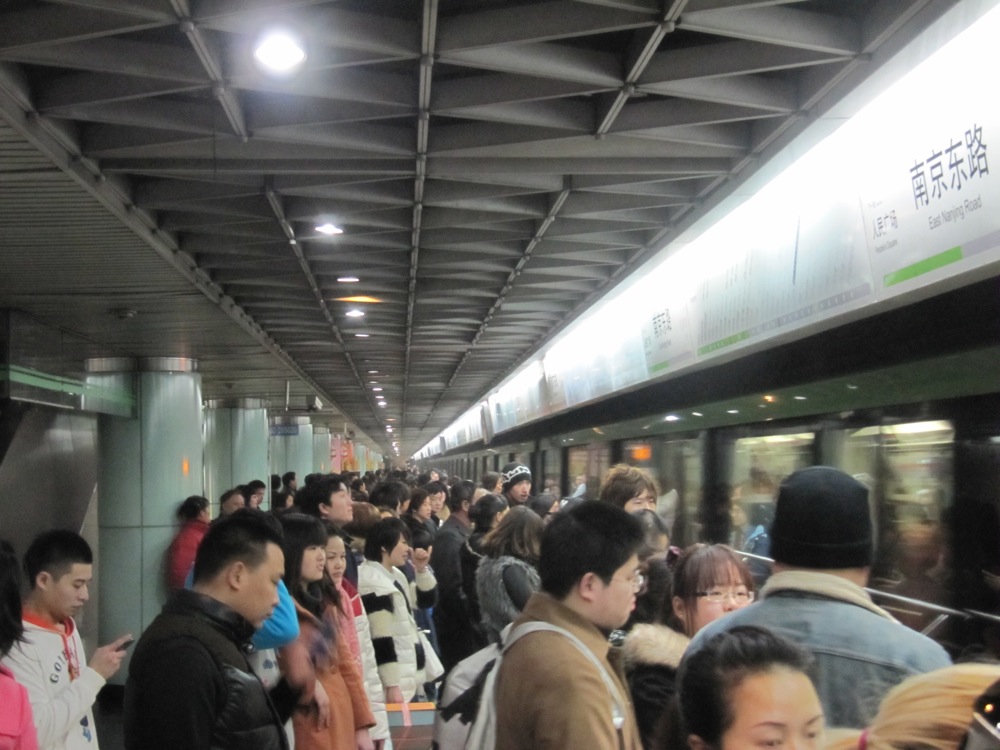
Shanghai’s metro, still in its second decade of operations, is already among the busiest in the world. It has surpassed New York, and is expanding so rapidly that I could easily see it being the world’s busiest within a few years. It’s adding about 20 stations per year. Also, with fares under a buck and useful English translations, it’s definitely the best way to get around town.

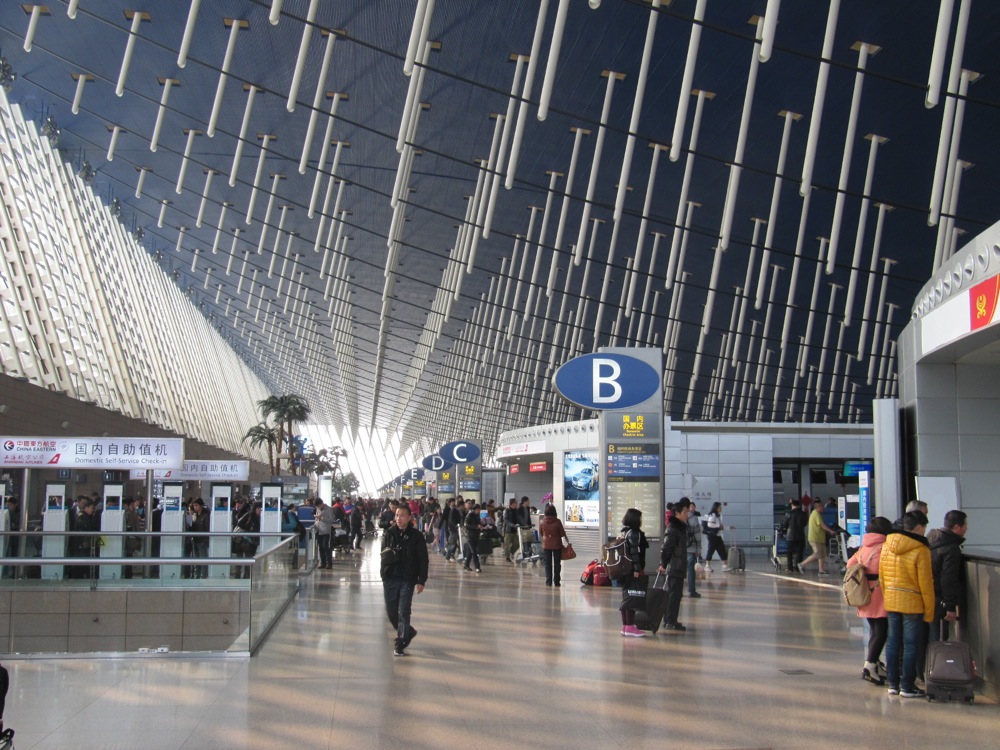
c inf airport

Pudong, Shanghai’s main airport.

n nanjin apple

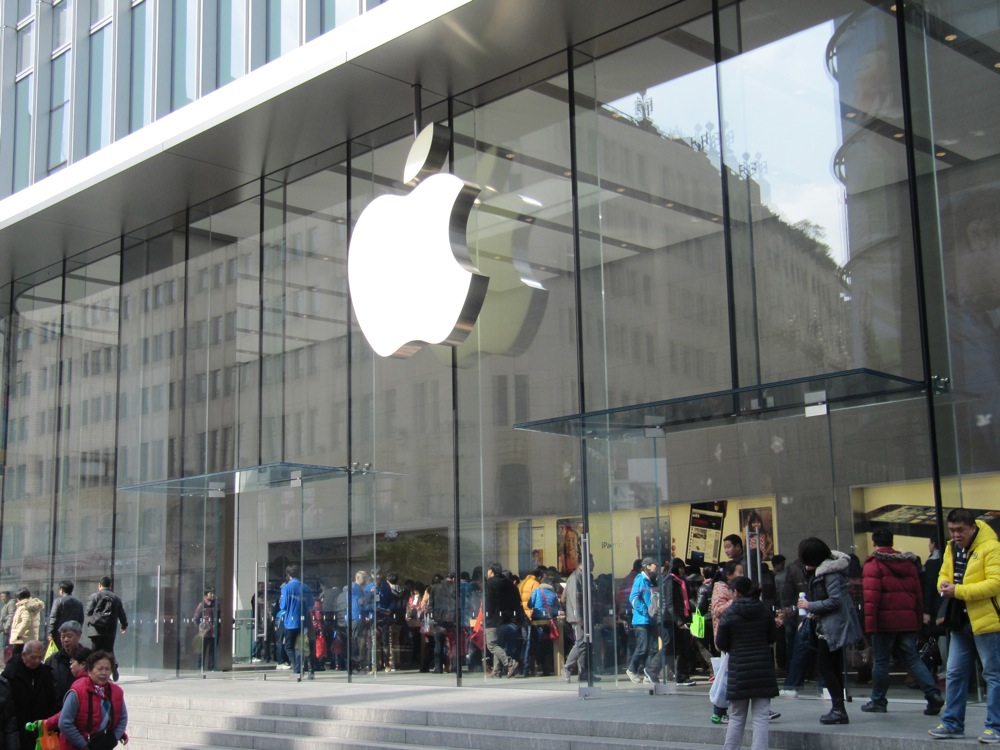
Western brands, clamoring for a piece of China’s booming consumer economy, are a fixture in modern China. This Apple store in Shanghai was absolutely mobbed.

c brands

In China, brands have a chance to reinvent themselves a start anew. Lays, for instance, apparently sells packaged french fries.

c brands2

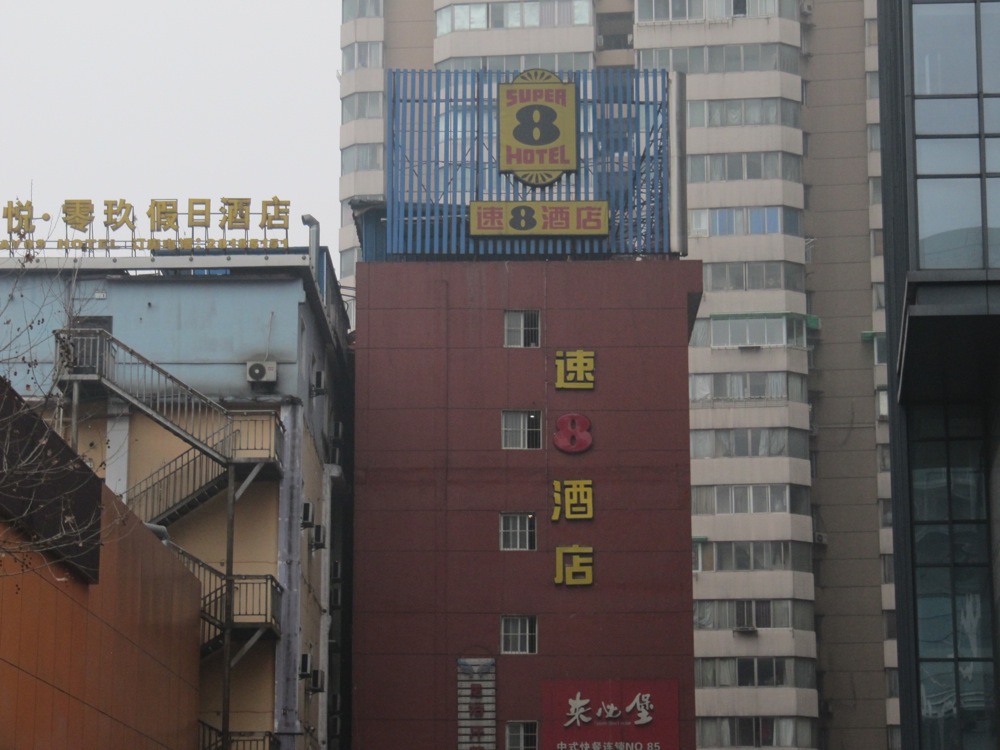
The Super 8 Motel upgrades itself to the Super 8 Hotel in China.

As an aside, I just don’t see how any of these mega-investments in hotels could be making any money. I stayed in a Holiday Inn–much nicer than a Holiday Inn in the States–for $60 a night. A five-star Sheraton was $105. Contrast that with Brazil, where finding business-standard accommodation under $100 is nigh impossible.

c haze

By the way, I must admit my picture quality through this series of posts will be lacking. I couldn’t really help it: China just about always seemed to be shrouded in haze while I was there. I know China already has a reputation for being a hazy place, and these next few blog entires will do nothing to change that image.

Next up: Shanghai.

Posted by: Caroline | February 5, 2013

Two Nights in Savannah

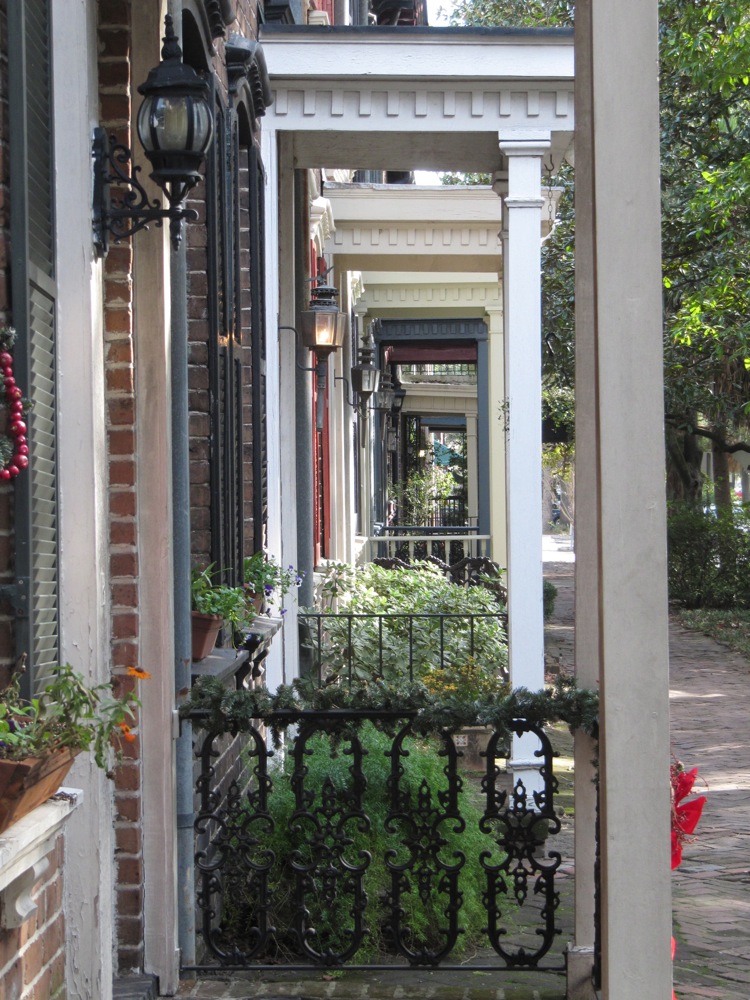
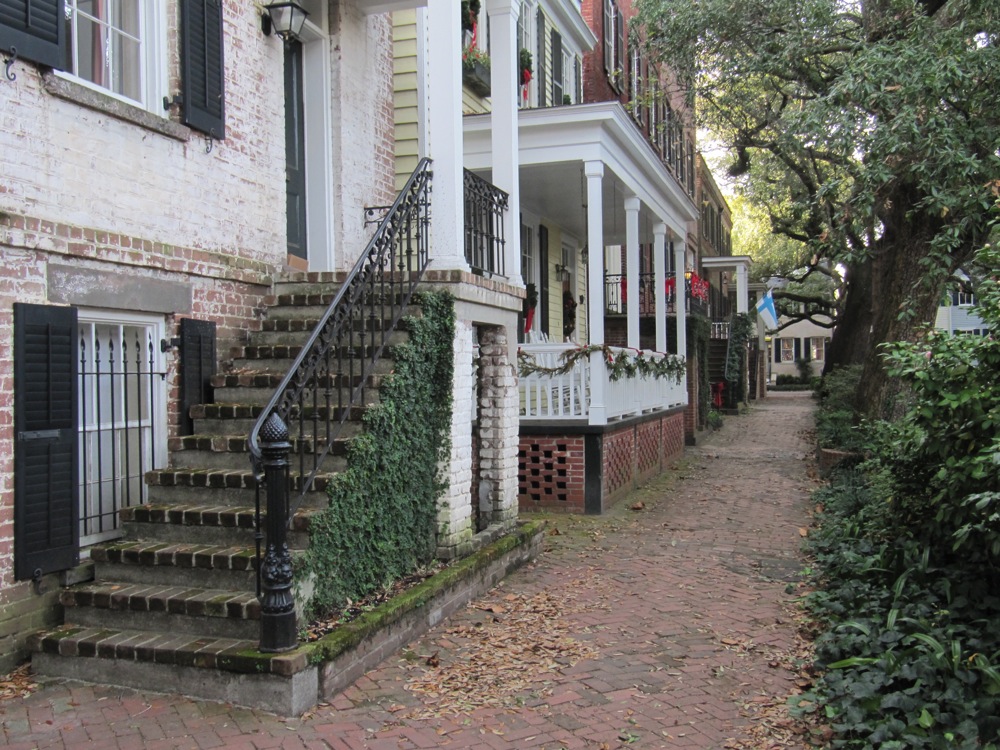
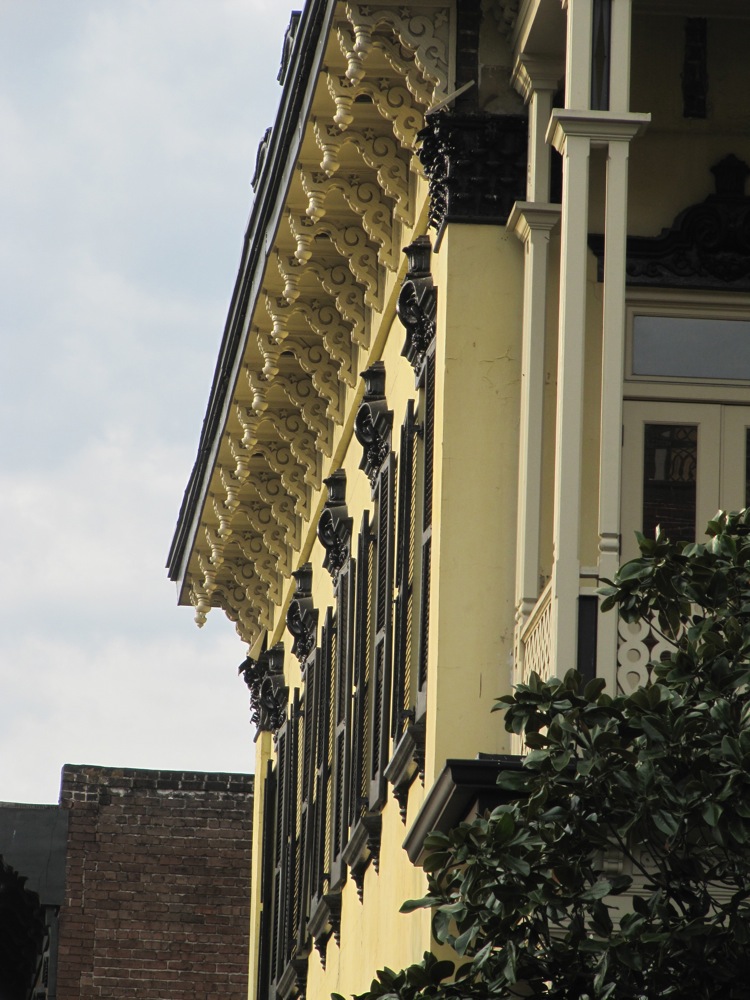
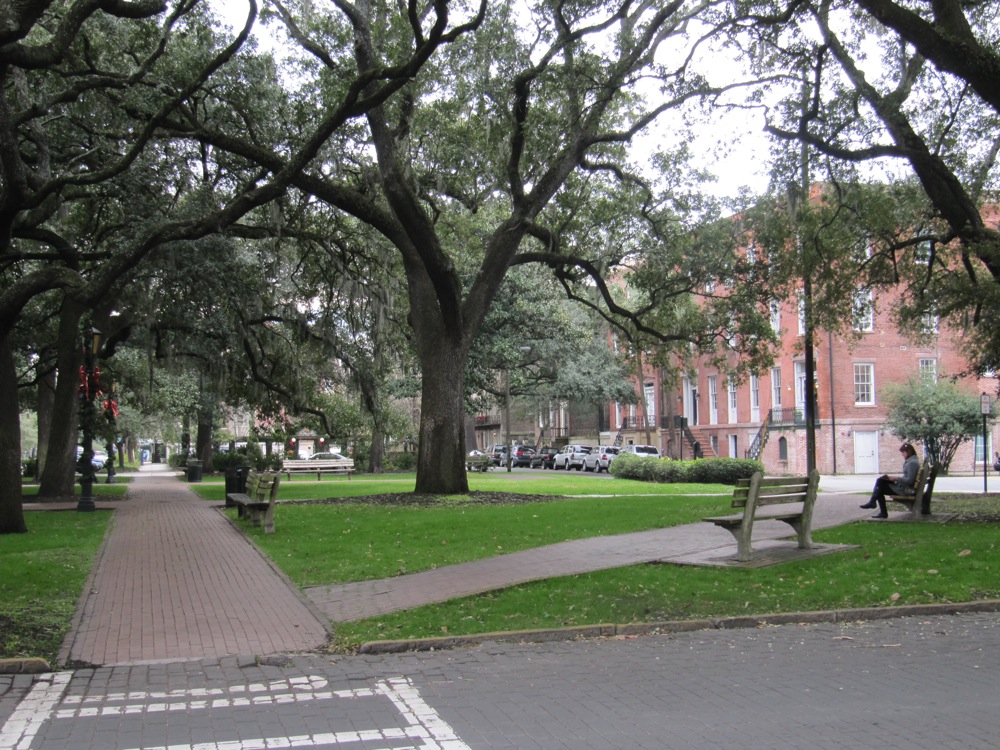
Sometimes Alex and I are so intent on the next passport stamp that we forget to set aside time to explore neighboring gems. So when Alex suggested we visit pretty little Savannah, I couldn’t resist. I hadn’t seen the city since a 5th grade field trip, when my primary interest was a thorough investigation of each taffy and fudge shop on River Street.  My thrills have changed a bit since then. But once I arrived, the grassy squares and proud colonial homes seemed familiar, and now I could appreciate them a bit more–before finding the closest fudge shop, of course.

ogelthorpesq2

hist-houses 3

colonial park cem

But you know us. This could be no typical trip to Savannah. We wanted to keep it as low to the ground as our international travels, so we forsook the car and hopped on the Greyhound. I won’t deny that the trip to Savannah was fairly atrocious–girl gabbing on her cell phone about the most personal of issues behind us while the bus creaked with some mysterious loose part that nearly drove me insane–but the trip back home was positively lovely with a new-ish, spacious, and fairly empty bus. And the bus ride gave us plenty of time to delve into the required reading for any visit to Savannah: Midnight in the Garden of Good and Evil. After reading that, I was primed to see drag queens running through the streets and public duels between men with drawls.

greyhound

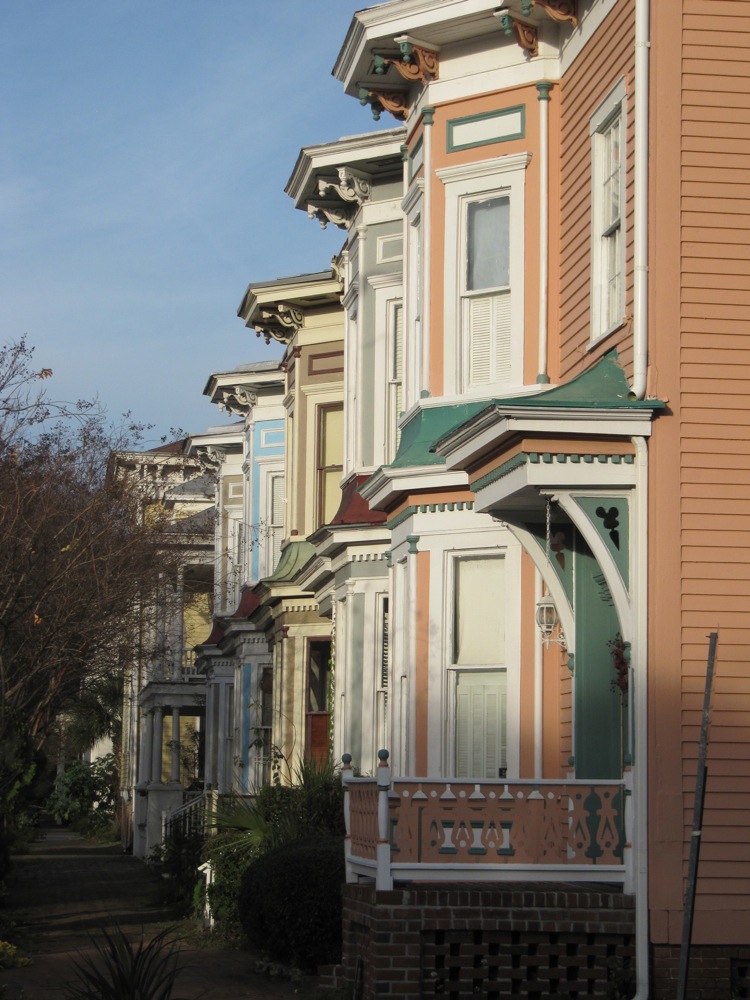
We didn’t do much in Savannah. No nighttime ghost tours in horse-drawn carriages for us. But we did a ton of walking, and around each corner in Savannah there is something beautiful, intriguing, or mysterious.

hist-houses 6

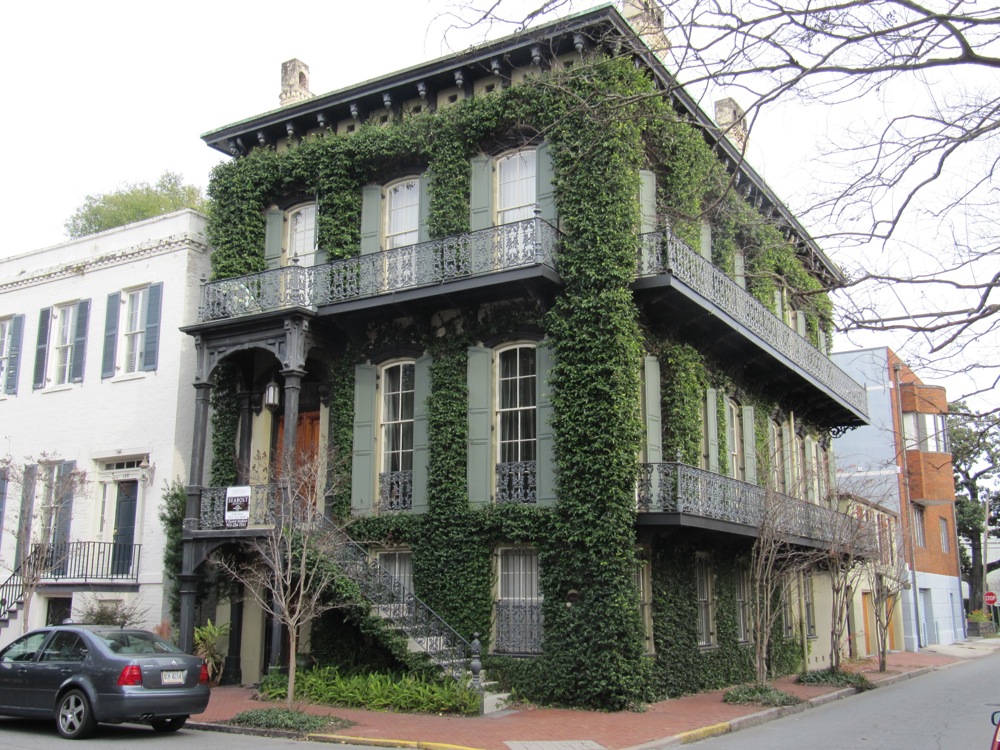
I loved this ivy covered home, which is for sale for any interested buyers. (I’ll covet it forever, though.)

scad

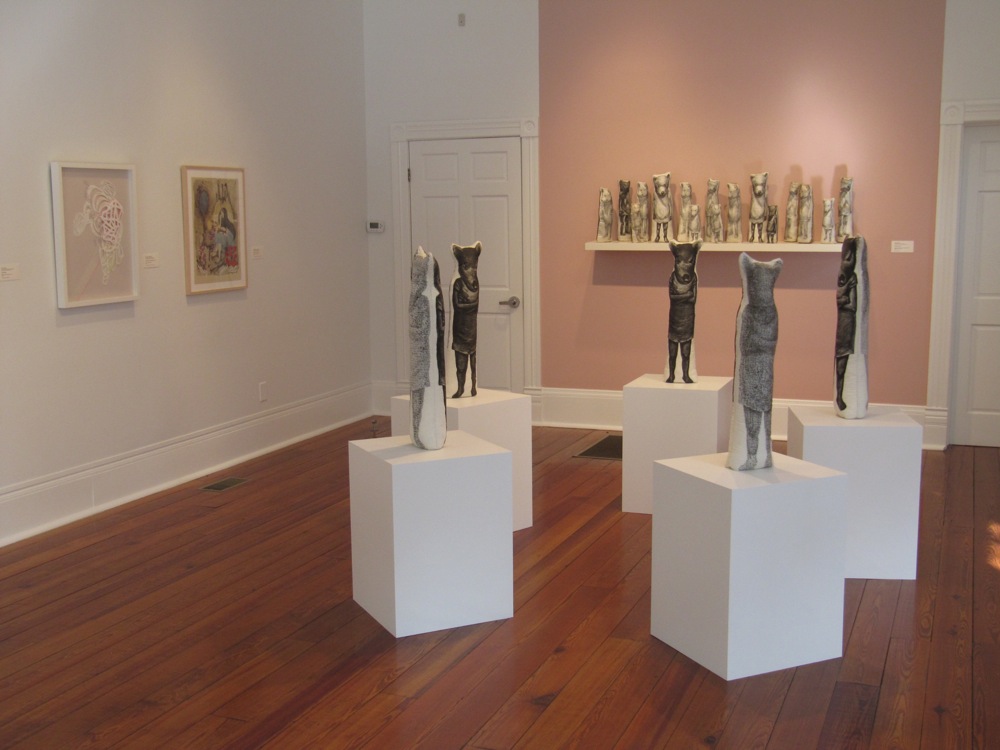
Thanks to SCAD, art galleries are tucked into nooks and crannies all around the city. We stopped at this printmaking exhibit, manned (or womanned, I guess) by a gregarious security guard who shared her interpretations of the art with us.

colonial park cem marker

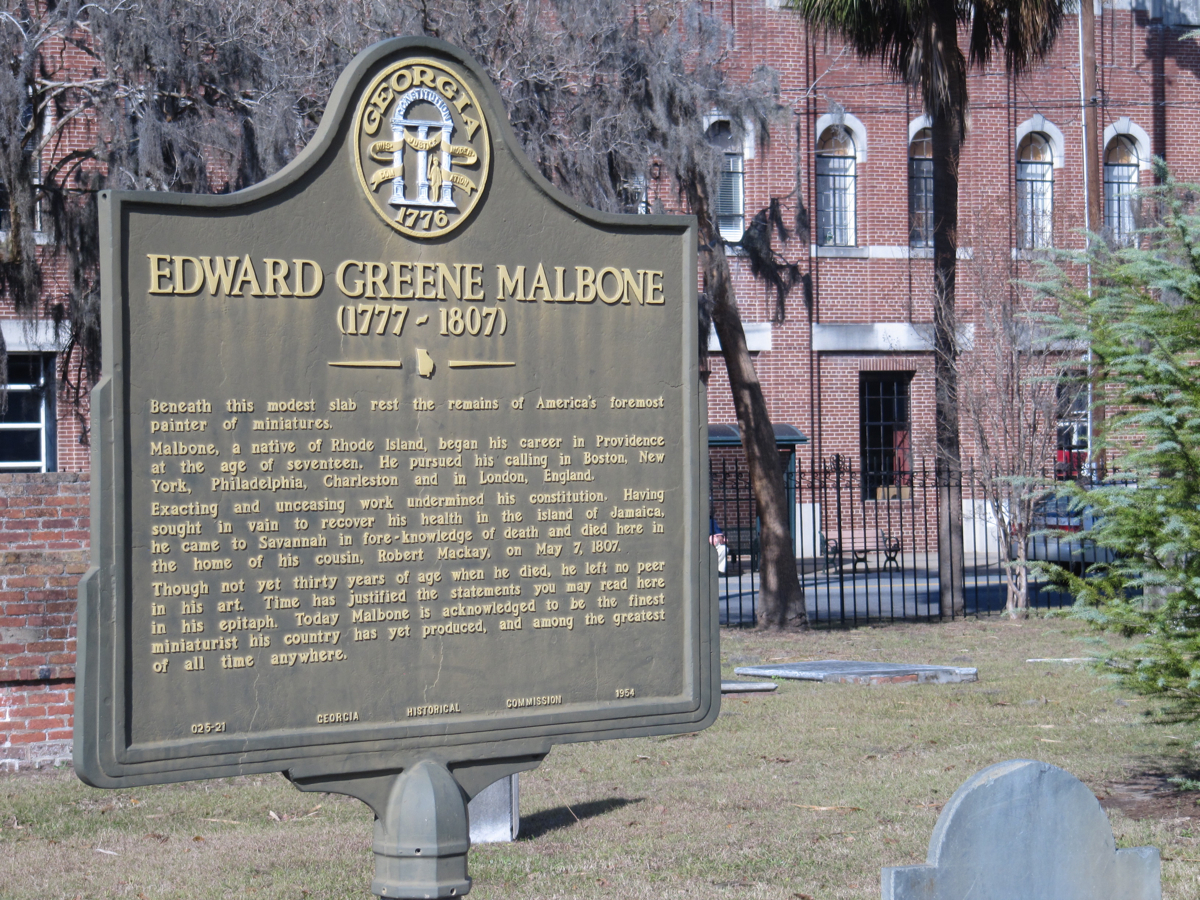
And we must not forget the grave of Edward Greene Malbone, acclaimed miniaturist. Cemeteries are different in Savannah. They’re essentially parks with lots of artfully worded mini-biographies.

hist-houses 1

hist-houses 5

hist-houses 4

hist-houses 2

(Still no drag queens, though.)

hist-houses 7

ogelthorpesq

square

victorian

We visited St. John the Baptist church, still decked in red and green.

st john 1

st john 2

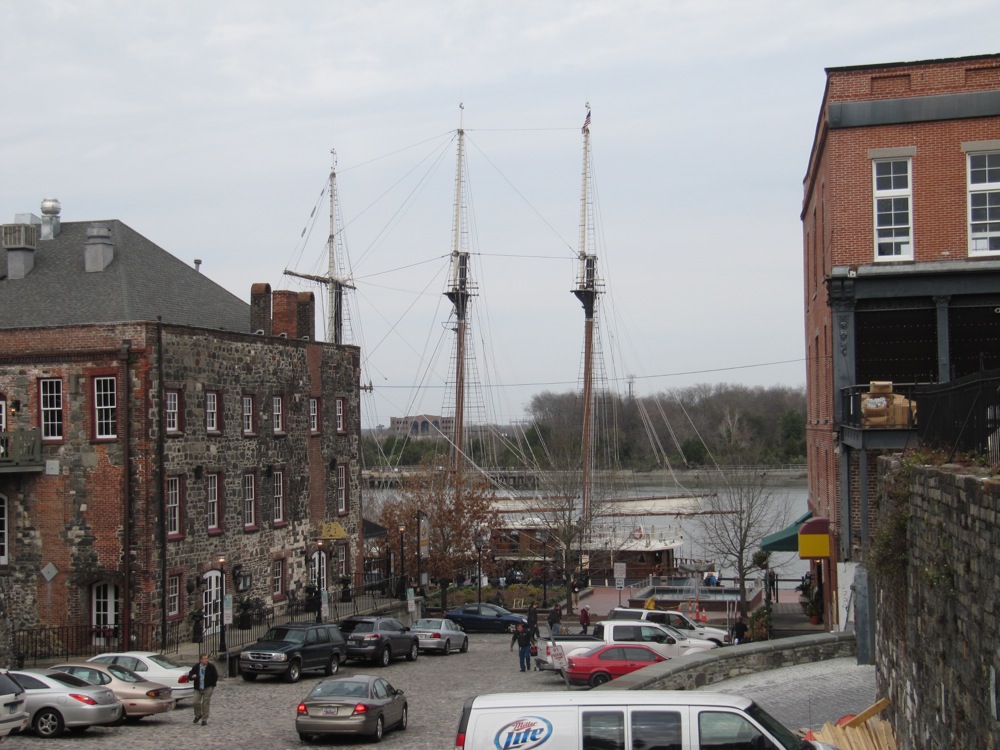
We spent the requisite time on River Street, watching for boats and tourists.

river st 2

river street cotton

river st 1

river port

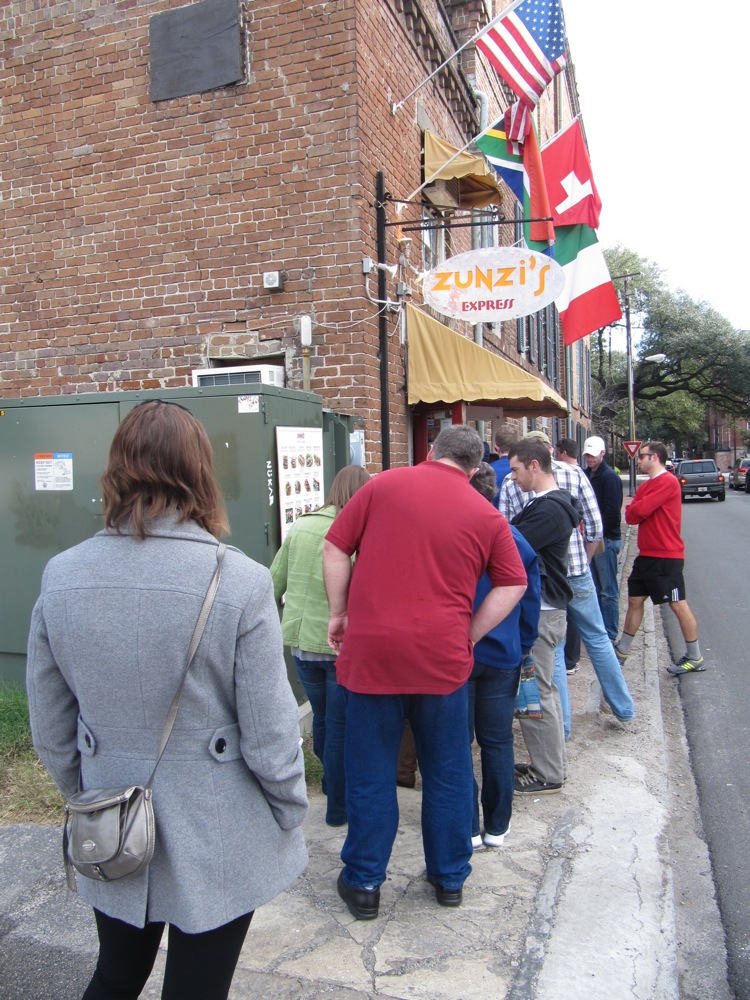
Perhaps the best treat of the trip was finding this South African take-away restaurant.

ogelthorpe zunzis1 \

This curried chicken over mashed potatoes tasted straight out of Cape Town.

ogelthorpe zunzis2

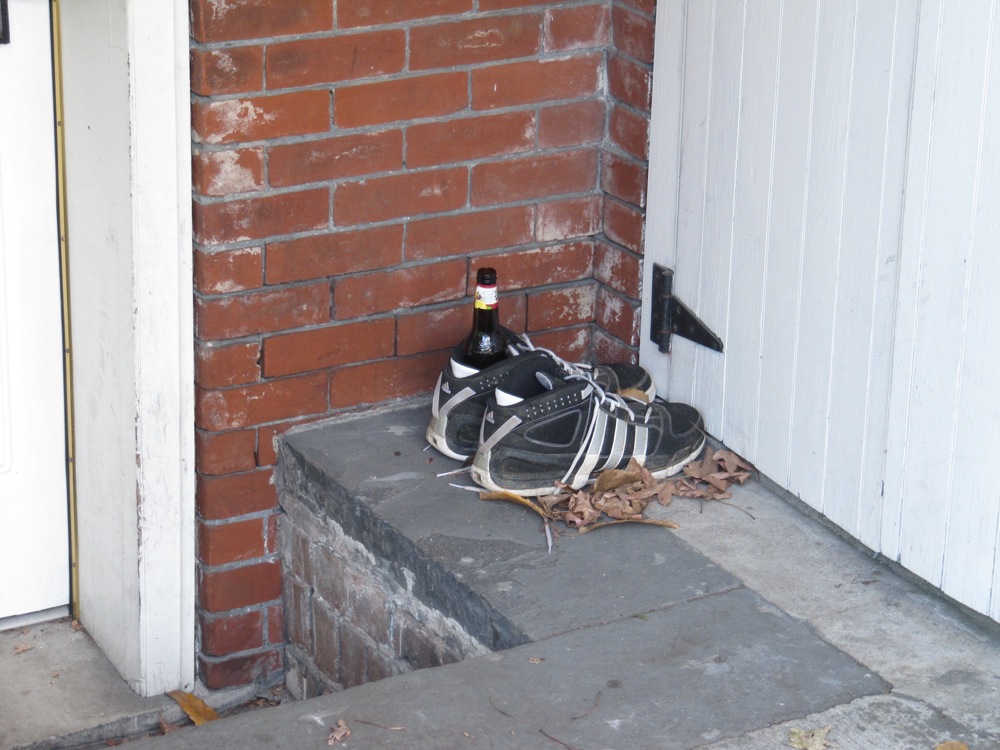
And on the walk back we finally caught a glimpse of that famous Savannah style so clearly depicted in Midnight. Alcohol is as commonplace as shoes.

xshoes

Posted by: Alex MacGregor | December 13, 2012

Boston by the Neighborhood

Work took me to Boston just in time to enjoy some unseasonably nice early-December weather. Like Brazil, these travels were again sadly Caroline-less.

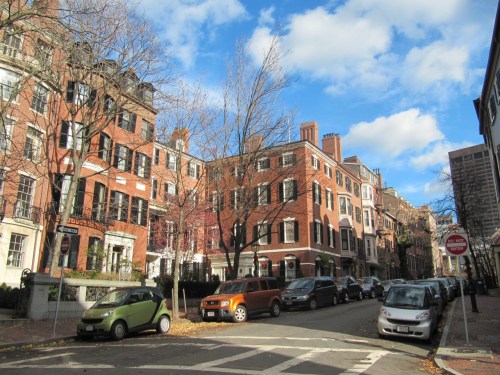
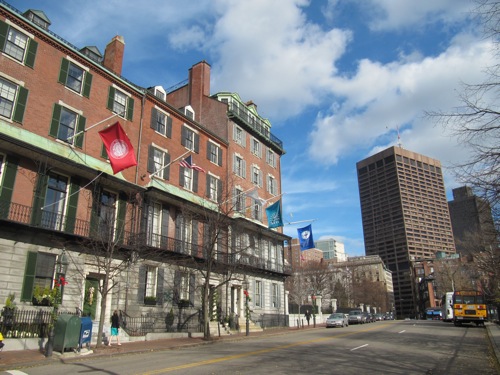
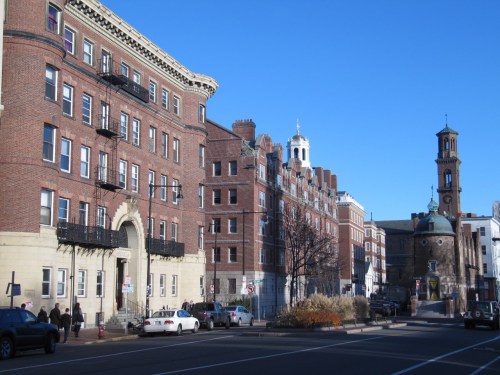
Since I didn’t have enough time for proper sightseeing, I decided to skip the big tourist draws along the freedom trail and focus my exploration on the neighborhoods that really make Boston unique.

Beacon Hill

beacon hill1

Beacon Hill is definitely such a neighborhood. Classic Boston through-and-through, and home to distinguished folks past and present, ranging from John Hancock to John Kerry, Sylvia Plath to Uma Thurman.

beacon hill3

beacon hill2

state house1

Beacon Hill is home to Massachusett’s capitol building, State House…

beacon hill cheers

…and the Cheers bar!

Public Garden

Sandwiched in the middle of everything is Public Garden, an oasis in the hustle and bustle. It sits adjacent to the more famous Boston Common, and is sort of considered the same park, but I liked Public Garden better.

boston common1

The park was designed by Olmsted, who designed Central Park in New York and Druid Hills in Atlanta (and whose sons designed Piedmont Park).

boston common gw


A statue of George Washington in Public Garden, with the Boston skyline in the background.

boston common downtown

The view from Boston Common into downtown.

Back Bay

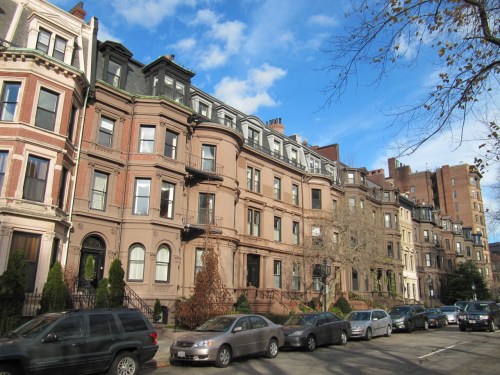
back bay2


Another of Boston’s legendary neighborhoods is Back Bay.

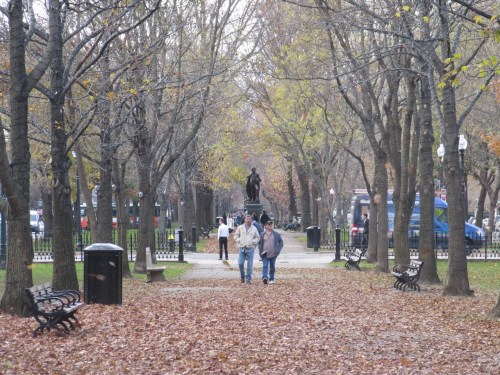
back bay1


The neighborhood is laced with leafy linear parks, which were especially leafy due to municipal leaf-blowing operations occurring as I passed through.

Alas, I didn’t really get enough time in Back Bay. At least if you miss something in a place like Boston you know you’ll probably be back someday. But when you’re somewhere like the Ilha de Mocambique, you’ve got to consider it your one and only shot.

Chinatown

Long time readers of this blog know Caroline and I love Chinatowns, having visited them in the Domincan Republic and Cuba.

chinatown


The distinctly Bostonian Chinatown here is a lot more authentic–I had some great Dim Sum!–and vibrant. Sorry, Santo Domingo and Havana.

Cambridge

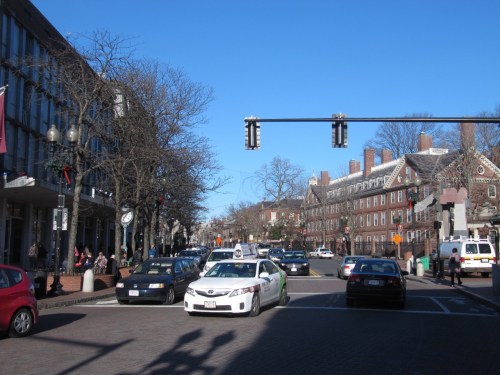
cambridge harvard sq


I was able to spend a day with my friend from high school who now studies at Harvard.

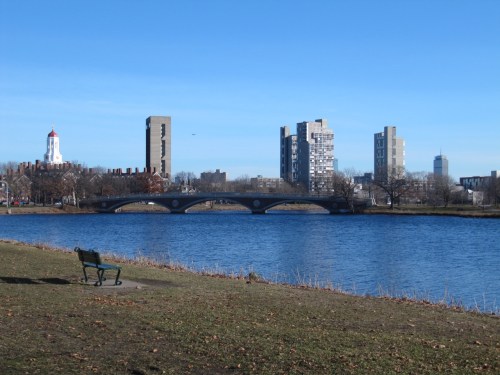
r charles

Cambridge is across the River Charles from Boston.

cambridge


Although it feels a long way outside of town, everything in Boston is small-scale compared with Atlanta. It’s only three miles as the crow flies from downtown to Harvard; by Atlanta standards, that’s nothing.

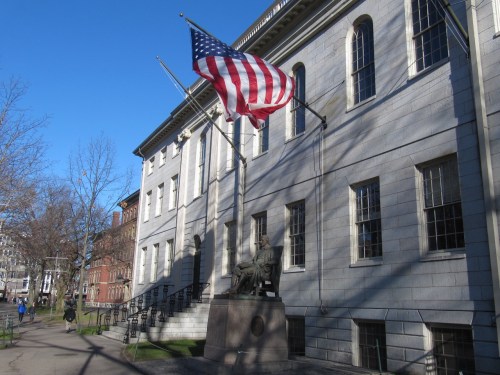
harvard1


The statue of John Harvard.

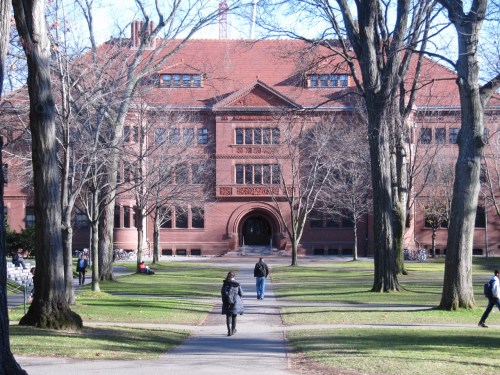
harvard2


Harvard’s beautiful campus.

Posted by: Alex MacGregor | September 5, 2012

Sidetracked to São Paulo

Just when I thought I had hung up my traveling boots for the foreseeable future, work took me somewhere I didn’t expect to go for quite a while: Brazil. While I’ve always dreamed of checking out Rio and the Iguazu Falls, Brazil is a tough place to visit: not only is it a long, expensive fight away, but getting a visa to Brazil is quite a hassle* (and also expensive).

But, of course, going for work completely changes the economics of the situation, so there I went–my first ever travels to South America. (On the negative side, going for work meant I was traveling without Caroline. Boo.)

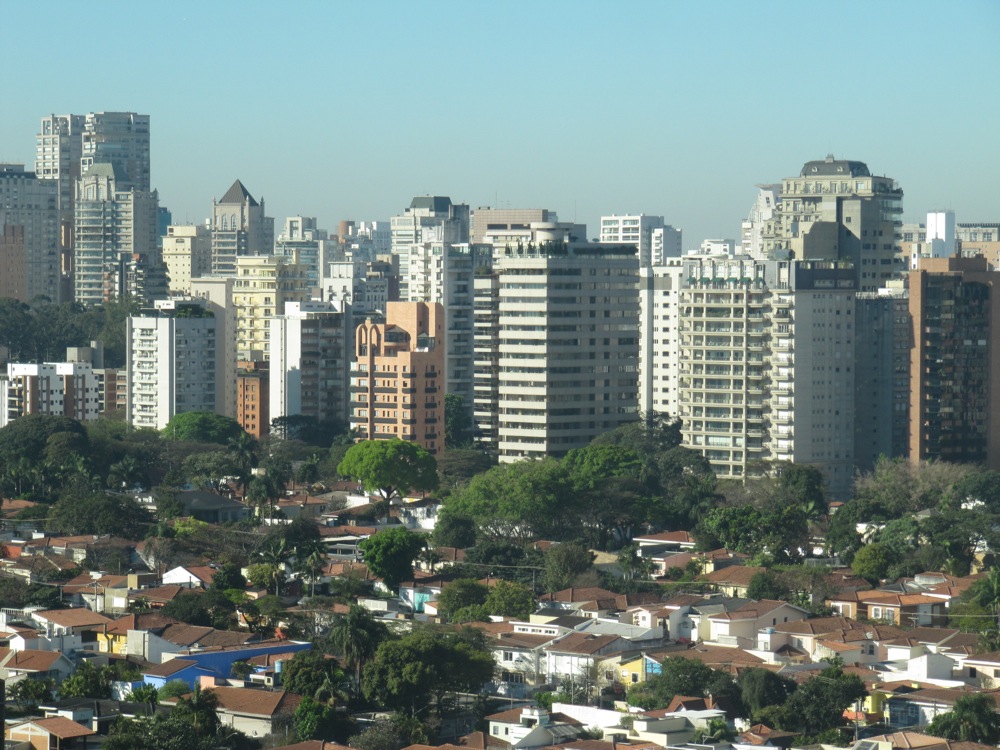
São Paulo, city of endless skyscrapers and helicopters. I learned after arriving that I’ve been pronouncing the “São” part of the city incorrectly my whole life. Apparently São sounds something like “sound” without the d, spoken quickly.

Of course, I spent almost all of my time there working. But that still left a day for me to wander around on my own and take everything in.

Paulista is São Paulo’s most prominent street. A true urban canyon with nonstop hustle-bustle, it feels a lot like New York. With roughly 20 million people, São Paulo is one of the 10 largest cities in the world. After Mexico City, it’s the largest in Latin America.

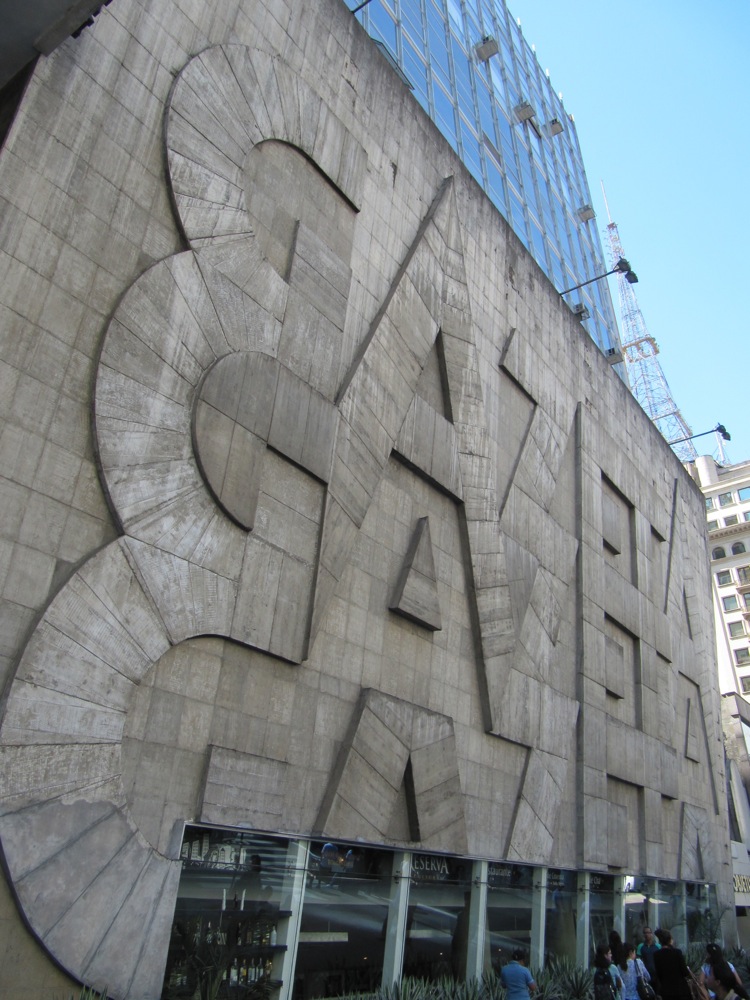
Paulista is a trove of modern architecture.

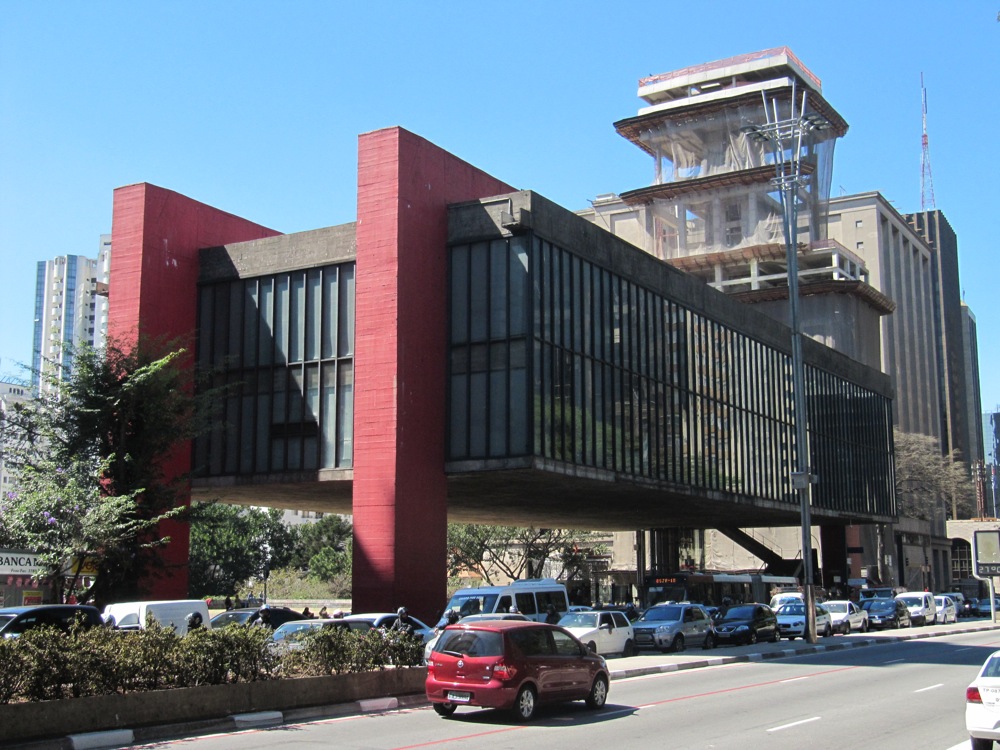
São Paulo’s Art Museum is a fascinating building. It’s about 250 long, and supported by only four columns.

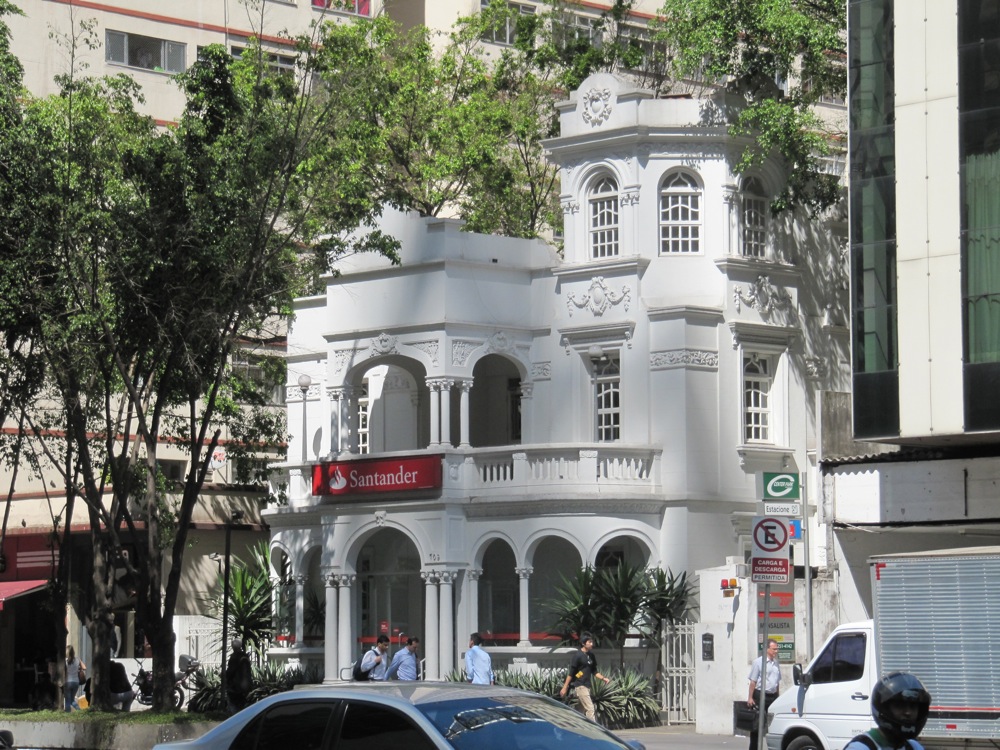
Paulista is a couple miles from the historic center and was once a rich suburb, so most of the high rise architecture is newer. But the road’s stately past peeks through from time to time.

Traveling to São Paulo in the winter was no problem. It was about 75 degrees and sunny the whole time–can’t complain about that. Despite being close to the sea, São Paulo is situated on a plateau, at about 2,500 feet in elevation.

Gotta love the ambiguous bathroom gender signs.

One curiosity about Brazilians is that they don’t like colorful cars. You might see a red car every once in a while, but that’s as colorful as it gets. Everything else is neutral.

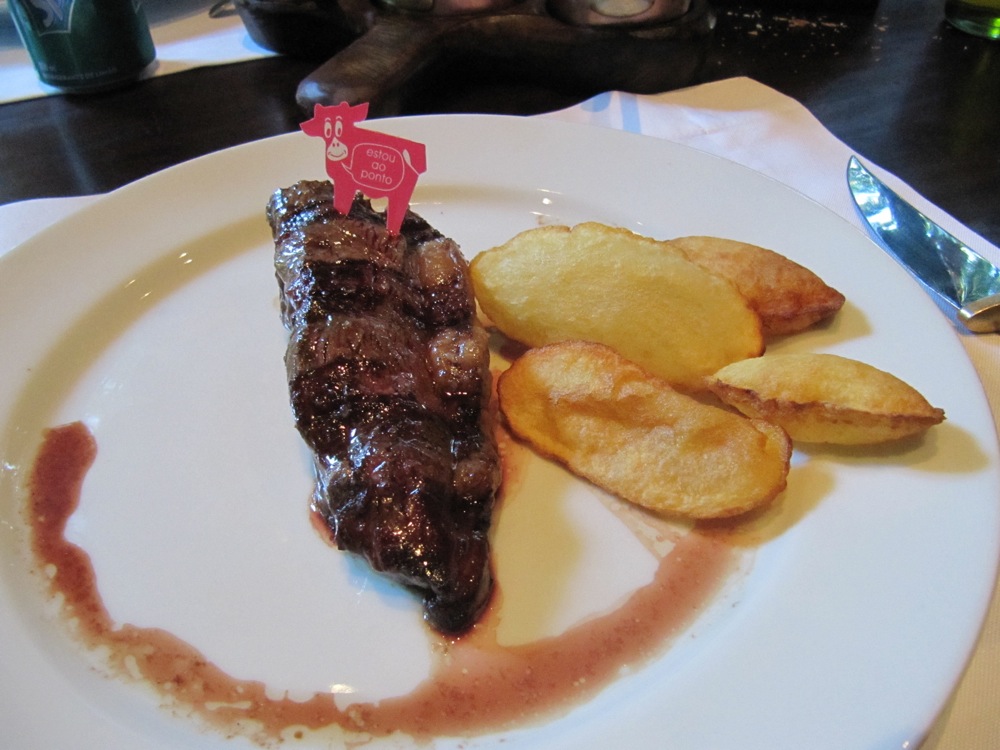
The obligatory trip to a steakhouse, complete with friendly, happy cows. (Actually, I had enough steak to last me a year. For one late meal, I went to a cheap-looking place only to find that steak is the only thing they serve late at night.)

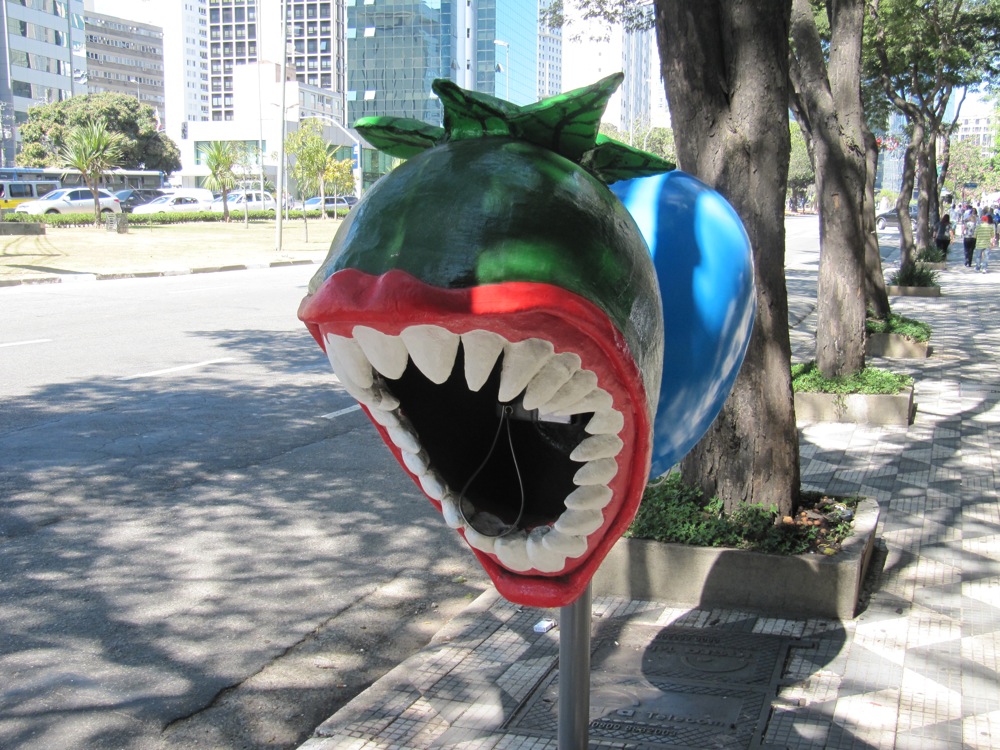
Brazilians have awesome design sensibility. These dome-shaped phone booths are all over the city, and many of them have been decorated in wild, artistic ways.

My personal favorite:

I decided to take the long walk over to this historic part of town.

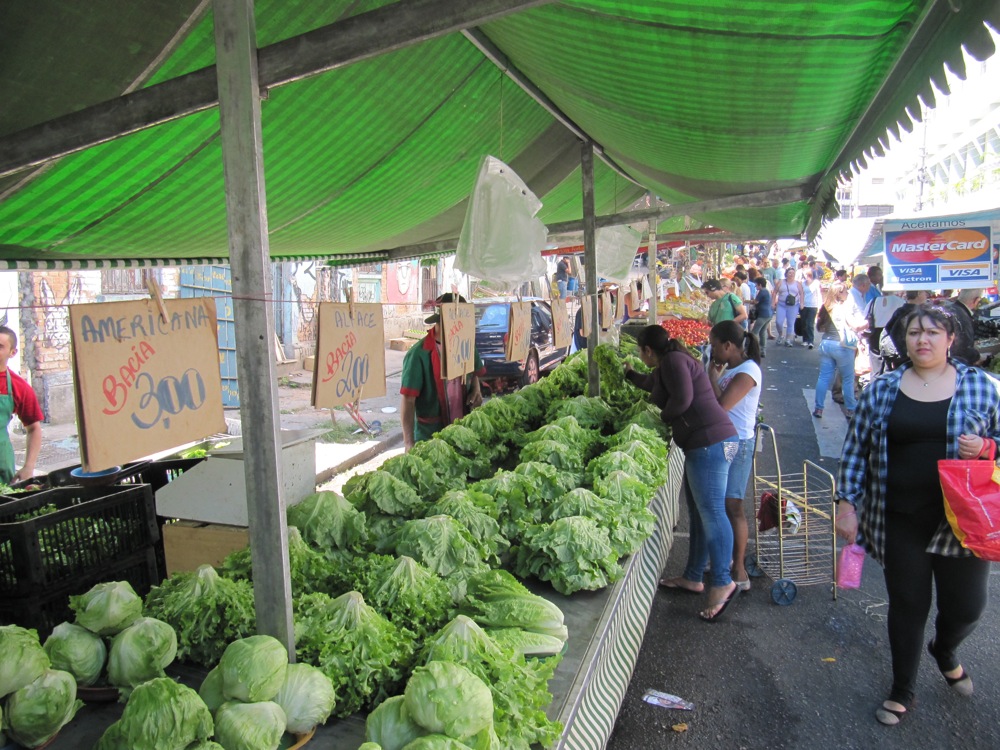
A market along the way from Paulista to the old city center. The walk definitely sends you through more typical Brazil.

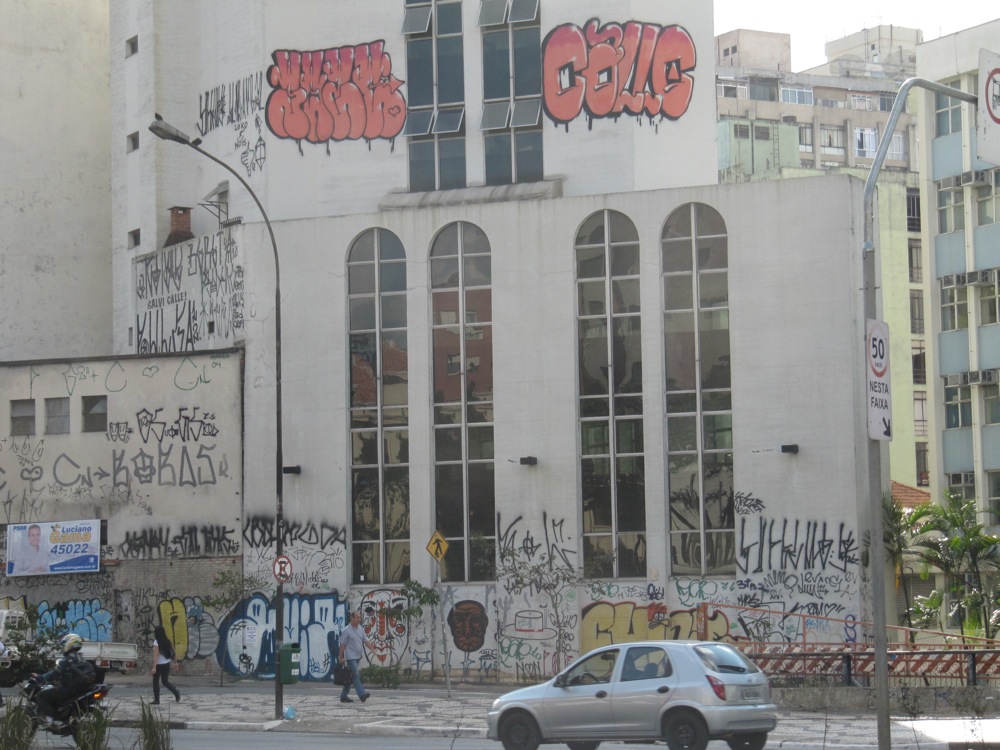
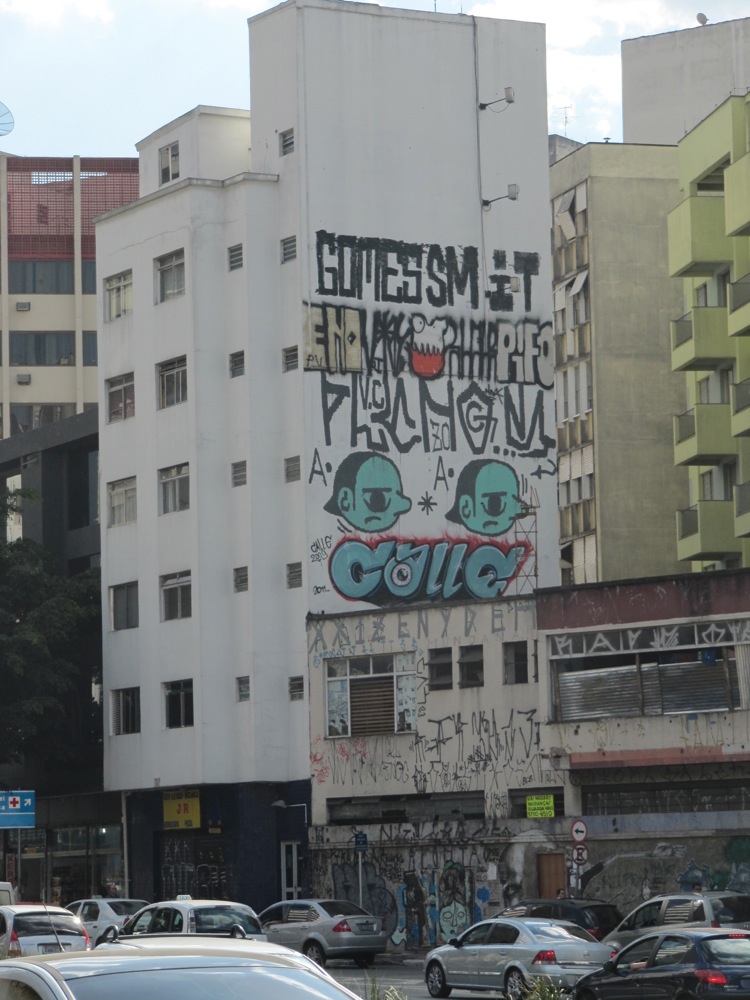
The graffiti problem in the more common parts of São Paulo is something to behold.

Seriously, how do they do it? Are São Paulo’s newspapers filled with grisly tales of people dying in graffiti-related accidents?

Portuguese is just close enough to Spanish to be dangerous. A Spanish speaker would probably read this something like “Caution: Bus does not go against flow”. In Portuguese, it means the opposite.

I actually got into a few conversations with people, pushing my Spanish to the absolute limit. They could mostly pick up on what I was saying, but to me it sounded like Brazilians were speaking Italian or something. Difficult to pick up more than a few words here and there.

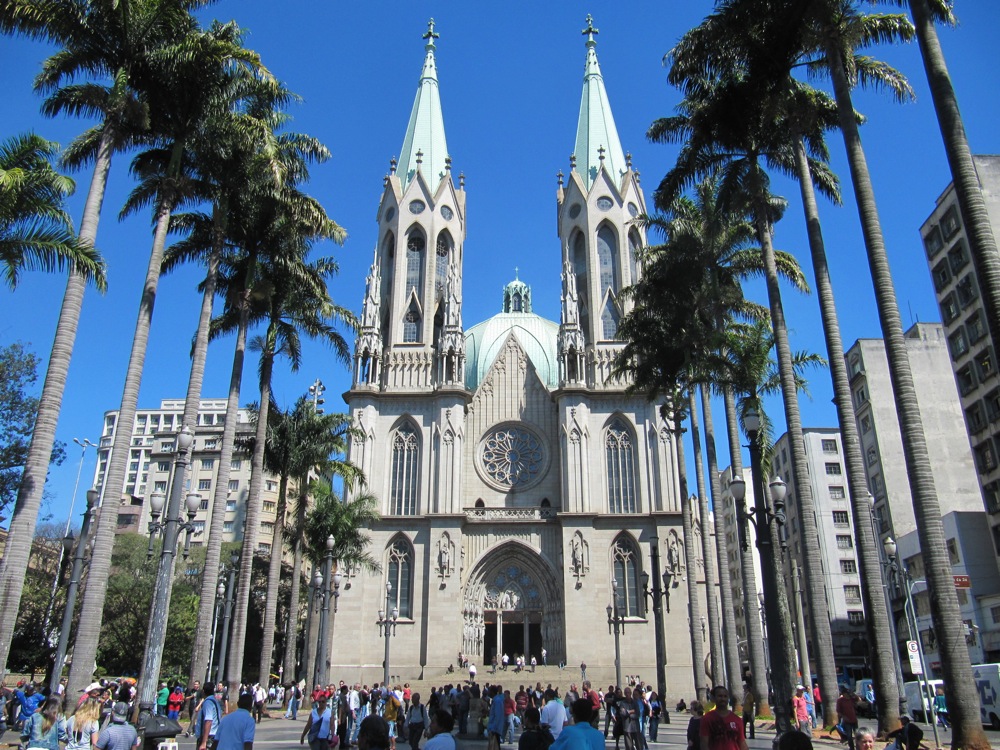
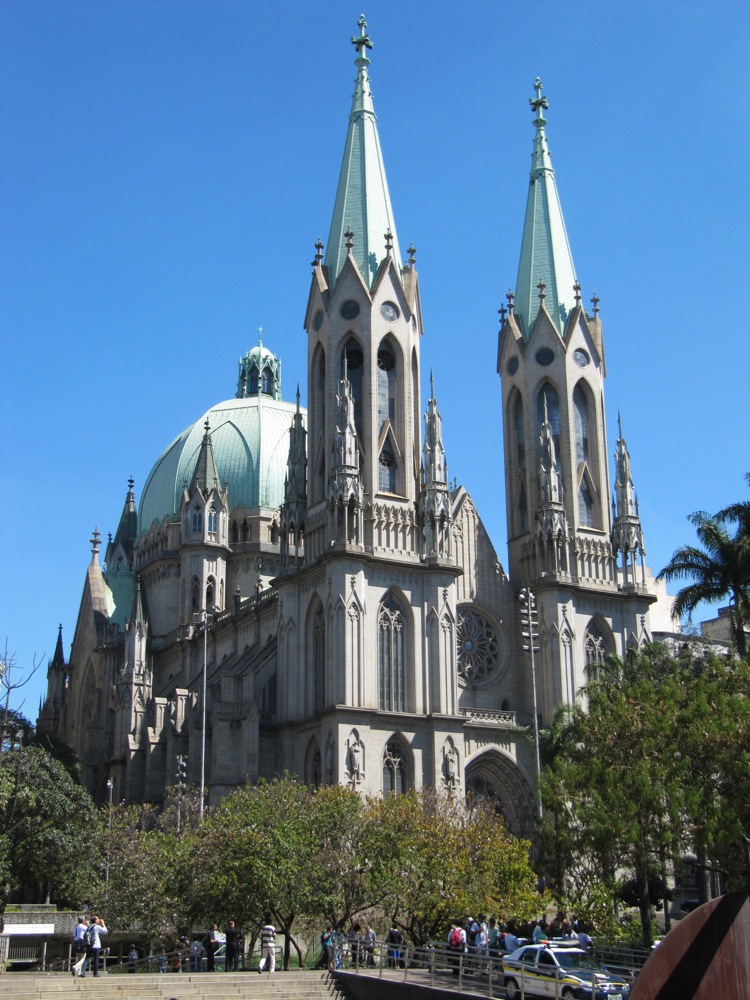
After a few miles of walking, I reached the Praça da Sé, the city’s old central square. Its centerpiece is this giant cathedral: probably the most impressive I’ve seen outside of Europe.

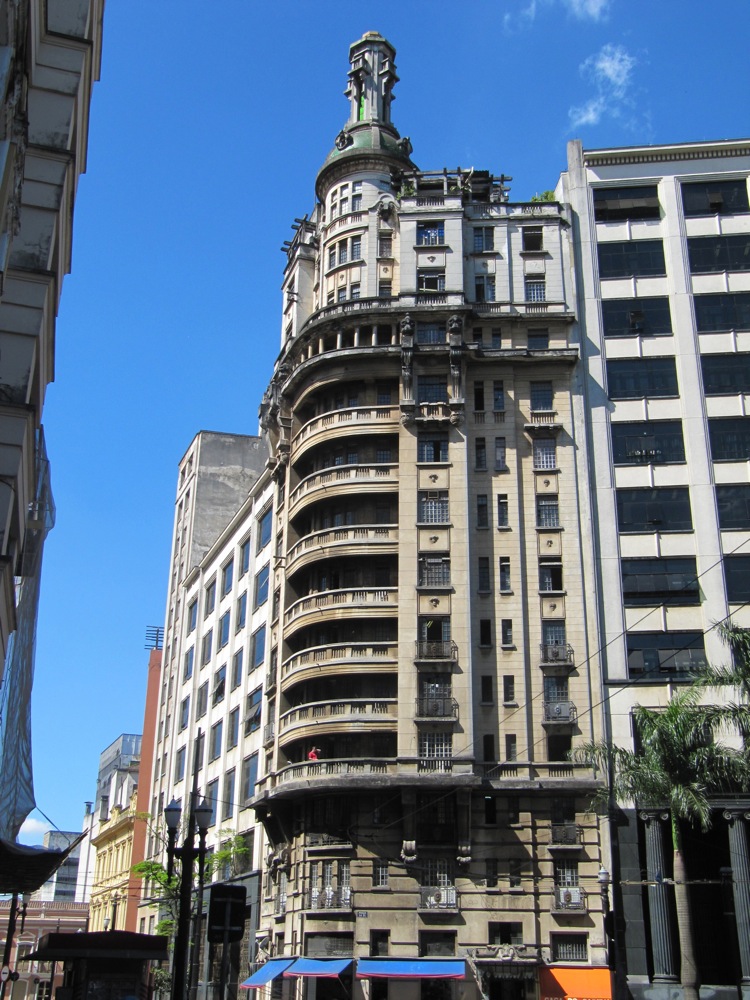
The older part of São Paulo has plenty of beautiful old buildings and big-city feel extending throughout a huge area. A great place to wander around, although sketchy at times.

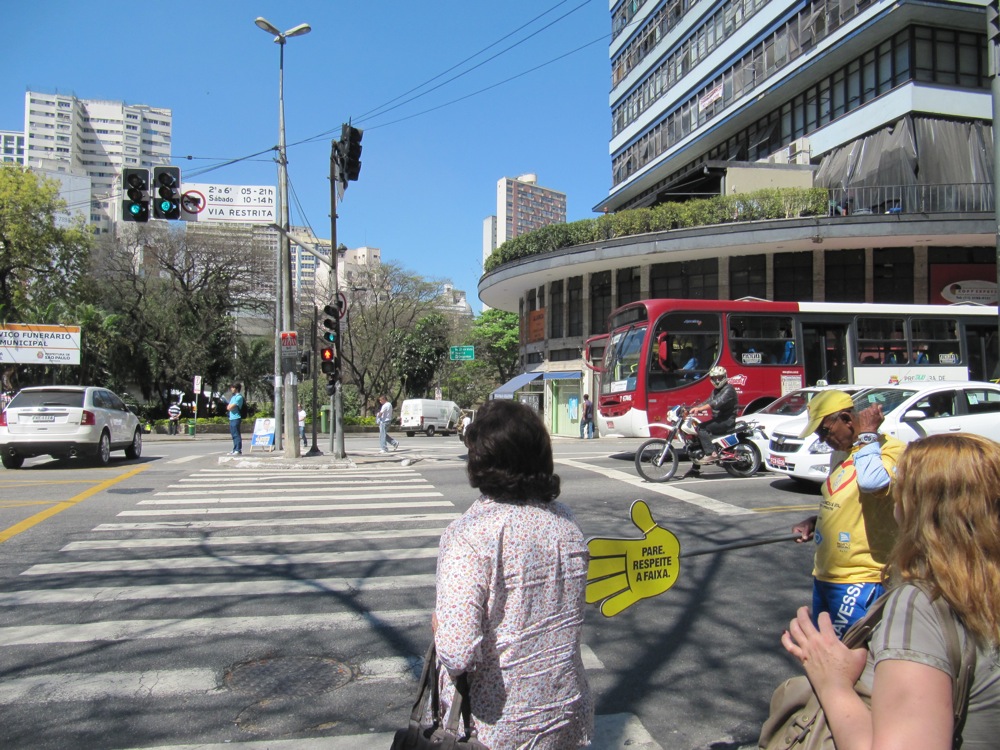
One of my favorite things: at busy intersections, people hold out hands to discourage jaywalkers.

Of course, there’s lots more stunning design and architecture everywhere you look.

Another gravity-defying building.

The refurbished inside of the historic post office.

The entrance to a subway station.

I saw a lot of really cool stuff in Brazil, and definitely would be excited to go back (bring on Rio!), but the style and design of Brazil’s public places is what really stuck out to me. We seem to have such a hard time designing good public places here in Atlanta; why can’t we just have Brazilians do the designing?

Brazil will get no shortage of attention in the coming years, given the 2014 World Cup and 2016 Rio Olympics. I must say the attention will be well-deserved: I found Brazil to be a fascinating place. And São Paulo is the place everyone says not to go! São Paulo may not have tons of attractions like some other Brazilian cities do, but you could certainly do a lot worse.

*As annoying as it is to have to get a pre-arrival visa, you really can’t blame Brazil. They simply use visa reciprocity: if Brazilians need a visa to get into your country, you’ll need a visa to get into Brazil. For that reason, citizens of a number of oddball countries can get into Brazil without a fuss (such as Turkey, Russia, Morocco, the Philippines, and Namibia), while people form the US, Australia, and Canada all must go through elaborate visa proceedings. The visa is good for 10 years, as long as your passport is still valid. Unfortunately, my passport expires in 2014.

Posted by: Alex MacGregor | August 31, 2012

Back to Havana

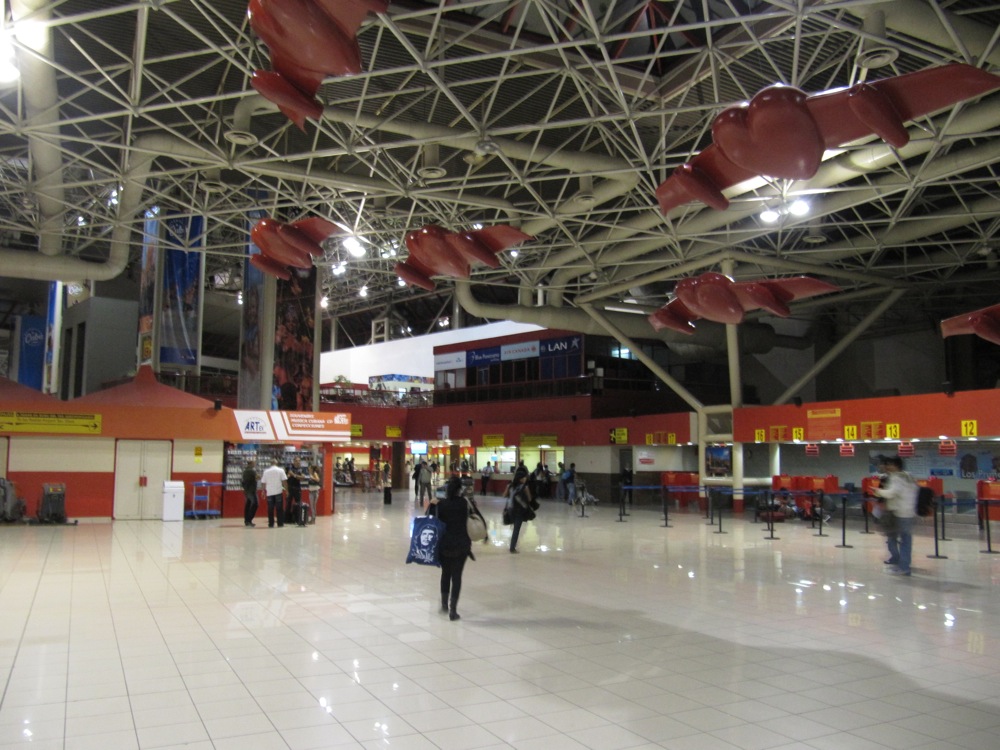
Like most island countries, Cuba has only one real gateway to the outside world: the capital, Havana. So Havana is not only most travelers’ first stop in Cuba, but also their last.

One intriguing option the government leaves open for you to travel from Santa Clara back to Havana is the train. We’ve had train adventures in places ranging from Mozambique and South Africa to France and Switzerland. Why not add Cuba to the list? After all, it’s one of only a few Latin American countries that still has a functioning inter-city train system.

Santa Clara’s train station is a stark place. Getting a ticket here had a lot of the same frustrations involved in getting a Viazul bus ticket in Sancti Spiritus.

We were actually getting down the Cuba ticket procedure. You have to wait uncomfortably long before anyone is willing to do anything to help you. Of course, the strategy is to annoy the workers so much that they have an interest in getting you off of their backs.

Hopefully, you are eventually given an absurdly detailed document that will serve as your ticket (passport number, nationality, birthday–all of this information and more could be necessary to secure passage on the train). Typically, you have the ticket for a grand total of about five minutes before someone collects the ticket, leaving you with no proof you bought the ticket in the first place.

Our tickets even had assigned seats (surprisingly), but the seats were taken due to some sort of booking error (unsurprisingly). So Caroline and I were separate for about half of the trip. Seated in the midst of a large Cuban family from Santiago visiting relatives in Havana, this gave me a chance to have some of the only normal interaction with Cubans not in the tourist trade on the whole trip. The best was a 14 year-old girl who wanted to practice her English, who asked me, “Do you like Michael Jackson, King of Pop?”

Eventually Caroline and I were reunited, and we spent much of the journey studying the guidebook map in disbelief at how long the trip was taking. The decrepit state of so many towns we passed through was remarkable. No tourism to keep the economy going meant house after house was just falling apart–whole blocks of them. This is the Cuba you’re not supposed to see.

By the time we arrived at the station in Havana, even I wondered if it had been worth it to take the train. The train was hot, slow (5.5 hours to go 150 miles), and not particularly cheap, at $10 each. For the Google Search crowd, I regret to say Viazul is probably your better option for getting from Santa Clara to Havana, at just a few dollars more.

Back in Havana, we quickly took to wandering around and soaking up the architecture. If Cuba has one remarkable thing about it, clearly it is Havana. The central city is a seemingly endless expanse of old buildings; possibly the best in the world outside of Europe.

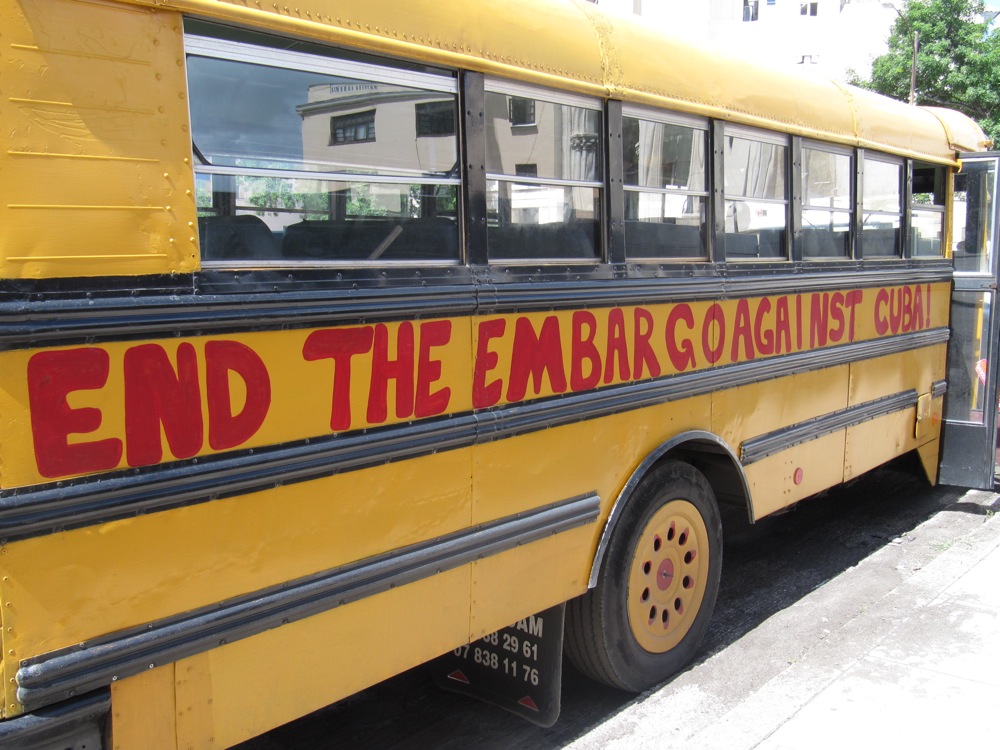
If/when the embargo against Cuba ends, I would definitely recommend a trip to Havana just to check it all out. No other place within a couple hours flight of the US can come close. Mexico City can compete in terms of colonial architecture, but it’s the endless array of early 20th century buildings that makes Havana special.

Speaking of the embargo…

Unlike the state-approved art in Santa Clara, these murals are a lot more subtle in meaning.

The Museo de la Revolucion was the main activity for our second trip to Havana.

Honestly, the revolutionary history aspect of the trip had gotten a bit overwhelming at this point. Between the revolutionary museum in Trinidad and the armored train museum and Che pilgrimage site in Santa Clara, I had kind of had my fill.

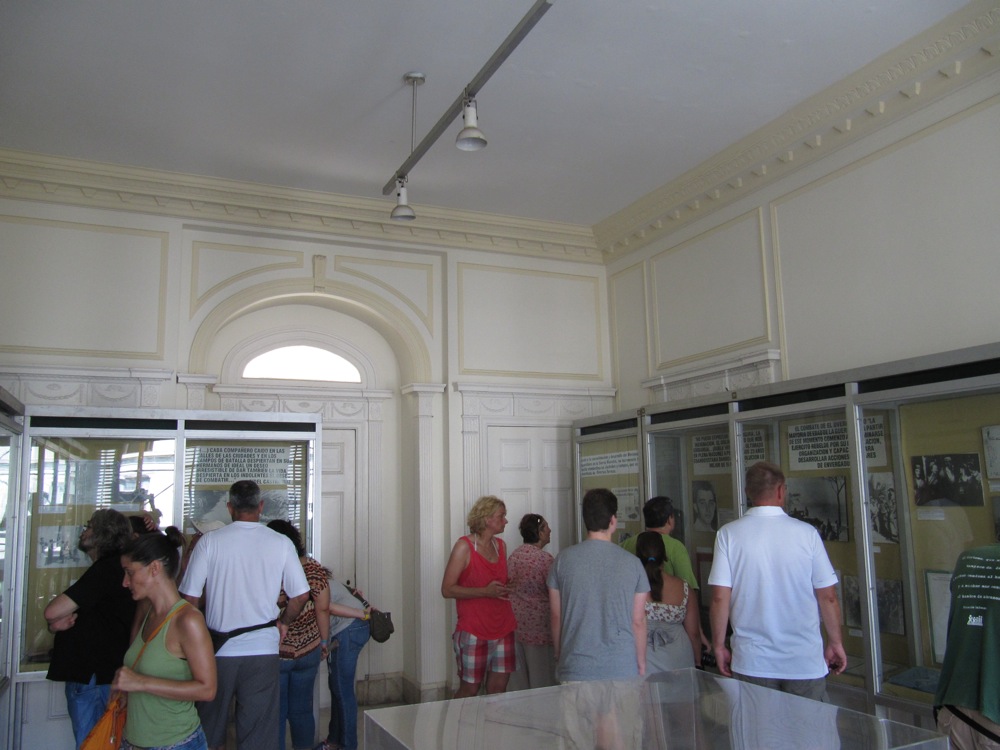
Not only that, but the place was uncomfortably crowded with foreigners as well (even though locals can get at 1/25th the price!). The stamina of your typical tourist to study these barely-comprehensible displays regarding military details of the revolution was remarkable; but alas, I could only last about 15 minutes until I gave up.

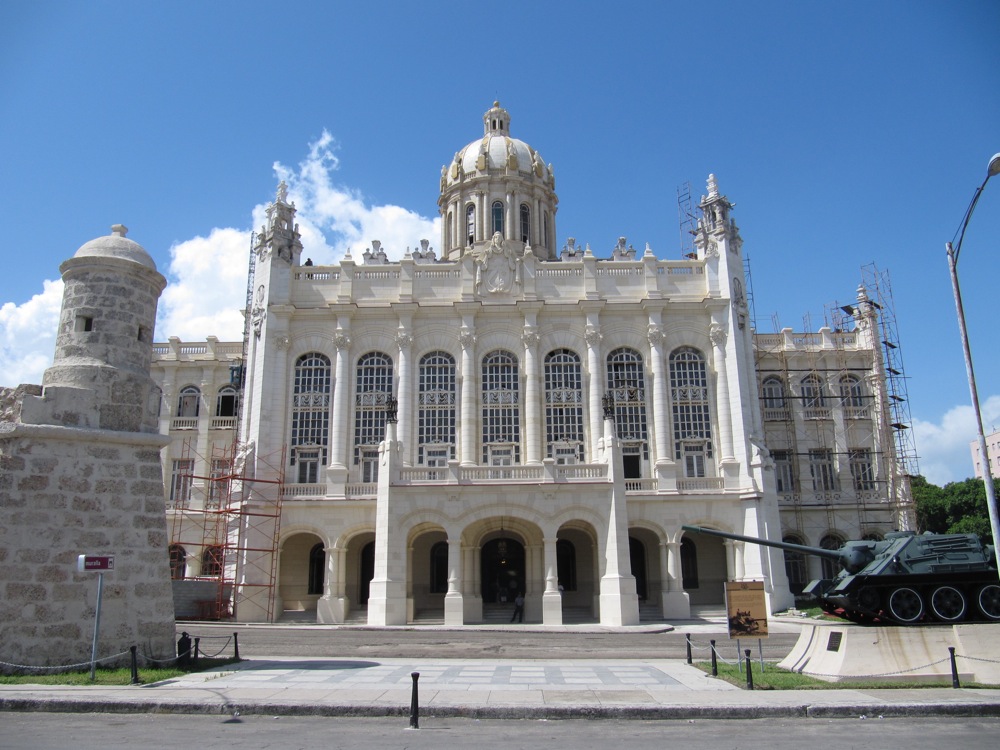
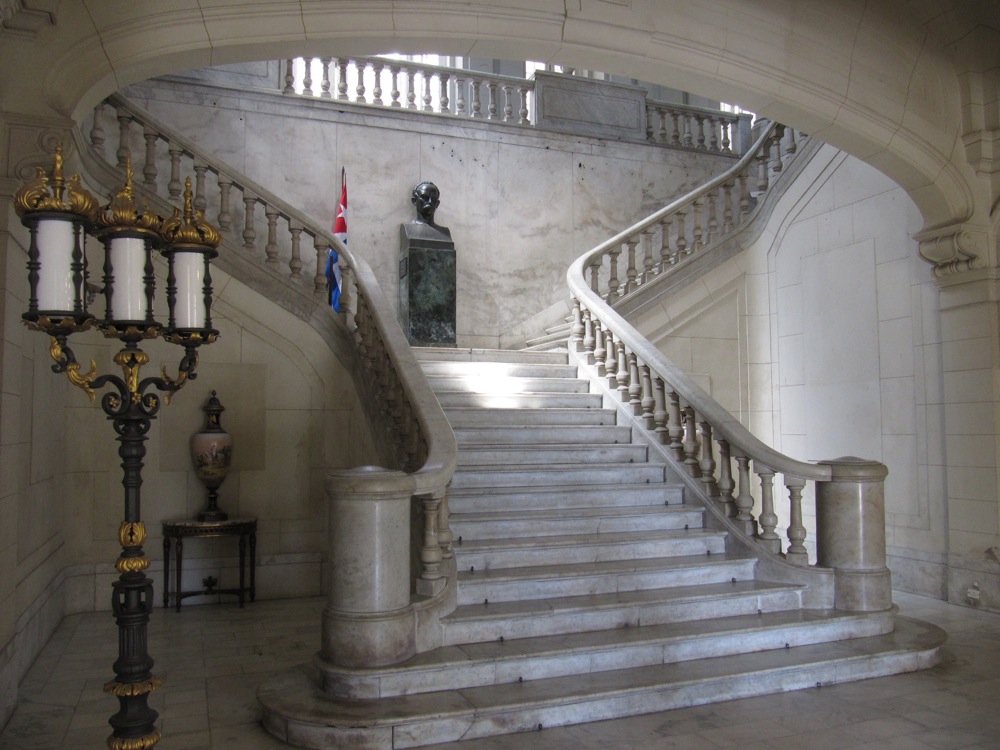
More interesting to me was the fact that the museum is housed in President Batista’s old palace.

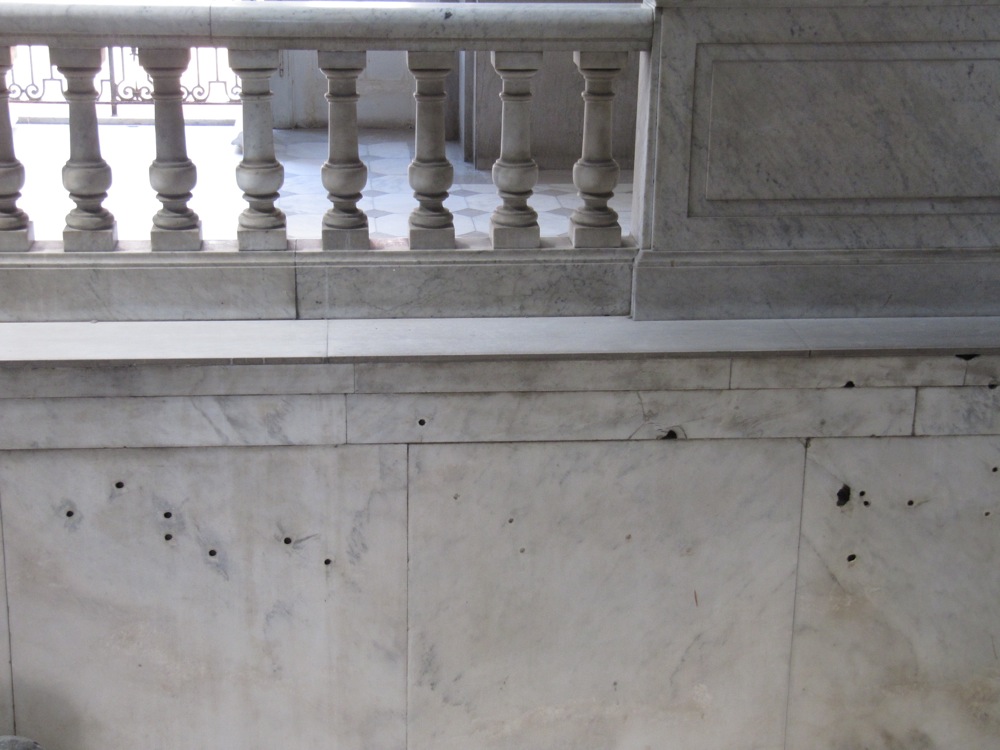
Bullet holes remain from fighting related to a 1957 assassination attempt.

The building is supremely opulent and an incredible place to stroll around. Apparently the rest of the tourists must have slipped into a black hole at some point, because when you’re wandering around these incredible rooms, you’ve got the place almost to yourself.

The Hall of Mirrors, modeled after that in Versailles. Incredible.

Frescoed ceiling.

For an extra CUC, you can check out the president’s offices.

The president’s conference room, where, in the early years of the revolutionary government, the Castro brothers and Che would gather to discuss public policy.

I actually preferred the exhibits about life after the revolution over the ones about the revolution itself. Lots of interesting artifacts and vignettes about how awesome life suddenly was–all the new teachers, hospitals, food, and so on. Some might call this propaganda; others, putting your best foot forward.

The other tourists didn’t seem to find this part of the museum quite as enthralling as the military history portion. Different strokes, I guess: it’s tough to compete with military history.

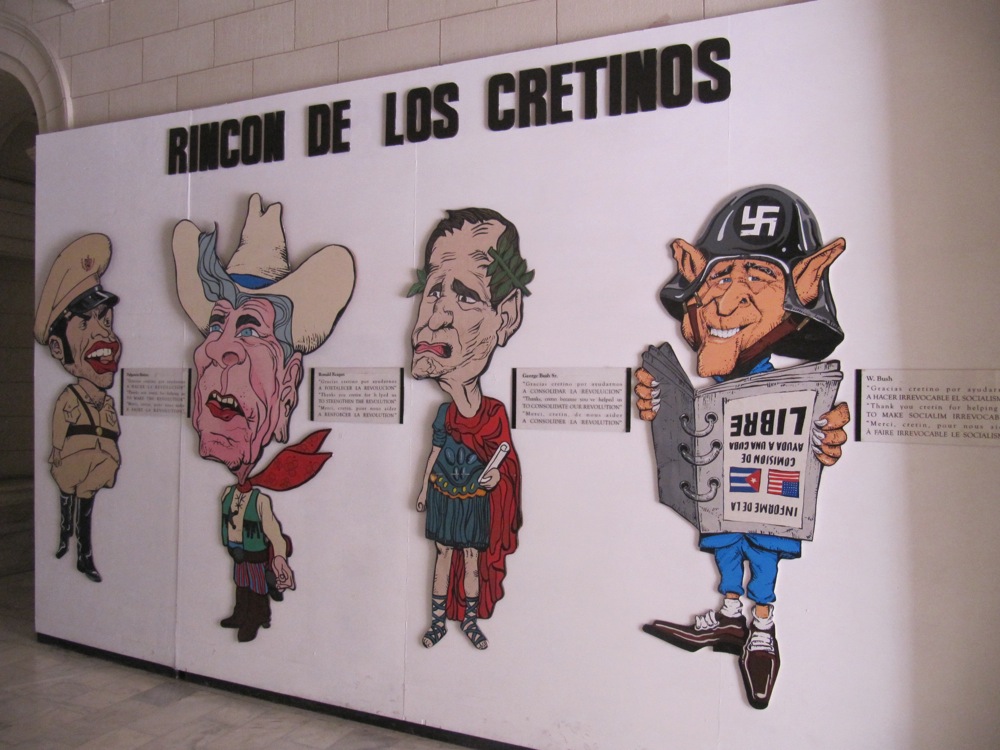
And, who can forget, the most colorful part of the museum: the “Cretin Corner”.

No ambiguity about the message here!

Our last meal in Cuba was in Havana’s Chinatown. Like the Chinese food we had in Malawi, when you have Chinese food in a place like Havana you’re really just trying to stave off a craving, rather than have a satisfying meal. But by this time the next day we were planning to be in rural Nicaragua, so we had to jump on the amenity while it was available.
Goodbye Cuba!

I’m definitely glad we made the journey to Cuba, but, considering the time, cost, and hassle associated with it, I’m not planning to return until the embargo is lifted. Let’s hope that happens sooner rather than later.

« Newer Posts - Older Posts »

Categories