Posted by: Alex MacGregor | February 11, 2010

To Joburg by Rail

After a fabulous week in Cape Town, filled with adventures in wine country, crazy wind at the Cape of Good Hope, delicious curry, and arduous mountainclimbing, it was time to move on to Johannesburg. We decided to pick the cheapest and most scenic way to make the journey to South Africa’s largest city: by train. Shosholoza Meyl, the government-run rail company, still makes the journey all the way across the country–a gruelling 26 hours–for just $50 in a sleeper compartment.

After a frantic trip to the Shoprite to gather supplies, Caroline settles in for the midday departure.

The first stretch of rail from Cape Town is beautiful. It’s the perfect time to head to the dining car and watch the scenery go by.

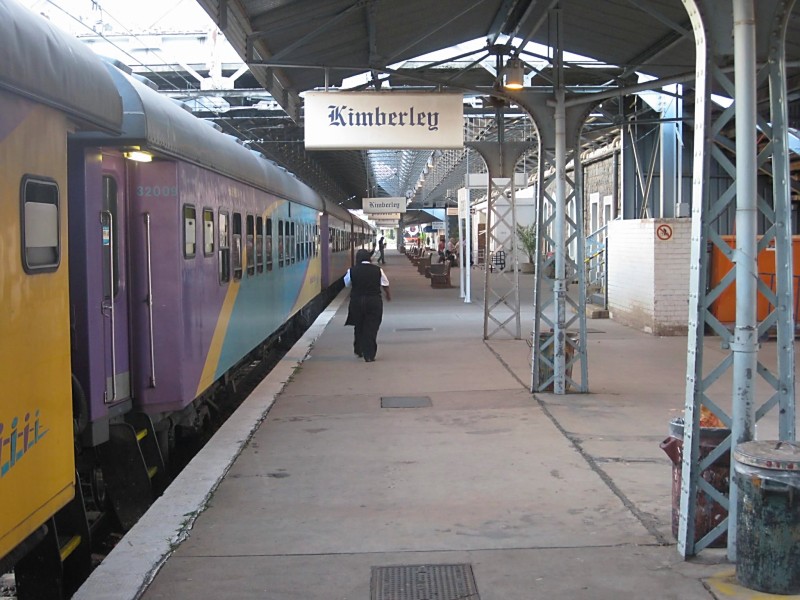
After getting the best rest we could for the evening, we found ourselves in the diamond-producing city of Kimberley. Lots of the stations along the route looked like they might have well been in England.

Finally, at midafternoon the next day, we arrived in central Joburg. Thankfully, I was meeting some long-lost family who so kindly were able to meet us at the station and give us a ride and a place to stay.

Thank you so much Karen, Gretchen, and Paula!

Posted by: Caroline | February 10, 2010

To the Most Southwestern Point in Africa

Because we don’t know how to drive stick (and all the rental cars here are) and because public transportation only gets you halfway down the coast, we decided to take a tour to Cape Point/Cape of Good Hope, the most southwestern point of Africa and where the Indian and Atlantic Oceans meet. We chose Baz Bus, a company targeted to the semi-adventurous backpacker (adventurous enough to avoid the huge tourist coaches but not quite ready to hop on the metrorail through the townships).

I originally thought the minibus was going to be sparsely packed since we were the first ones on, but within thirty minutes there wasn’t a seat left. We traveled with two guys from Canada (one who had an SLR camera–this is the person you need to make friends with on a trip), some individual student-aged tourists from Japan, Germany, and the Netherlands, and a huge group of mainly American and British volunteers working with kids in one of the townships.

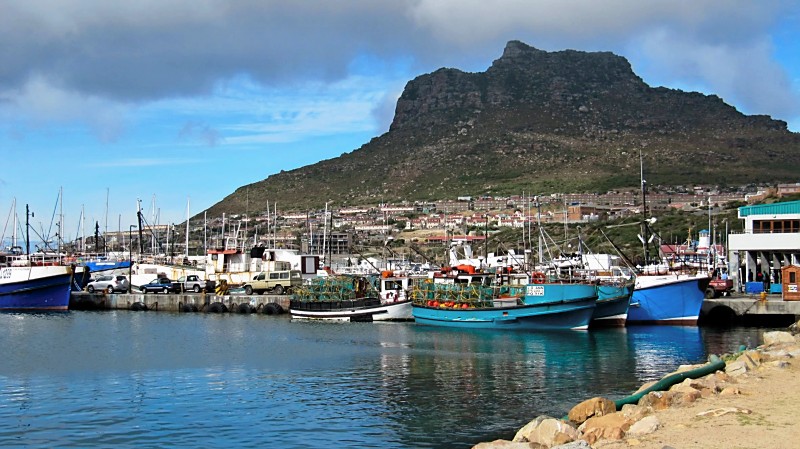
Our first stop was at Hout Bay, jokingly named the Republic of Hout Bay. The name dates back to apartheid, when South African passports were difficult to use in a world that disapproved of the system. So a new Hout Bay passport was created and, according to legend, successfully used for international travel. Hout Bay is a small fishing village, which might be quaint if it wasn’t for the strip of excessively nautical businesses lining the wharf. Alex and I sat down for a coffee in one of these places, but decided to leave on principle when we noticed all of the employees were dressed in sailor costumes (ok, ok, actually I think it had more to do with no one paying attention to us for ten minutes).

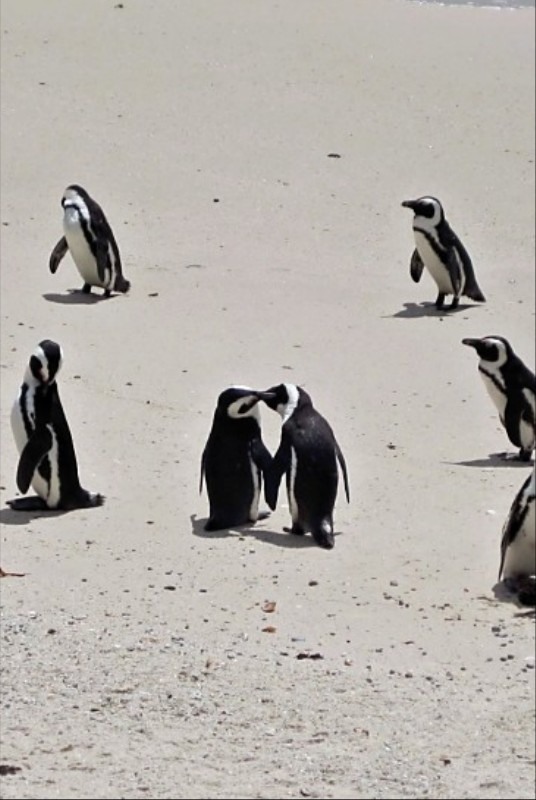
Next, we stopped at a beach near Simonstown to see African penguins. They’re eerily calm and impossibly adorable.

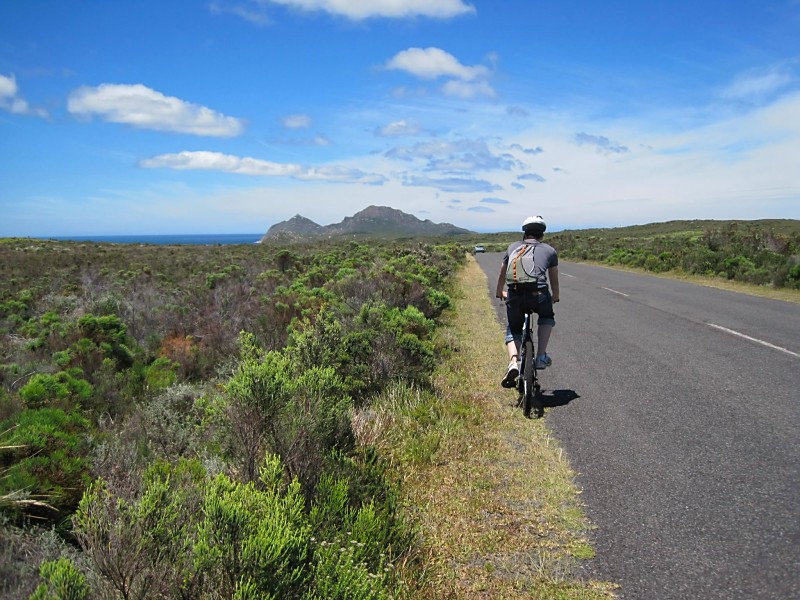
After that we entered the Cape of Good Hope National Park and unloaded bicycles to travel the 6km of lunar landscape to the visitors center.

Cape Point was next, and we managed to make it all the way up to the old lighthouse (it was too high up for ships to see when there were storms, so it is no longer used) — and it is QUITE windy up there. Like, afraid-of-losing-your-camera-and-possibly-self-to-the-sea windy.

Our final leg of the trip was a 45-minute walk along rocky cliffs to the Cape of Good Hope. The wind continued to be brutal — so brutal that, even against the backdrop of one of the most beautiful places in the world, all I thought about was getting myself, my camera, and my hat down safely to the end of the trek. We took a brief trip down to one of the beaches, which featured stunning waves — and treacherous sand gusts. Let’s just say I felt really exfoliated afterwards.

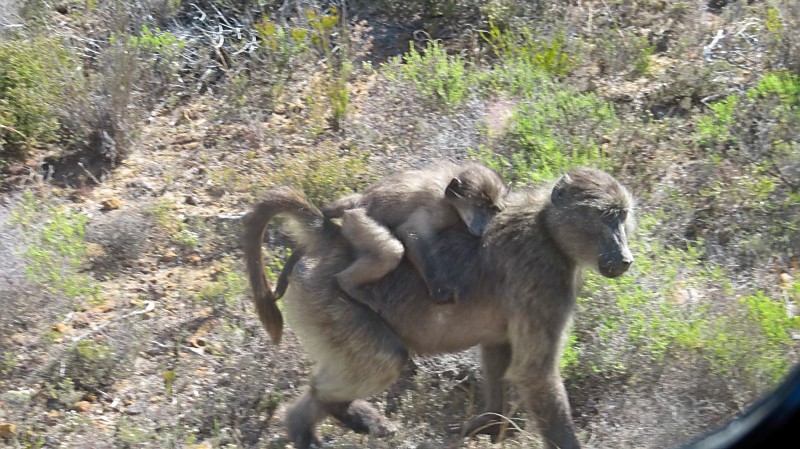
Baboons tend to be a big problem here, as they we can smell food from far away and will climb into cars and houses. We even saw one sitting on a car in a parking area. I only wish I could see how the driver reacted when he returned. We passed this troupe on our way home.

Posted by: Alex MacGregor | February 9, 2010

The Locals’ Road to Franschhoek

One aspect of South Africa we had found a bit bewildering was the difficulty of plucking ourselves out of the tourist economy and putting ourselves into the local economy. So on our trip to the wine-producing regions east of Cape Town we decided to not let the high-gloss brochures and promise of a safe, trouble-free excursion tempt us. We were going to “do” wine country–which to us just meant taking a pleasant trip into the countryside–without any outside help.

Our plan was to take the Metrorail train to Stellenbosch. Although the guidebook suggests a $20 each-way ride in the tourist coach as the easy, mainstream way of accomplishing this trip, we felt the $2 train fare was worth whatever hardship we would have to endure.

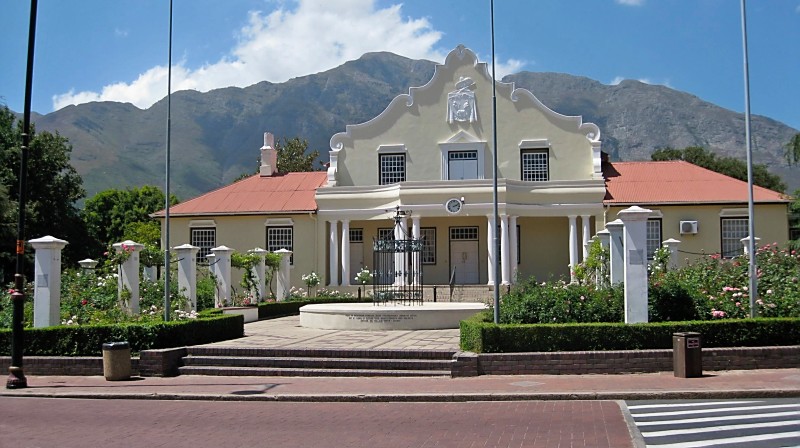
Stellenbosch is a pleasant, medium-sized city, with lots of Dutch Colonial architecture. The center has an old church, armory, and some nice streets, lined with cafes geared towards wealthy South Africans and foreign tourists.

But it wasn’t exactly what we wanted. The people at the tourism office stated that there was no vineyard within walking distance, and the only option was to take a R170 ($25) tour bus that stops at four separate wineries.

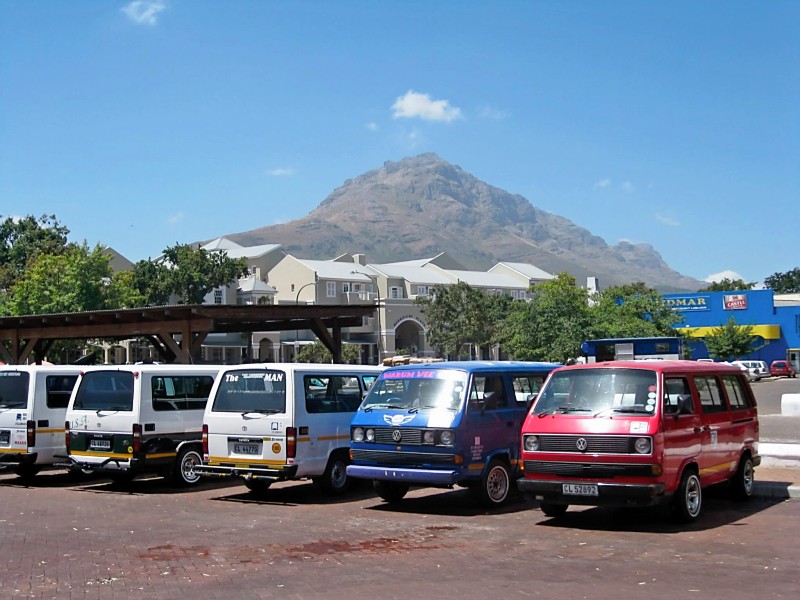
So we found another way. We had read about a town called Franschhoek, which, while touristy and expensive, had wineries within walking distance and was set in a beautiful valley. Although the guidebook says it’s not worth really attempting unless you had your own car, it was apparently possible to reach the city by minibus (or “minibus taxis”, as they’re called here). Sounds fine to us!

We headed to the bus station and began asking around. Although none of the signs said Franschhoek or anything close, we hopped on the bus indicated by the locals to be the correct one.

The bus went straight away into the higher, more rugged country before turning off into a medium-sized village, where we spent a good twenty minutes dropping off and picking up passengers, then continued on to a smaller town with little more than an elementary school and a grocer. The bus driver said, “Get out. Wait here for another taxi.” And he was gone.
The next taxi came surprisingly fast–I had to run from the grocery store, where I was buying a Coke (“Oh, you aren’t a South African?!” when they heard me speak), then stand up the whole first part of the minibus ride. Ultimately, we were dropped at an intersection with a signpost pointing towards Franschhoek and told to wait for a bus headed in that direction. It wouldn’t be long now.

After about ten minutes on the new bus, we turned and started driving through a township area on the outskirts of Franschhoek. After winding through the rough streets of the township for a while, we finally found ourselves dropped at the end of the line, just outside the tourist zone in Franschhoek.

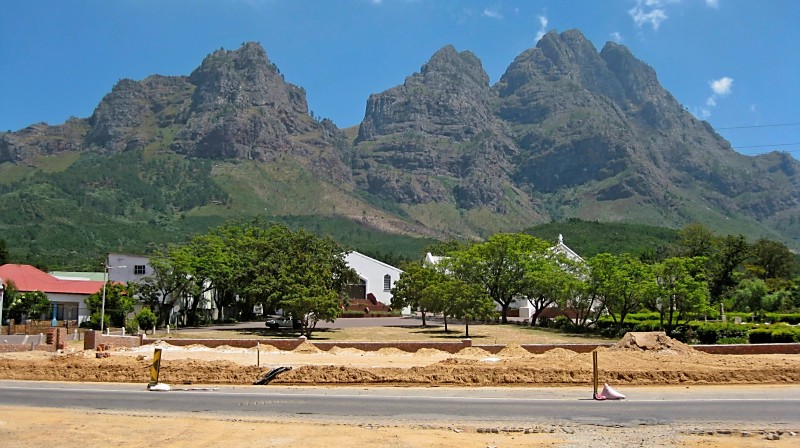
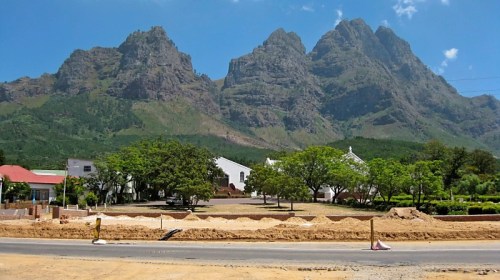
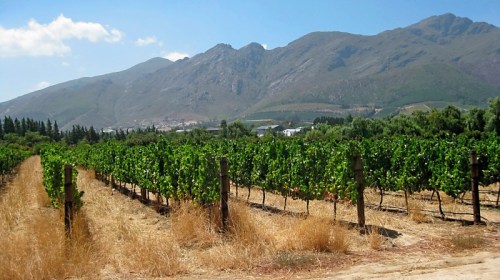
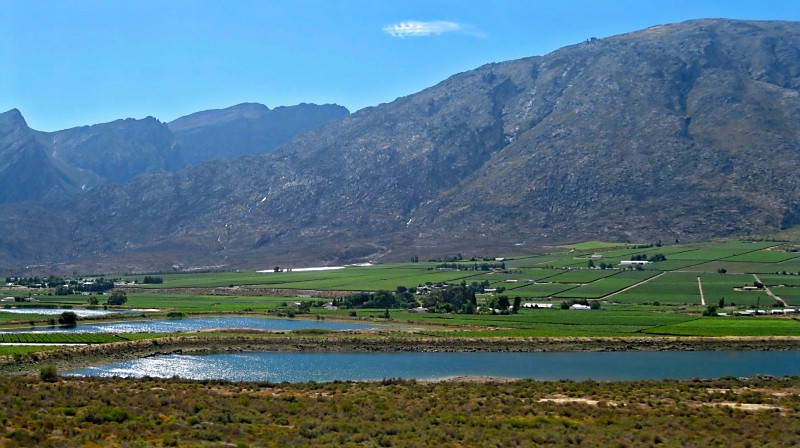
The mountains in Franschhoek were incredible. Both slopes of the valley were lined with vineyards, which eventually gave way to rugged, rocky mountains. The region was much more compact than Stellenbosch–you could probably walk across the valley in half an hour–and the mountains were higher and closer. The area was originally settled by French immigrants, who promptly began producing wine in the valley.

Everything was also very expensive and exclusive. We felt like intruders into a hidden world.

We decided to head to one of the closest wineries, called Mont Rochelle.

There we did a wine tasting for R20, and got to tour the lovely grounds of the vineyard, which had great views.

Because it had taken most of the day to get out there, we decided to take an easier minibus ride to Paarl, on a different train route. After explaining the predicament we faced surrounding our train tickets (which did not include a trip to Paarl), the confused Metrorail employees just shrugged and let us through.

We accidentally sat in second class on the train, which turned out to be a great mistake because we were able to witness the incredible talent of a Congolese salesman who had was a master of punning in at least 5 languages, and had the whole cabin laughing along as he made his jokes. He was so good a salesman I actually bought something. It’s incredible to think of just how talented an entertainer he is, and how his talents are being spent selling candy in the second class compartments of the Cape Town Metrorail.

All in all we made out exceptionally well. We had a great day only spending about R70 ($10) on transport per person, and a couple dollars more on the wine tour…Not bad!

Travel Info: If you’re keen on getting to Franschhoek from Cape Town using public transport, the best way to get there is to take the Metrorail to Paarl, rather than going via Stellenbosch. On the road outside the train station, minibus taxis run between Paarl and Franschhoek regularly–ask around.

Posted by: Caroline | February 5, 2010

Table Mountain (Mostly) by Foot

After spending yet another morning at the Mozambican consulate (once we left last time, we discovered that Alex’s visa was missing a critical stamp that would have delayed us for hours at the border), we decided to hike Table Mountain. It’s not the most pristine of environments; the cable car that can take you to the top attracts as many massive tour busloads as can squeeze into the parking lot. However, it still gives you an excellent view and a horrendous workout (which we needed after all the curry). We were planning on at least hiking up and taking the cable car down, but it seemed kind of ridiculous to pay twenty dollars for that–so we hiked both ways via Platteklip Gorge.

It was hard hiking, similar to using a Stairclimber for 2 hours. Note the actual stone stairs leading up most of the 1,000+ meters to the tabletop.

By the way, doesn’t Alex look too cool in his new street-vendor shades?

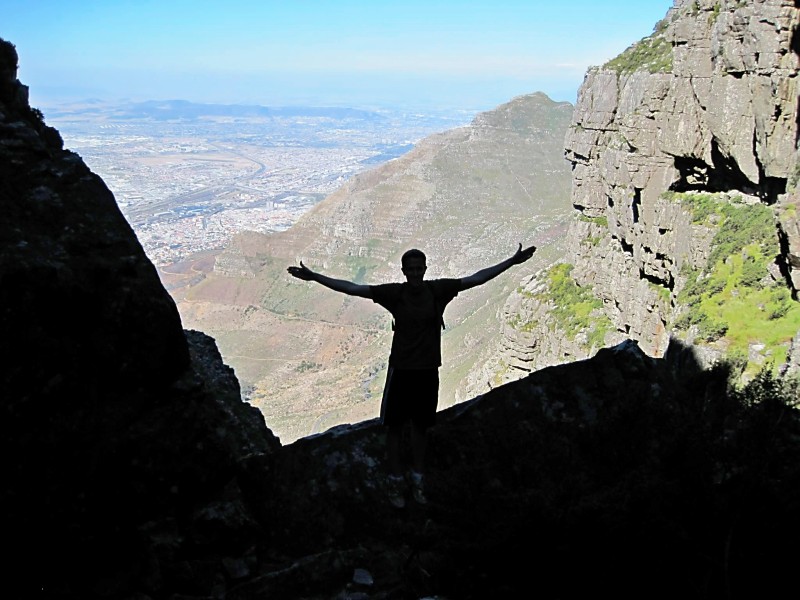
Alex was so happy to be within meters of conquering the mountain, he wanted to take this vaguely sacrilegious photo.

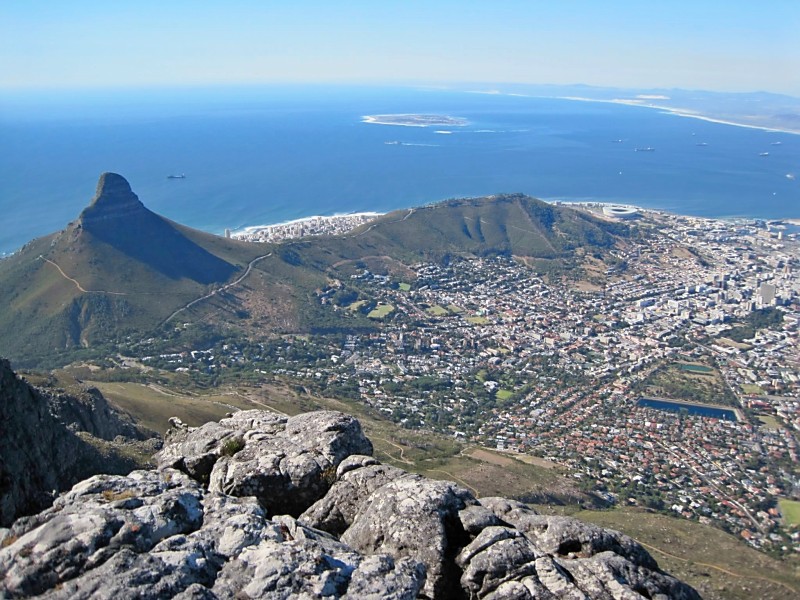
Finally–at the top! This is really channeling Lord of the Rings, am I right?

You can see Lion’s Head (far left) and Robben Island (near the top).

Back at the lower cableway station, we found one taxi driver who was willing to use the meter instead of charge us a double fare: Gary from Zimbabwe. We asked him how Zimbabwe is, and he assured us, “There are no more problems.” He is planning to return after the World Cup, an event that is creating palpable excitement in the city, both for the sport and the supposed riches that await from an influx of fans. One of our other taxi drivers asked, “Why does everyone think they are going to get rich from the World Cup? They say they are going to get rich, but I ask them: HOW?”

Posted by: Alex MacGregor | February 5, 2010

Museum Day

On Wednesday we set off at the ripe hour of 6AM with one solid objective in mind: to climb Table Mountain. We weren’t really sure how to get to the start of the hike, so we just started walking uphill, shrugging off an outrageous R80 taxi offer along the way. After about 30 minutes of walking up Kloof Nek Road in search of the mythical Kloof Nek, we noticed that the mountain was becoming more and more densely covered in clouds, and then it started raining. So we turned around and walked all the way back down.

We decided to occupy the apparent rainy day with an alternate set of plans: museum day. The four museums:

Castle of Good Hope – Built by the Dutch in the 1600s to defend one of the Dutch East India Company’s favorite colonial possessions. We had a long conversation with the castle blacksmith, who turned out to be a Congolese whose dream is to get to the USA, but has only made it to South Africa so far.

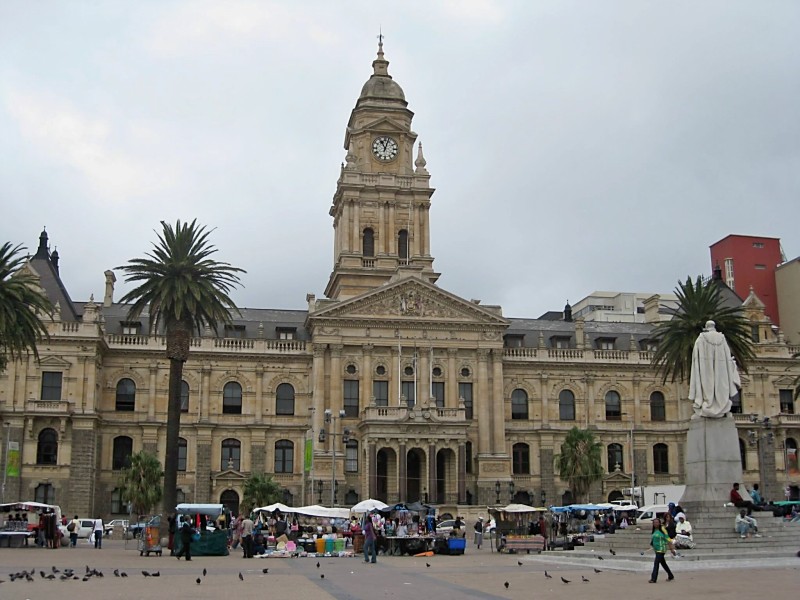
Outside the Castle, in a market area that still needs a little bit more exploration:

District Six Museum – Museum commemorating the bustling mixed-race neighborhood that the apartheid government destroyed in the 1970s after proclaiming the district a white area under the Group Areas Act. It remains blighted and empty to this day.

Slave Lodge – Structure where enslaved people were housed during the early colonial era. Interestingly, very few were actually from the Cape; most were from Mozambique, Madagascar, India, Southeast Asia, Indonesia, and Malaysia.

Nelson Mandela Gateway – In lieu of Robben Island. Lots of exhibits on apartheid, including creepy photos of perpetrators of the old regime.

waterfrontwide

We were museum-ed out by this point, so we decided to wander around in one of Cape Town’s premier tourist hotspots: Waterfront. This is basically the old port area, with nice colonial buildings and a whole lot of tourist restaurants.

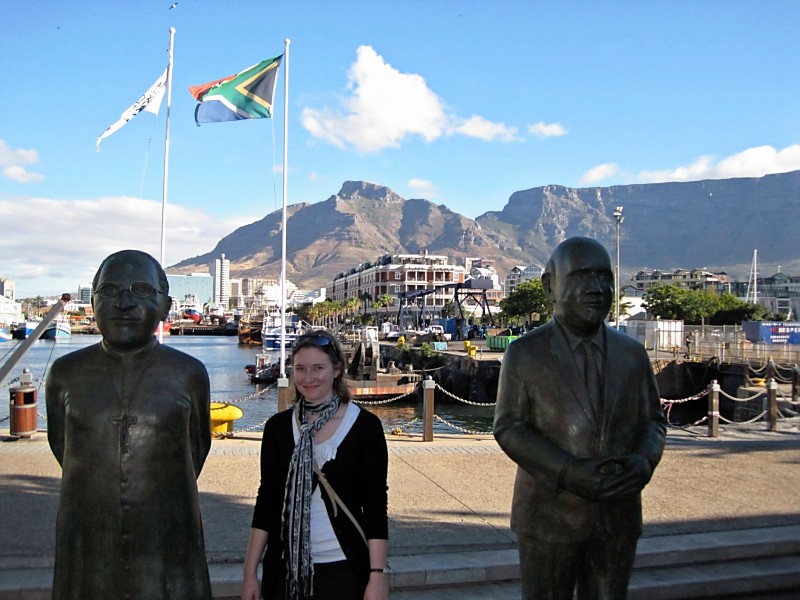
Although the view was very nice, the relentless pressure from tour operators got so tiring that we caught a minibus back to Central, after the obligatory photo-op with Desmond Tutu.

Of course, the weather had long since become nice again, like it usually does in the Cape.

Posted by: Caroline | February 3, 2010

Curry in Cape Town

Cape Town is light and breezy in both weather and attitude. I love it here. It’s extremely international, which means it has amazing food. I think everyone knows how much I love curry…

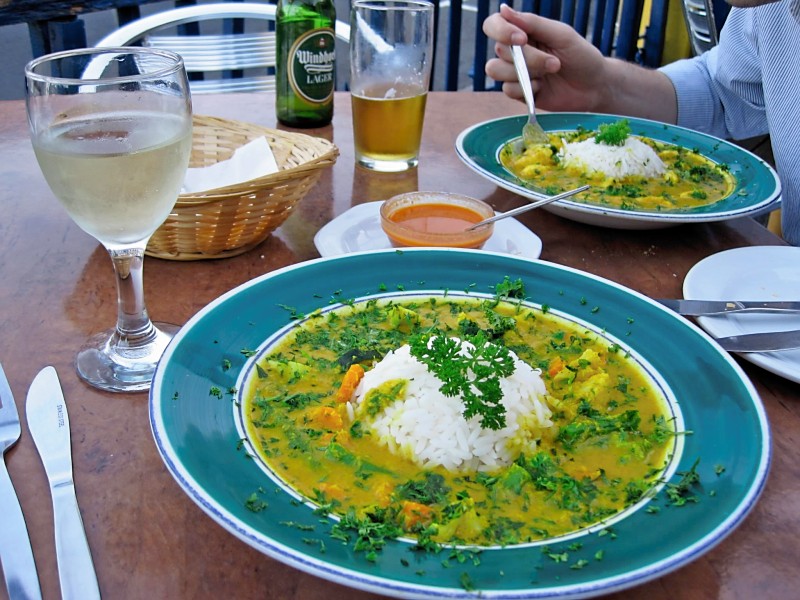
After our 11 hour flight,  we felt like zombies so tried to regain some life with the Tanzanian fish curry at African Image cafe. Our server wore a Barack Obama apron (for sale next door).

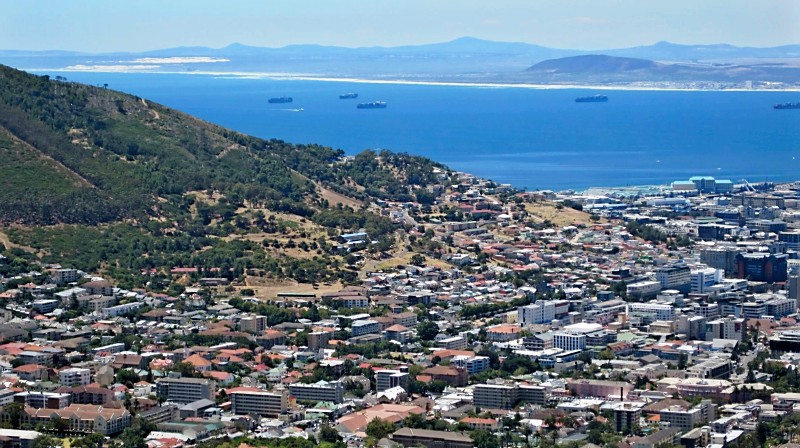
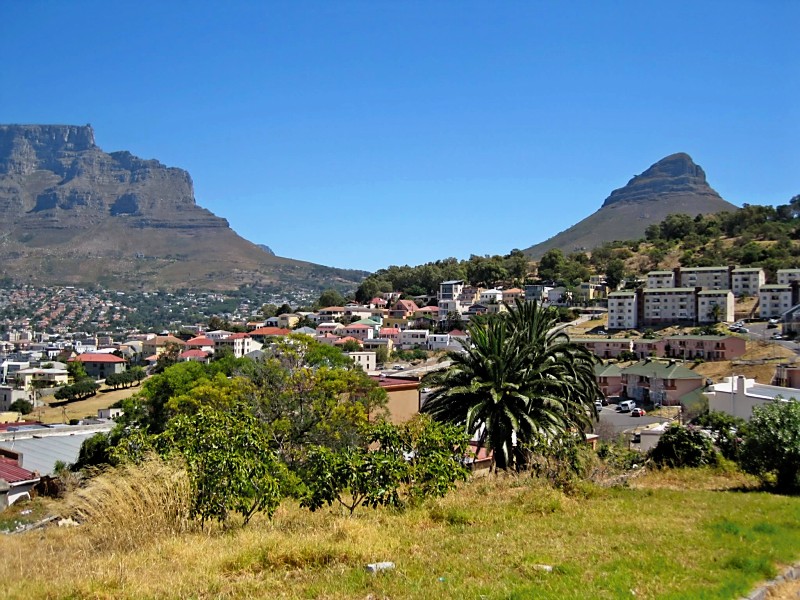
The next day we headed up (I mean really up) to a viewpoint of the waterfront (see picture at top of this blog) and nearby Table Mountain and Lion’s Head (below).

On the way up, we passed through a neighborhood called Bo-Kaap, home to some famous Cape Malay cuisine–and lots of fun, colorful buildings.

We ducked into a suspicious looking building right next to a butcher’s, but it ended up being much less creepy than it seemed. We had the bobotie, which is kind of like a curry flavored meatloaf (ground meat with egg baked on top) in a bed of rice.

Because we will be entering Mozambique after South Africa, we needed to obtain a pricey visa (the consulate clerk asked us where we were from and almost laughed when we said the U.S.–he knew we were about to fork over more money than we wanted). Getting the visa required a bit maneuvering (racing through the center of the city to transfer bank funds on a time limit), but I think that is a good preview of what is to come as we hop from country to country. To reward ourselves, we sample some of Mozambique’s cuisine: vegetable and chicken curry.

Posted by: Alex MacGregor | February 3, 2010

Freezing in Frankfurt

Hello everyone!

It’s 2010 and Caroline and I are going on a journey from Cape Town, South Africa, to Milan, Italy. After spending a couple months on Southern Africa, we are going to fly to Ethiopia for a couple weeks, then we’ll fly to Istanbul and make our way across eastern Europe.

We didn’t spring for the nonstop tickets from Atlanta to Capetown, so our outbound journey involved consecutive overnight flights, with a full day of waiting around in Frankfurt. At the suggestion of my father, we took Germany’s (shockingly pricey) high speed trains to the historic city of Heidelberg to spend the day.

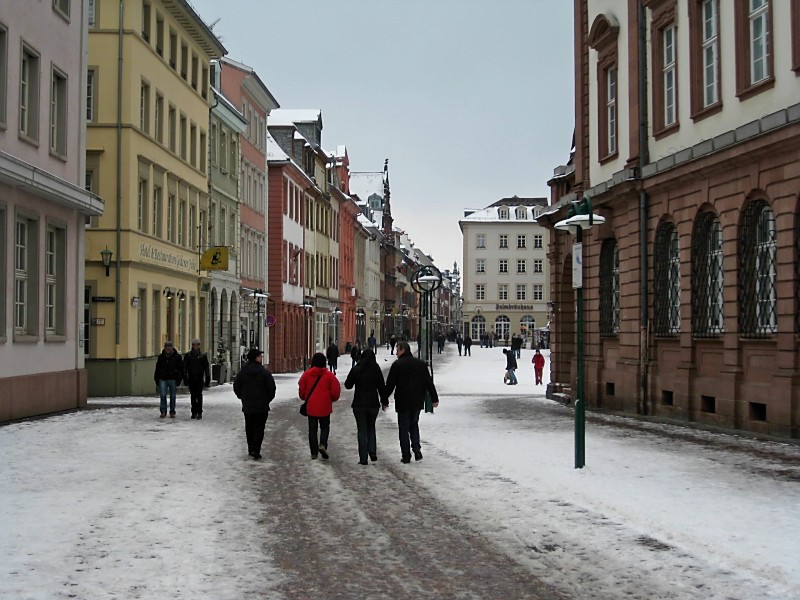
Heidelberg was very nice–set in the bottom of a deep valley, with a historic quarter right next to a nice river. We ate German food, had coffee in the oldest restaurant in the city, and explored the old quarter. The drawback: Germany is in the grips of a horrible blizzard right now, and we are dressed for summer in the Western Cape!

It wasn’t just us who were thrown off by the blizzard–the whole of Germany seemed messed up, including the world-famous punctuality of the German rail system. We learned that when a train is canceled, it just  disappears from the departures board without explanation!

In order to stay out of the bitter cold as much as possible (which is not that much, it turns out), we huddled into the lower section of the train station–which we found can be described as “lower” in more ways than one. After an hour or two brushing shoulders with some of Germany’s less savory characters, we finally caught a train back to the airport, checked in, ate a rather odd chicken curry sandwich at the airport McDonald’s, and took a nap in anticipation of the 10-hour flight to Cape Town.

Well, we did the best we could with our “day trip to Germany” considering the circumstances.

« Newer Posts

Categories